



Brass Hinge Tray
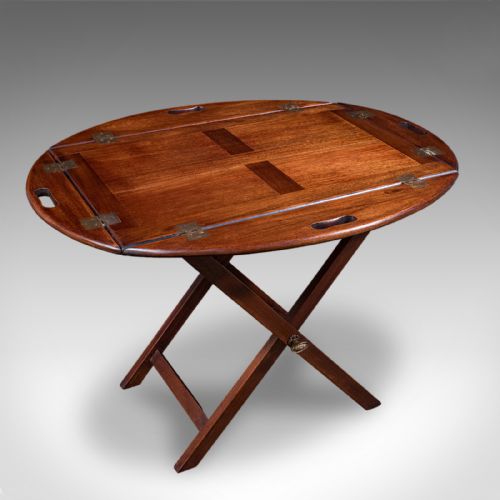
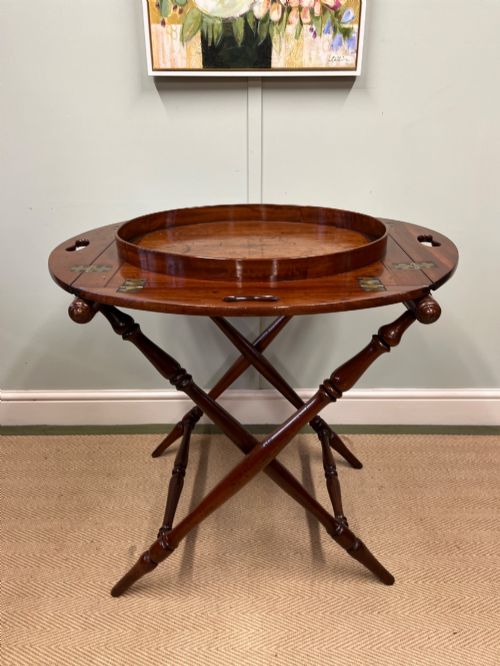
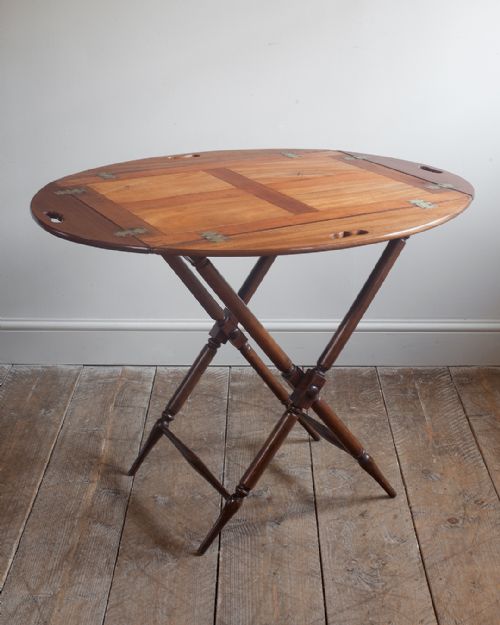
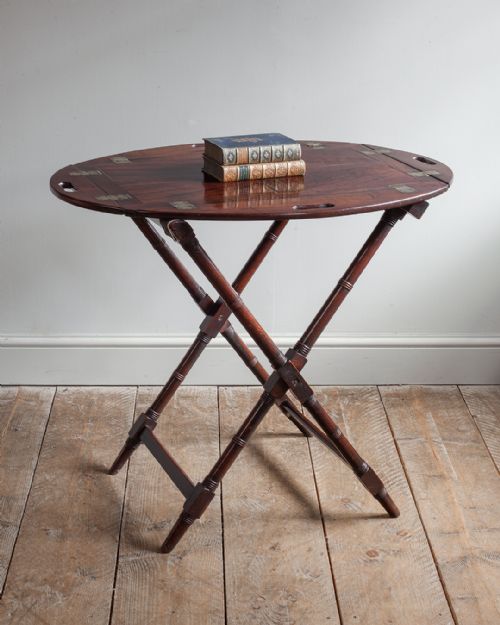
These brass hinge tray examples are sturdy serving tables that fold for storage, bringing practical utility and warm timber tones to any interior.
Brass Hinge Tray
When you search for a brass hinge tray, you are looking at versatile serving furniture designed to be lifted from its folding stand and carried by its hinged sides. These pieces combine a removable timber tray top with a collapsible wooden base, offering a functional surface that stores flat when not in use.
The versions you are most likely to meet on this page span the eighteenth and nineteenth centuries, alongside later revival pieces. They appear predominantly in mahogany, including Cuban mahogany, and take rectangular or oval forms with characteristic hinged drop flaps.
Originating as practical equipment for large English households, these trays served dining and hospitality needs before finding a second life as coffee tables and occasional tables in modern homes. The form balances rigid carpentry with pivoting hardware, creating a stable platform that disassembles in seconds.
How they were made
Makers constructed these trays using dense hardwoods like mahogany and oak, selecting timber for figure and strength to support loaded service. The characteristic hinges, usually made of brass, allowed the side panels to drop down flat or lock upright into position.
Stands were engineered to fold cleanly, utilising canvas webbing or pivoting cross-frames that collapse without tools. Joinery on the tray bodies relied on tight corner joints and inset handles, ensuring the piece could withstand frequent lifting and weight.
Brass Hinge Tray Retail Price Guide 2026
Typical asking prices for brass hinge tray among the pieces listed under this phrase on Sellingantiques today, from the lower quarter to the upper quarter. They describe what is for sale here now, not the wider market.
The clever folding stand ensures that a piece built for eighteenth-century servants folds away neatly for twenty-first-century floor space.
What varies in quality
The distinction between ordinary utility items and finer examples rests upon timber selection and hardware execution. Superior pieces utilise figured Cuban mahogany with rich grain patination, whereas standard versions rely on plain mahogany or oak.
Quality also shows in the weight and finish of the brass hinges, where crisp casting and flush fitting indicate careful workshop production. The joinery of the tray gallery and the stability of the folding stand complete the measure of a superior piece.
The Brass Hinge Tray Glossary
- Drop-flap serving stand
- A table comprising a removable tray top with hinged sides supported by a folding base. This configuration allowed servants to carry provisions and set up temporary surfaces quickly.
- Cuban mahogany
- A dense, dark timber prized for cabinet making during the eighteenth and early nineteenth centuries. It offers exceptional durability and a deep reddish-brown tone.
- Occasional table
- A small, movable table intended for flexible use around a room. These trays function naturally in this role when placed upon a fixed or folding stand.
- Canvas webbing
- Strong woven material used within folding stands to provide flexible structural support. It bears the tension of the frame while allowing the stand to collapse completely.
Brass Hinge Tray: Frequently Asked Questions
What is a brass hinge tray used for today?
These pieces serve primarily as coffee tables or low occasional tables in contemporary reception rooms. Their removable tops and folding stands provide practical surface area with the flexibility to clear floor space when needed.
They also function effectively as low serving tables or display surfaces for books and decorative objects, combining historic character with everyday utility.
How do I care for mahogany and brass?
Maintain the timber surfaces by applying natural beeswax periodically to nourish the grain and protect the finish from moisture. Avoid placing hot items directly onto the wood to prevent marking the polish.
Polish the brass hinges sparingly with a soft cloth to remove dust without stripping the natural aged patina. Regular dusting keeps both wood and metal in stable condition.
Are these trays stable enough for daily use?
The folding stands and hinged sides are engineered for reliable weight-bearing when fully engaged. Properly fitted brass hinges lock the drop flaps firmly into position during ordinary use.
Checking that the canvas webbing and frame joints remain secure ensures the stand supports the tray securely. They provide a stable surface for everyday domestic items.
How can I tell a Georgian tray from later pieces?
Georgian and Regency examples typically feature dense Cuban mahogany timber, hand-cut joinery, and patination acquired over centuries of use. The brass hardware on older pieces often shows distinct hand-finished characteristics.
Edwardian and revival pieces utilise similar forms but generally display different timber maturity and machine-made hardware components. Examining the wood grain and construction details clarifies the period of manufacture.