


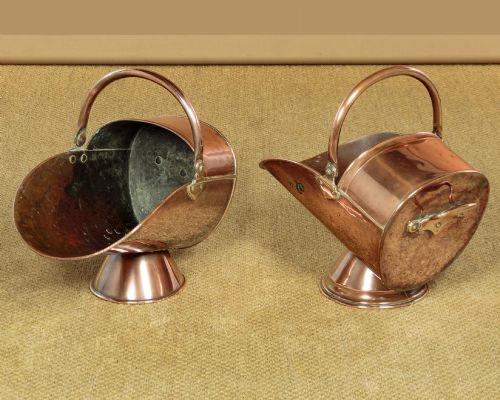
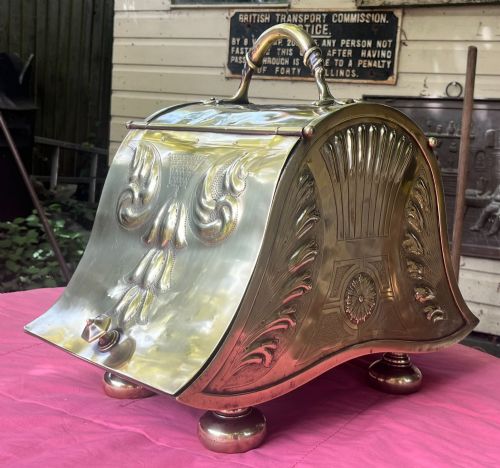


Brass Helmet Bucket
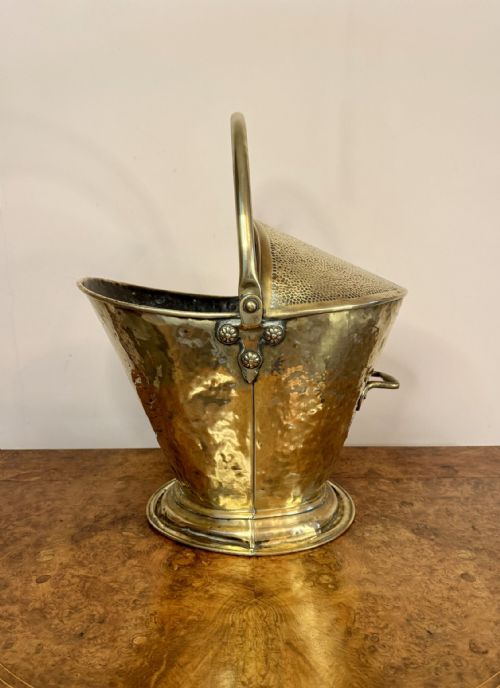
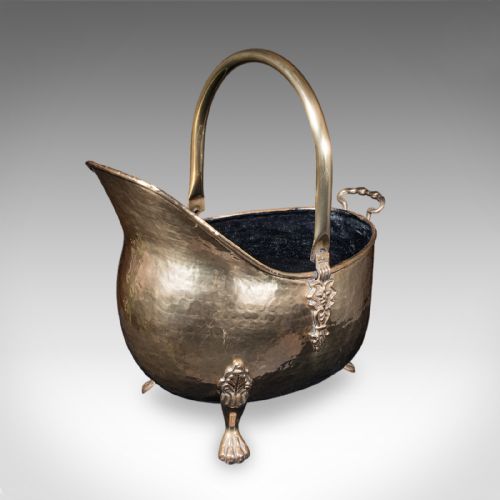
A brass helmet bucket brings utility and shine to the hearth, offering a deep vessel for fuel shaped with a flared, sloping rim.
Brass Helmet Bucket
A brass helmet bucket is a fireside accessory designed to hold coal, logs, or kindling near the hearth. When you search for this phrase, you find practical containers shaped with a distinctive sloping rim that resembles a historic helmet, making them both useful and decorative.
The pieces appearing on this page span the Regency, George III, and Victorian eras through to the Edwardian period. Victorian and late nineteenth-century examples dominate the selection, showing the heavy reliance on metal coal containers during that industrial era.
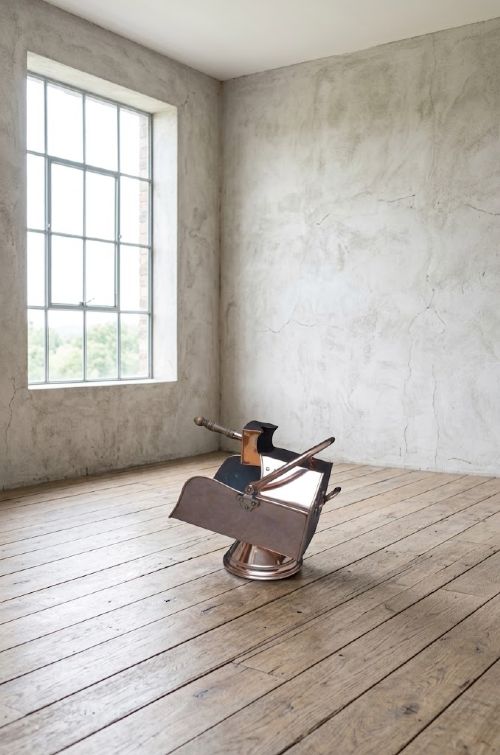
Beyond standard coal scuttles, the inventory includes variations styled as log bins, umbrella stands, and fireside bins. These objects combine sheet brass and copper bodies, frequently paired with iron handles and sometimes equipped with matching shovels.
How they were made
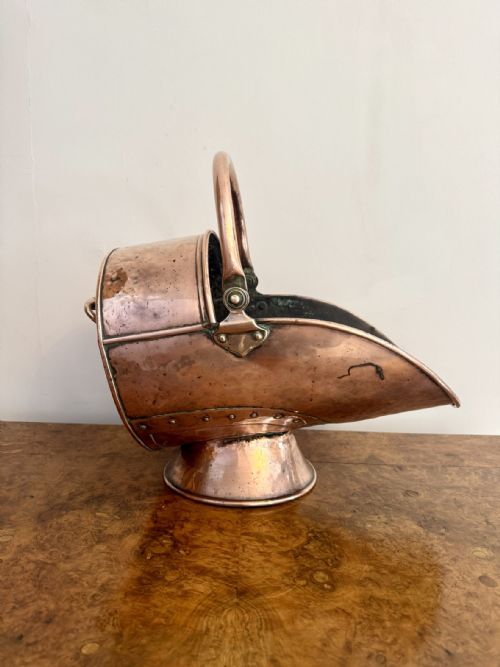
Makers constructed these vessels primarily from sheet brass and copper, hammering or pressing the metal into shape. Many examples combine both metals, using copper for the main body and polished brass for rims, handles, and feet.
Structural strength came from iron internal components and fittings, while decorative touches included ebonised wood or ebony handles. Some later Edwardian and Victorian pieces also display embossed surface patterns worked directly into the sheet metal.
Brass Helmet Bucket Retail Price Guide 2026
Typical asking prices for brass helmet bucket among the pieces listed under this phrase on Sellingantiques today, from the lower quarter to the upper quarter. They describe what is for sale here now, not the wider market.
Several buckets come with their original shovels, surviving centuries of clearing ash without getting lost.
What varies in quality
Quality rests upon the thickness of the metal sheet and the integrity of the construction. Heavy gauge brass and solid copper bodies resist dents and hold their shape under the heavy weight of coal or logs much better than thin, flimsy alternatives.
The refinement of the details separates standard utility vessels from superior examples. Finely turned wooden handles, robust cast feet, and the survival of an original matching shovel elevate a piece significantly.
Benham And Froud·Henry Loveridge
The Brass Helmet Bucket Glossary
- Helmet scuttle
- A fireside container featuring a high back and a sloping, flared front rim resembling a traditional helmet. This shape allows fuel to be scooped out easily while containing loose pieces.
- Sheet brass
- A flat-rolled alloy of copper and zinc used to form the lightweight yet durable bodies of these buckets. It takes a high polish and resists corrosion near the fireplace.
- Ebonised wood
- Timber treated with a dark stain or finish to imitate ebony. It frequently appears on the handles and grip knobs of these fireside vessels.
- George III period
- The era spanning from seventeen sixty pendekatan to eighteen twenty, noted for refined metalwork and classic proportions. Pieces from this time carry substantial historical age.
Brass Helmet Bucket: Frequently Asked Questions
What were brass helmet buckets used for?
These containers served primarily to store and transport coal or logs from the cellar to the fireplace. Their flared rims made it simple to transfer fuel onto the fire using a matching shovel.
Over time, their bright polished metal also served a decorative purpose in the grand sitting rooms of nineteenth-century homes, reflecting the light from the hearth.
How do I clean a brass helmet bucket?
Maintenance depends on whether you prefer a bright polished finish or a mellow, aged patina. Gentle dusting and occasional washing with mild soapy water keep the metal clean without stripping its history.
Avoid harsh abrasive compounds that can scratch the thin sheet brass or remove hand-hammered details. Patina builds over decades of handling, so many collectors choose to leave the surface untouched.
How can I tell a Victorian bucket from an Edwardian one?
Victorian examples tend to feature heavier gauge copper and brass with robust cast iron or brass feet and hand-beaten detailing. They often display deep patination earned through decades of daily use beside coal fires.
Edwardian pieces sometimes utilise lighter machine-pressed sheet brass and crisper, more uniform surface embossing. The transition between these reigns shows subtle shifts in manufacturing speed and decorative tastes.
Can I use these buckets for logs today?
Many buyers continue to use these historic vessels beside modern wood-burning stoves to hold logs or kindling. Their durable metal construction handles dry wood without issue.
It is wise to check the interior for any historic moisture damage or rust, particularly around the iron bases. Lining the bottom with a protective mat can prevent new scratches from heavy logs.