



Brass Hearth Protector
A brass hearth protector keeps stray embers where they belong while bringing a warm metallic gleam to the fireside.
Brass Hearth Protector
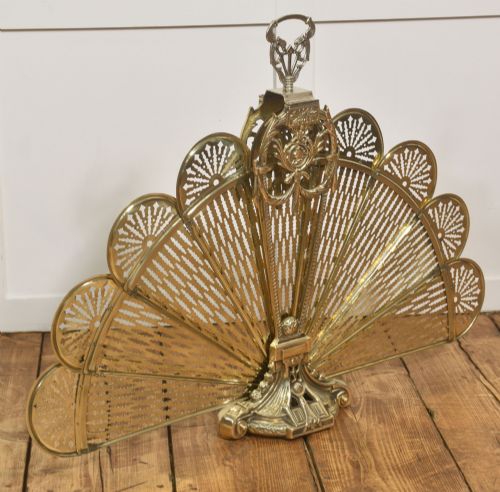
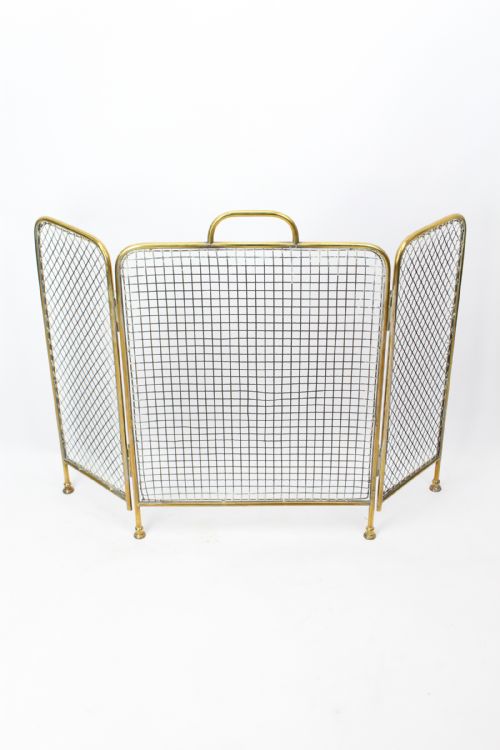
A brass hearth protector takes several distinct forms, most commonly appearing as fire screens, spark guards, and nursery guards across this selection. You will frequently encounter folding designs, curved demi-lune shapes, and striking peacock fan configurations designed to shield the room from stray sparks.
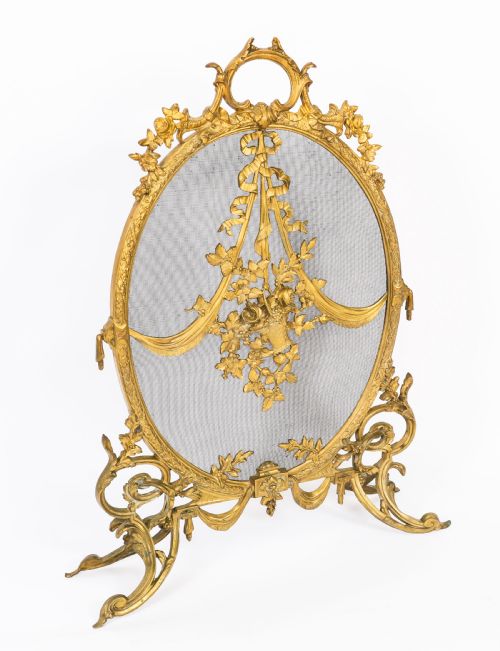
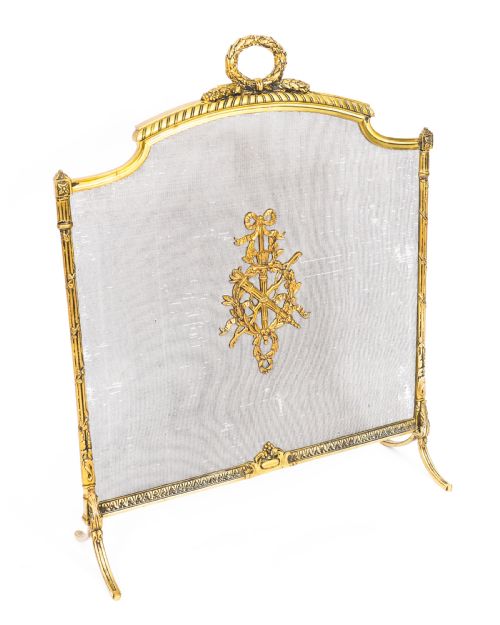
Originating predominantly from the Victorian era and the early twentieth century, these guards combine practical safety with decorative flair. French revival styles also feature prominently among the current listings, showing ornate rococo and empire detailing alongside simpler British domestic designs.
How they were made
The primary construction relies on solid brass frames paired with wire, steel, or iron mesh to catch flying embers while maintaining visibility of the fire. Copper accents and gilt bronze mounts appear on specific French revival examples to add contrast and decorative depth.
Folding mechanisms and articulated joints are built with pivoting hinges that allow the guards to expand or curve securely around the hearth opening. Mesh panels are typically woven tightly and secured within the metal framework to withstand daily proximity to open heat.
Brass Hearth Protector Retail Price Guide 2026
Typical asking prices for brass hearth protector among the pieces listed under this phrase on Sellingantiques today, from the lower quarter to the upper quarter. They describe what is for sale here now, not the wider market.
Peacock fan screens unfold like metallic plumage, transforming a functional safety barrier into an extravagant burst of 1920s hearthside theatre.
What varies in quality
Quality rests in the weight of the brass and the rigidity of the frame, where thicker gauge metal resists bending and maintains stability on uneven hearth stones. Finer examples display crisp casting and careful articulation in their hinges rather than loose joints that sag under their own weight.
The complexity of the decorative work sets the standard pieces apart from more utilitarian spark guards. Elaborate pierced castings, detailed gilt bronze mounts, and well-executed folding fan designs require a higher level of craftsmanship than plain wire mesh frames.
The Brass Hearth Protector Glossary
- Demi-lune
- Half-moon shape. This describes curved spark guards designed to sit snugly against a fireplace opening.
- Spark guard
- A protective barrier of wire or metal mesh. It stops flying embers from escaping onto the carpet while letting radiant heat pass through.
- Gilt bronze
- Bronze treated with a gold finish or mercury gilding. It provides a bright decorative accent on revival fireplace screens.
- Fire screen
- A movable decorative panel placed in front of a fireplace. When the hearth is cold, it conceals the empty grate.
Brass Hearth Protector: Frequently Asked Questions
What is a brass hearth protector used for?
These guards serve as a physical barrier between an open fire and the room, catching sparks and hot embers before they can damage flooring. They also provide a decorative presence by hiding an empty fireplace during the warmer months.
Different designs offer varying degrees of coverage, from flat folding screens to curved guards that wrap around the hearth opening for added safety.
How do I measure for a fireplace guard?
Measure the width and height of your fireplace opening to ensure the guard covers the entire hearth space safely. Consider whether you need a flat screen or a bowed design that extends further outward into the room.
Take into account any protruding hearth stones or fenders so the guard sits level and stable on the floor.
How do I clean antique brass and mesh?
Dust the wire mesh gently with a soft brush and wipe the brass frame with a dry cloth to maintain its finish. Avoid harsh chemical cleaners that can strip away the natural patina accumulated over the decades.
If polishing is necessary, use a mild brass cleaner applied sparingly with a cloth, taking care not to get abrasive liquids onto the mesh screen.
How do I tell Victorian guards apart from later ones?
Victorian pieces often feature heavier cast brass components and more traditional domestic proportions suited to coal grates of the period. Later Edwardian and 1920s examples sometimes incorporate finer mesh and alternative metals like copper. Nursery guards from the Victorian era are typically taller and built with robust frames to keep children at a safe distance from the flames.