
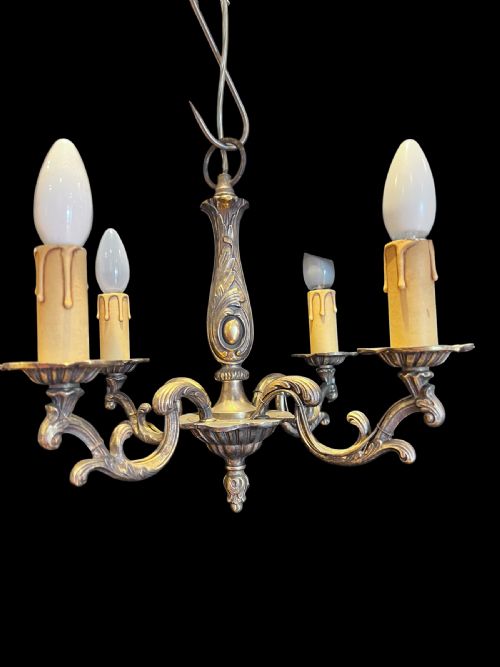
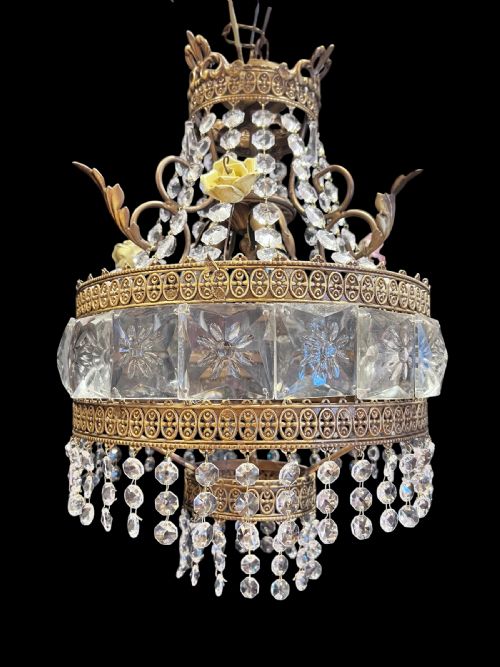

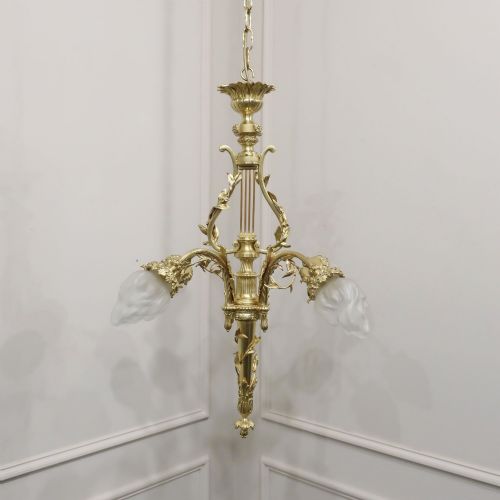
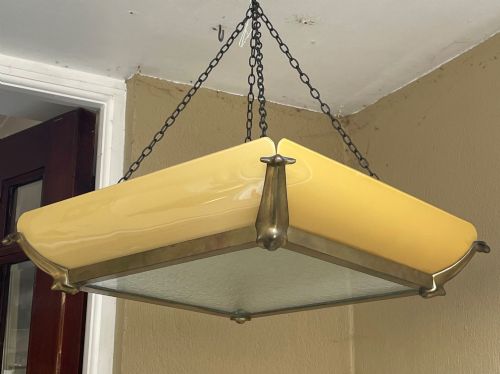
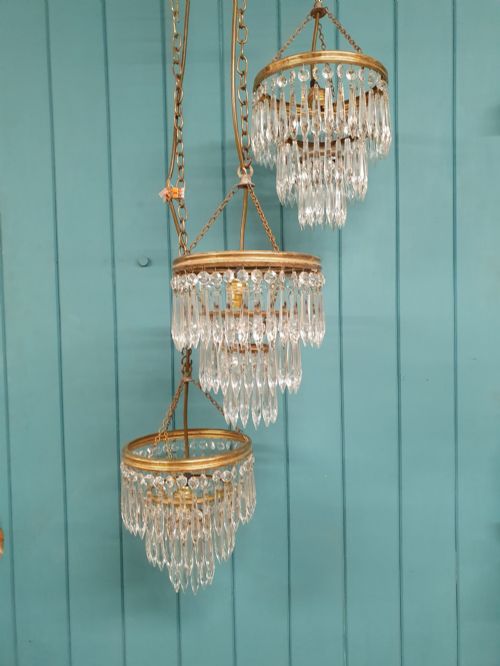
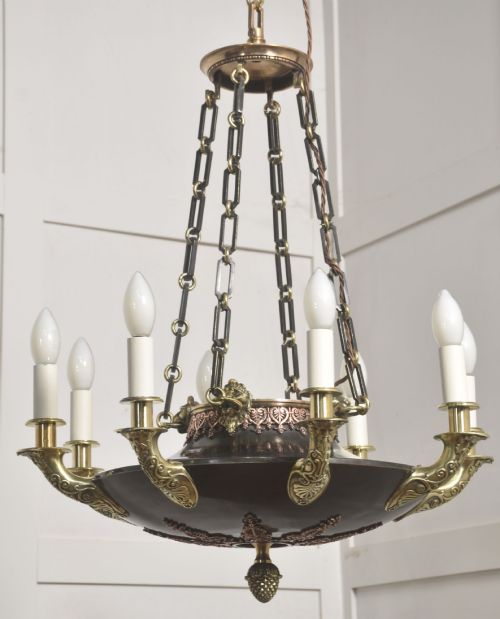
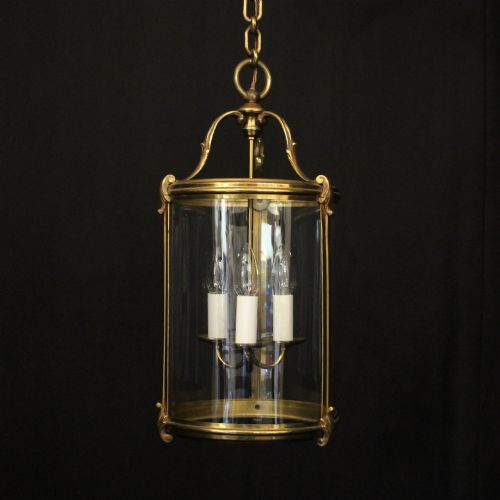
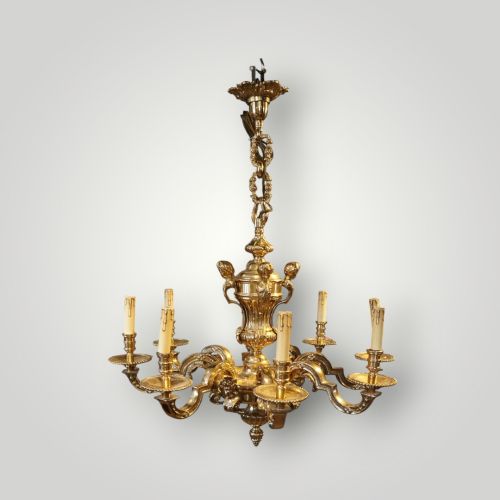
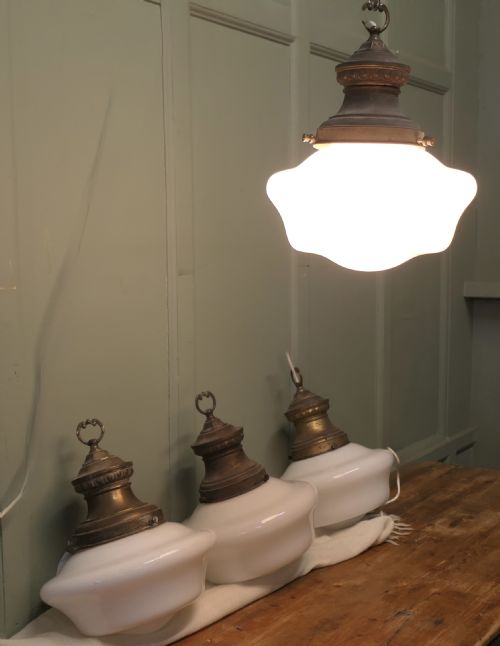
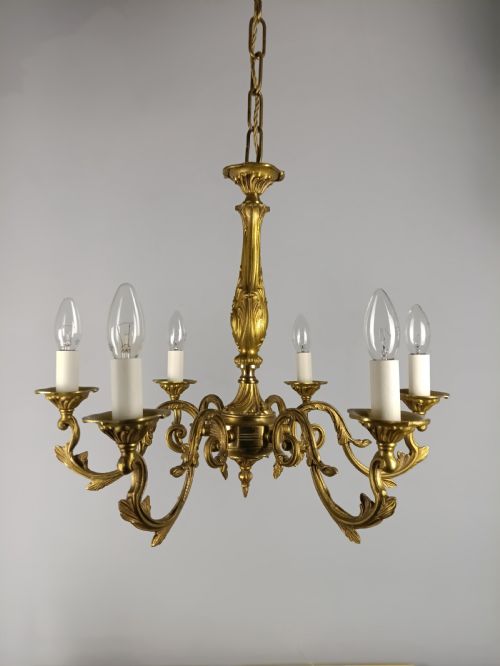

Brass Hanging Pendant Fitting
A brass hanging pendant fitting brings a room together with warm metalwork and a suspended source of light.
Brass Hanging Pendant Fitting
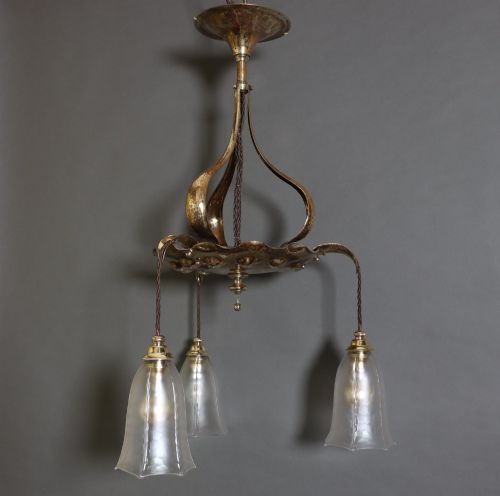
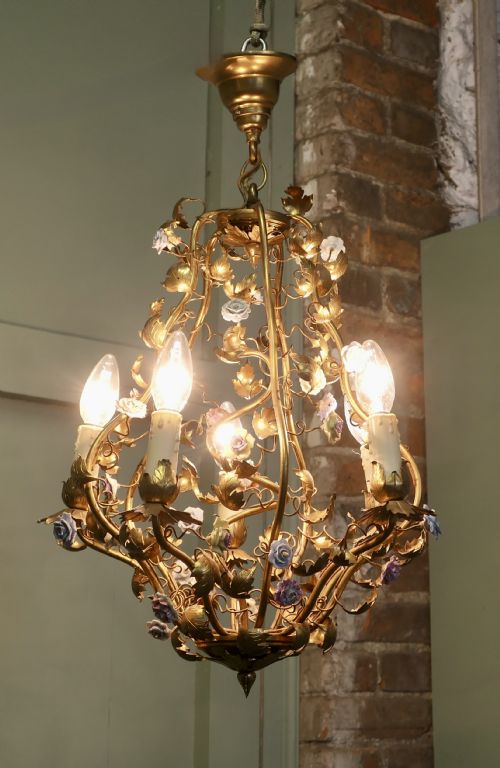
Buyers meet variations influenced by French Neoclassical, Art Deco, Art Nouveau, and industrial styles. Many pieces incorporate glass, crystal, or ceramic elements alongside the primary metal frame.
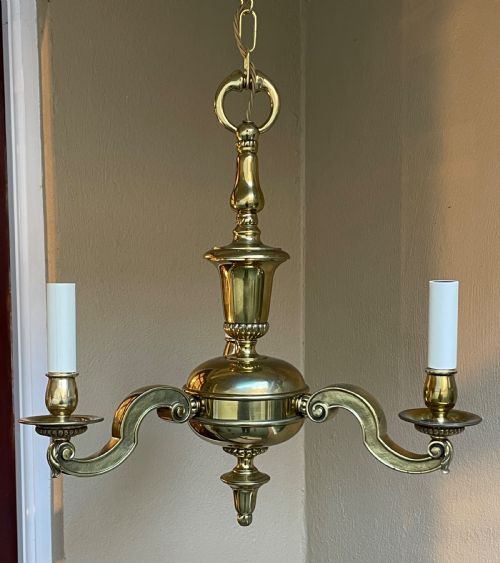
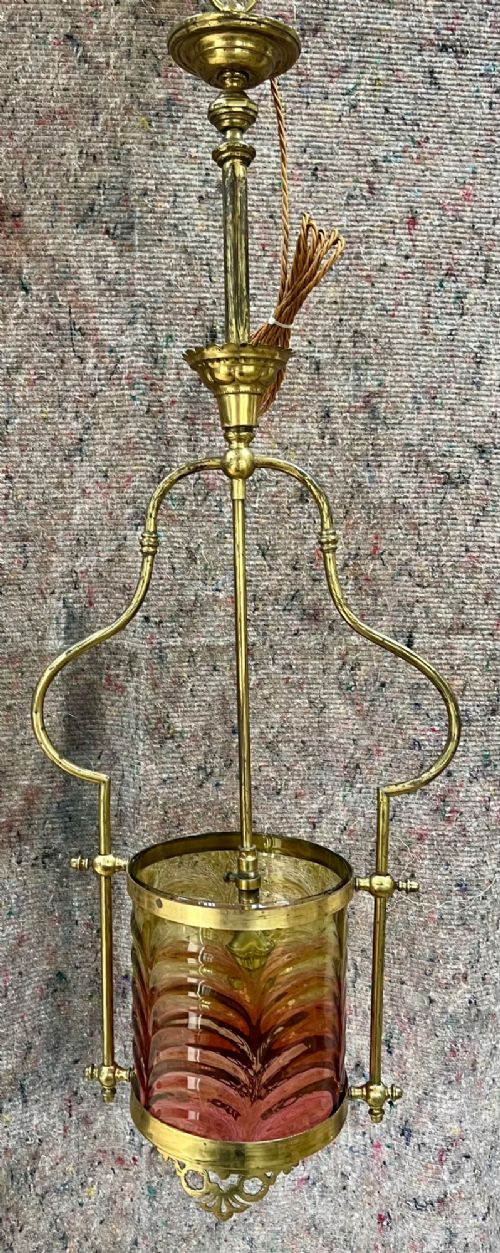
The selection ranges from single-bulb pendants and compact dome top fixtures to large multi-light chandeliers and convex hall lanterns.
Materials and construction methods
Makers utilised cast brass, gilt bronze, copper, and gilded brass to form the structural bodies and branches of these hanging fixtures. Metal components are frequently paired with moulded glass, hand-painted glass shades, and cut crystals.
Decorative details rely on techniques such as gesso application, tolewear painting, and intricate metal casting. Frames hold multiple bulbs or candles, often supplemented by glass prisms and ceramic floral motifs.
Listings feature brass hanging pendant fittings across eight distinct historical periods, from the nineteenth century through to 1940.
Assessing quality in hanging fixtures
Quality rests in the crispness of the metal casting and the complexity of the design, whether in a simple industrial shade or an elaborate French gilded bronze chandelier. Heavier brass frames and finely detailed mountings indicate superior craftsmanship.
The integration of materials also defines the standard of a piece. High-grade items combine clear or coloured crystal prisms, intact hand-painted glass, and original ceramic details harmoniously within the metal structure.
G.E.C
The Brass Hanging Pendant Fitting Glossary
- Pendant light
- A solitary light fixture suspended from the ceiling by a chain, cord, or metal rod. These direct illumination downward into a specific space.
- Hall lantern
- An enclosed hanging light, frequently glazed with glass panels within a metal frame. They were traditionally designed to illuminate entranceways and corridors.
- Gilt bronze
- Bronze metal treated with a thin layer of gold or gold-coloured gilding. This technique provides a durable, lustrous finish seen on many period chandeliers.
- Prism
- A cut piece of glass or crystal hung from a chandelier to refract light. They enhance the overall brightness and visual texture of the fixture.
- Tolewear
- Painted and lacquered metalware used for decorative accents on light fittings. It often introduces floral or coloured elements to the brass framework.
Brass Hanging Pendant Fitting: Frequently Asked Questions
How do I hang a heavy brass chandelier safely?
Heavy chandeliers require structural ceiling support, such as a joist or a heavy-duty ceiling box capable of holding substantial weight. Professional installation is recommended to secure the hanging chain and electrical connections properly.
Ensuring the drop height suits the room allows the fixture to provide optimal illumination without obstructing movement underneath.
Can I clean brass pendant fittings safely?
Dusting the metal frame and glass components regularly with a soft cloth maintains the surface finish. Avoid harsh chemical cleaners that can strip gilding or antique patina from the brass.
Gentle wiping preserves the historical character of gilt bronze, copper, and lacquered surfaces accumulated over decades.
What rooms suit a hall lantern best?
Hall lanterns fit naturally into entryways, stairwells, and narrow corridors where overhead clearance matters. Their enclosed glass designs protect the bulbs from drafts while casting clear light across transitional spaces.
Their historical association with hallways makes them a practical choice for welcoming guests at home.
How do I date a brass pendant fitting?
Dating relies on stylistic clues, manufacturing methods, and material combinations recorded in the piece. Art Deco and industrial designs point toward the 1930s, while ornate gilt bronze and crystal arrangements often reflect earlier French Neoclassical or Victorian influences.
Examining the casting quality and wiring methods provides further context regarding the era of production.