



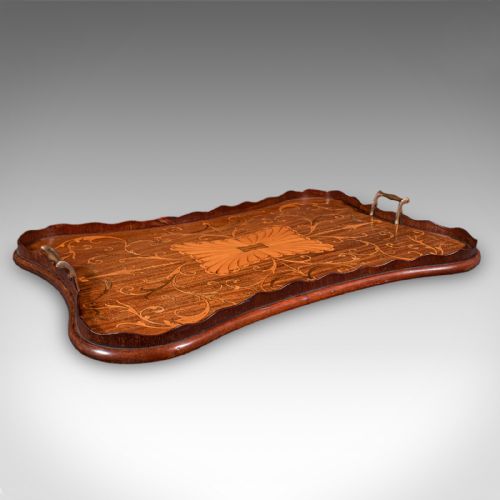
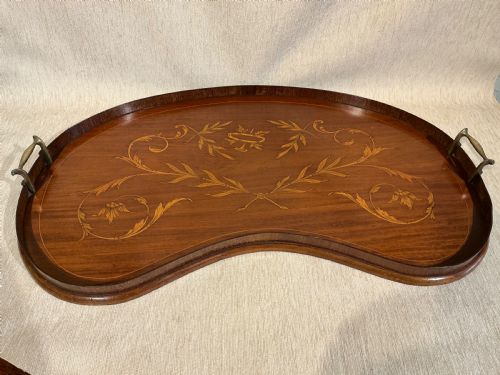
Brass Handled Serving Tray
A brass handled serving tray brings tangible utility and period charm to a room, offering a functional centrepiece for hospitality.
Brass Handled Serving Tray
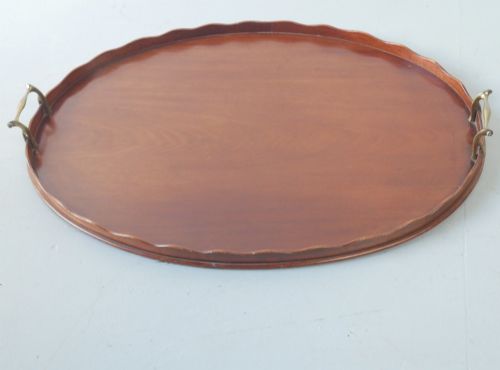
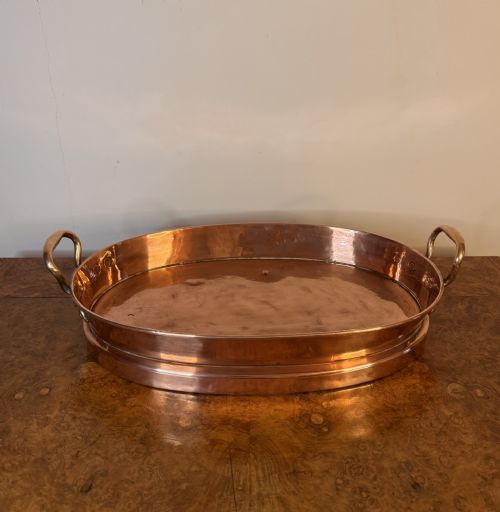
When you search for a brass handled serving tray, you encounter pieces spanning the Georgian, Victorian, and Edwardian eras, alongside Regency and Arts and Crafts examples. These items combine a timber base with secure metal mountings designed for carrying afternoon tea or domestic service.
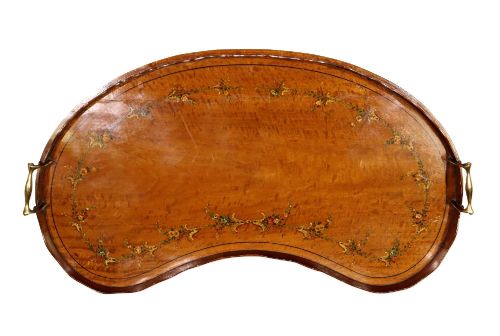
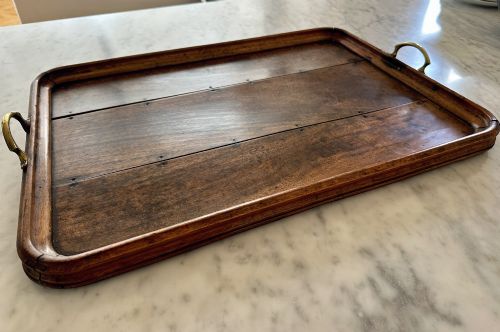
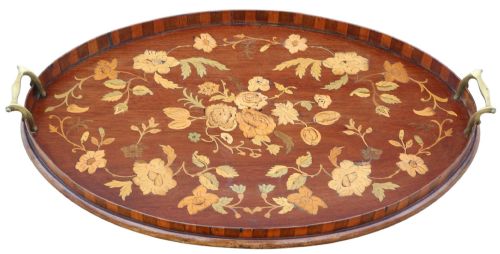
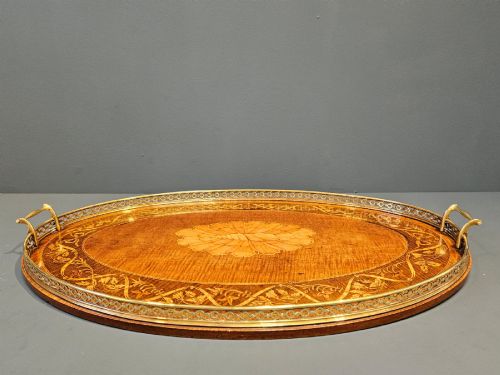
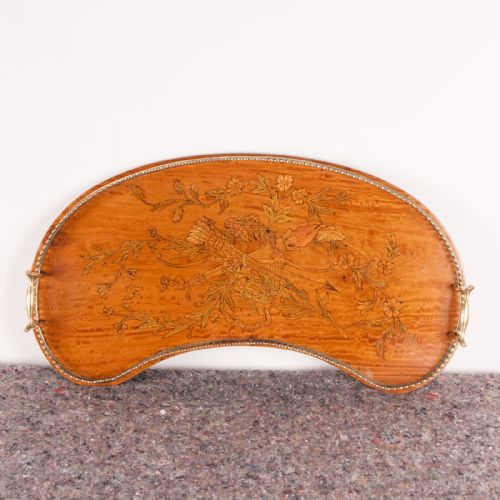
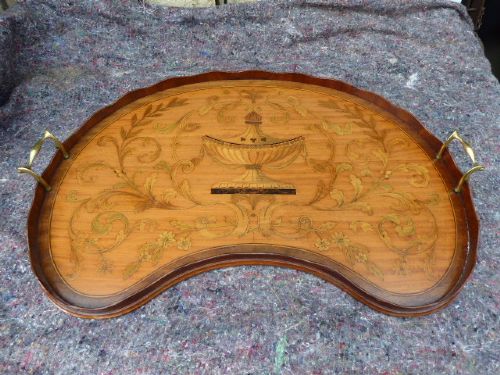
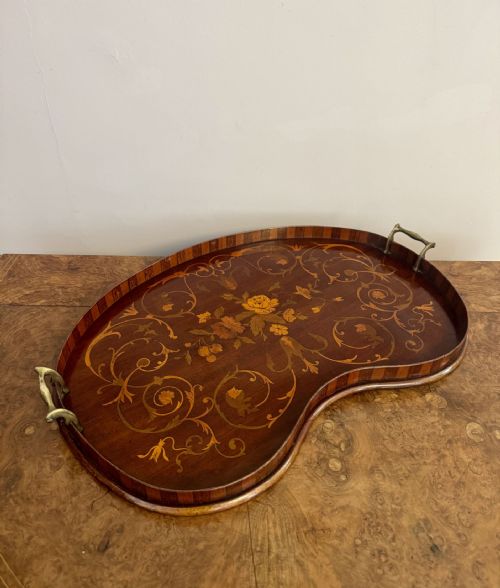
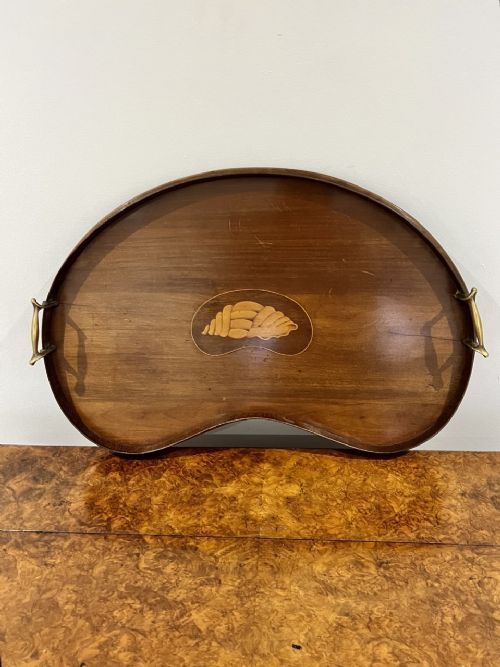
The dominant forms on this page include oval, kidney-shaped, and rectangular trays, frequently constructed from mahogany or satinwood. Many feature inlaid decoration, and certain examples arrive paired with stands to function as occasional tables.
Origins stretch across the nineteenth and early twentieth centuries, capturing shifts from Late Georgian austerity to the decorative flourish of Sheraton Revival and Edwardian craftsmanship. Buyers typically select these objects to serve drinks or display glassware upon a surface with historical character.
Materials and construction
Cabinetmakers utilised dense hardwoods such as mahogany and satinwood for the primary body of each tray, often applying contrasting veneers and intricate marquetry inlay. Elm and burr yew also appear, providing varied grain patterns across the timber surfaces.
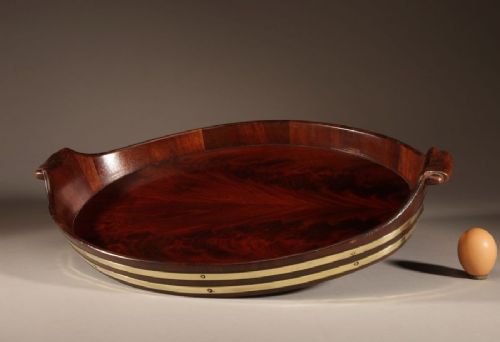
Brass handles and protective galleries are securely fastened to the edges, combining structural reinforcement with metallic contrast against the polished wood. Some specialised pieces employ coopered construction techniques similar to barrel-making to achieve curved wooden walls.
Brass Handled Serving Tray Retail Price Guide 2026
Typical asking prices for brass handled serving tray among the pieces listed under this phrase on Sellingantiques today, from the lower quarter to the upper quarter. They describe what is for sale here now, not the wider market.
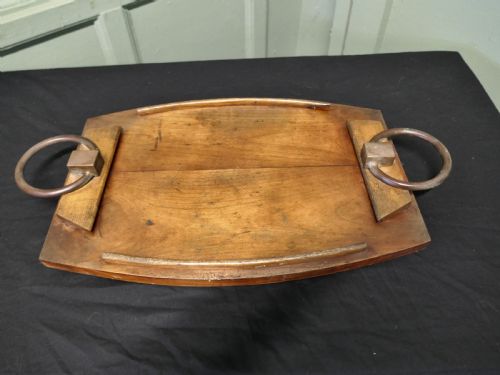
A sturdy ship's tray in golden elm proves that nineteenth-century hosts expected afternoon tea to survive rough seas without spilling.
What separates the finest examples
The distinction between standard domestic items and the top of the range lies in the precision of the marquetry and the crispness of the timber selection. Finely cut satinwood inlays and balanced symmetrical grain patterns indicate a higher tier of workshop production.
Furthermore, the weight, casting quality, and firm attachment of the brass handles separate exceptional pieces from ordinary utilitarian wares. Maker attribution, as seen in signed works from established cabinetmakers, elevates the standing of an individual tray.
Edwards and Roberts·Clay
The Brass Handled Serving Tray Glossary
- Marquetry inlay
- Decorative woodwork where pieces of contrasting timber, shell, or ivory are fitted into a veneer to form geometric or pictorial designs. This technique defines the visual richness of many Edwardian and Victorian trays.
- Kidney shaped
- A curved, asymmetrical form resembling a bean, popular during the Edwardian period for tea trays designed to rest comfortably against the body.
- Gallery
- A raised wooden or metal rim running around the edge of a tray to prevent items from sliding off during transport.
- Coopered
- Constructed from staves of wood joined tightly together with metal or wooden bands, typical of cylindrical or curved serving vessels.
- Sheraton Revival
- A late nineteenth and early twentieth century design movement that reinterpreted the elegant neoclassical furniture styles associated with George Sheraton.
Brass Handled Serving Tray: Frequently Asked Questions
How do I clean a brass handled serving tray?
Dust the wooden surface regularly with a soft, dry cloth and avoid harsh chemical sprays that might damage antique polishes. Maintain the timber occasionally with appropriate wax to preserve the grain.
Polish the brass handles sparingly using a dedicated metal cleaner, taking care not to let the substance stain the surrounding wood. Placing a protective cloth or mat underneath wet glassware prevents water rings on historic finishes.
Can I use these trays for daily serving?
Many of these pieces were built for functional domestic service during the nineteenth and early twentieth centuries and remain structurally robust enough for carrying drinks. However, fragile marquetry or delicate satinwood veneers benefit from gentle handling during use.
For everyday hospitality, ensure the weight distribution remains balanced between the brass handles. Many owners choose to display them on side tables or stands when not actively serving guests.
How do I date a mahogany tray?
Examine the timber species, construction methods, and inlay styles to determine the likely era of manufacture. Georgian pieces tend to exhibit restrained neoclassical lines, whereas Edwardian items often display elaborate marquetry and lighter satinwood components.
Look for tool marks on the underside and the fastening method of the brass handles, as hand-cut screws and traditional joinery point toward earlier production dates.
What is an etagere?
An etagere is a piece of furniture consisting of a set of open shelves or trays arranged in tiers, designed for displaying ornaments or serving items. In the context of serving wares, trays are occasionally mounted onto dedicated stands to create this multi-level form.
This configuration allows the tray to transition from a portable serving accessory into a static occasional table within a reception room.