



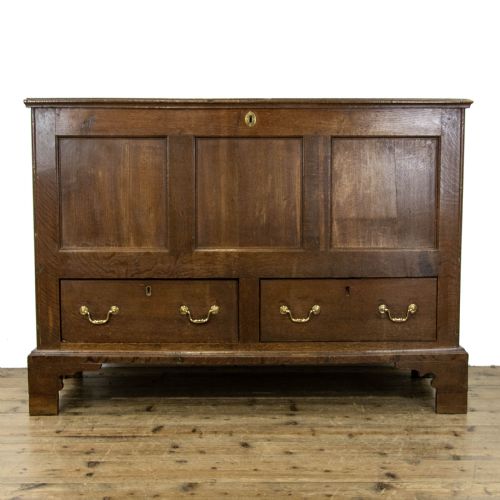


Brass Handle Oak Trunk
These robust pieces known as a brass handle oak trunk offer timeless utility, combining hardy timbers with functional metalwork for everyday storage.
Brass Handle Oak Trunk
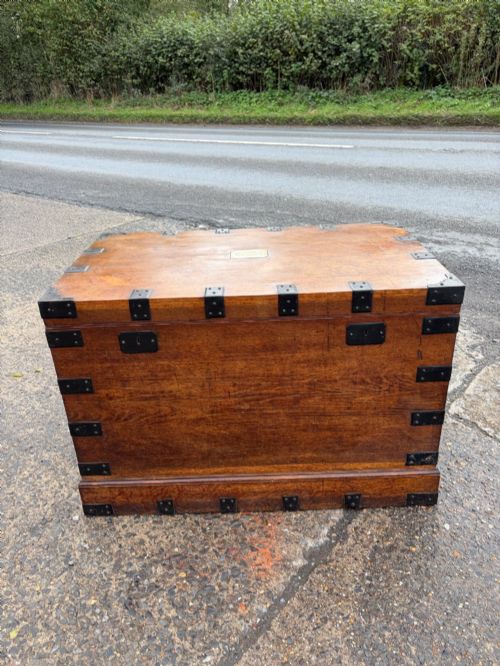
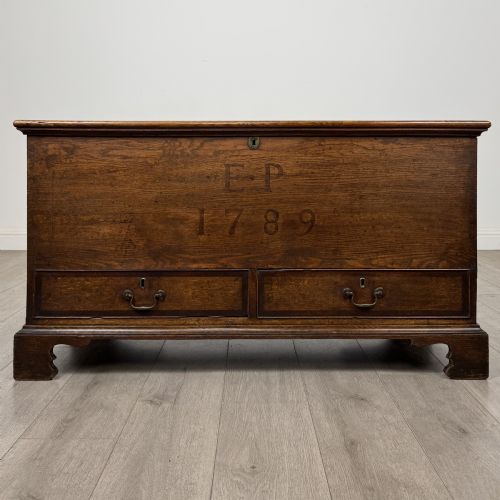
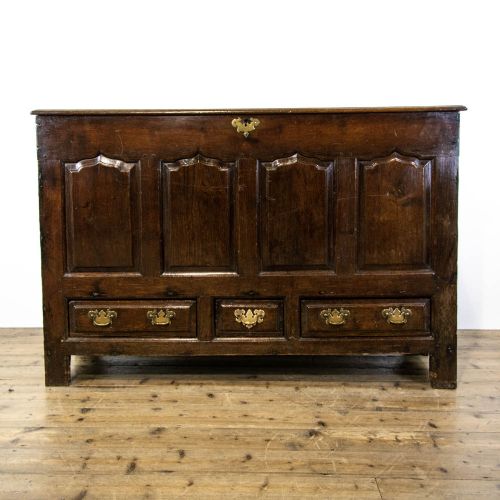
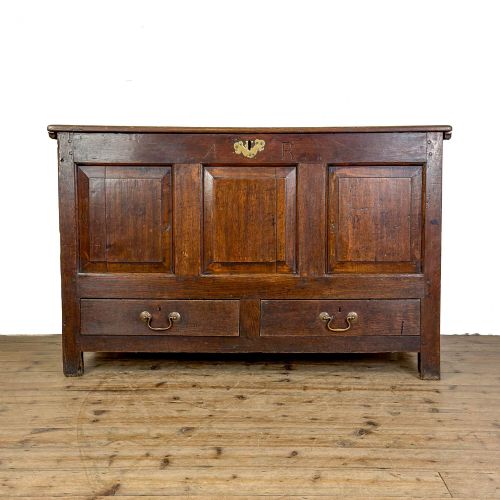
When you search for a brass handle oak trunk, you encounter a variety of sturdy storage items spanning the eighteenth and nineteenth centuries. These pieces encompass regional variations such as Welsh vernacular styles, Lancashire chests, and compact coffer bach forms.
The predominant items on this page are mule chests and storage trunks built from English oak and fitted with practical metal mounts. You will also find smaller apprentice pieces alongside large travelling trunks dating from the Georgian and Victorian periods.
Materials and construction
The primary material across these listings is solid oak, selected for its density and durability, sometimes complemented by internal panels or secondary timbers. Carpenters shaped these woods using traditional joinery methods suited to heavy daily use.
Brass fittings and iron hardware provide both structural reinforcement and lifting points. These metal mounts are secured directly to the wooden body to withstand regular transit and handling.
Brass Handle Oak Trunk Retail Price Guide 2026
Typical asking prices for brass handle oak trunk among the pieces listed under this phrase on Sellingantiques today, from the lower quarter to the upper quarter. They describe what is for sale here now, not the wider market.
Even miniature apprentice chests required proper joinery, proving that tiny furniture demanded serious effort.
Assessing quality and proportion
Quality in these trunks rests upon the integrity of the timber and the crispness of the joinery rather than decorative excess. Superior examples display well-figured grain, balanced proportions, and original metal hardware that has aged harmoniously with the wood.
Finer pieces often feature refined panel work or sophisticated regional moulding details that elevate a utilitarian box into an accomplished item of vernacular furniture.
The Brass Handle Oak Trunk Glossary
- Mule chest
- A storage chest featuring one or more drawers beneath the main lift-top compartment. This form bridges the gap between a traditional coffer and a chest of drawers.
- Vernacular
- Furniture built by local tradesmen using regional traditions and available native timbers rather than following metropolitan stylistic decrees. This approach results in distinct local characteristics.
- Panel
- A distinct section of wood fitted within a grooved frame to allow for natural wood expansion and contraction. Multiple panels are frequently used in the construction of large chests.
Brass Handle Oak Trunk: Frequently Asked Questions
What is a mule chest?
A mule chest is a traditional storage box that incorporates one or more drawers beneath the primary compartment accessed from a hinged lid. This hybrid form emerged when makers sought to combine the deep storage of a coffer with the accessible drawer space of a chest of drawers.
In the context of these listings, they represent a significant portion of the oak storage pieces available from the eighteenth century.
How were these trunks used?
These pieces served as essential domestic storage for textiles, blankets, and personal belongings in homes before fitted closets became common. Their sturdy construction also made them suitable for transporting goods during travel.
Smaller iterations functioned as desktop boxes, bedside storage, or fireside bins within the household.
How do I date an oak chest?
Dating relies on examining the construction methods, such as hand-cut joinery, panel thickness, and the style of hinges and handles. Eighteenth-century examples often exhibit vernacular detailing and pegged frame construction.
Nineteenth-century pieces frequently show standardised hardware and machine-assisted preparation while retaining traditional oak construction.
Where were these pieces made?
The pieces originate primarily from British workshops, with specific regional identities found in Welsh and Lancashire examples. Local cabinet makers utilised native English oak to build furniture suited to regional domestic requirements.
Travelling trunks from later periods reflect the expanding transport networks of the nineteenth century.