


Brass Hallway Hooks
Brass hallway hooks solve the eternal problem of where to put coats, hats, and keys while bringing period character to an entrance.
Brass Hallway Hooks
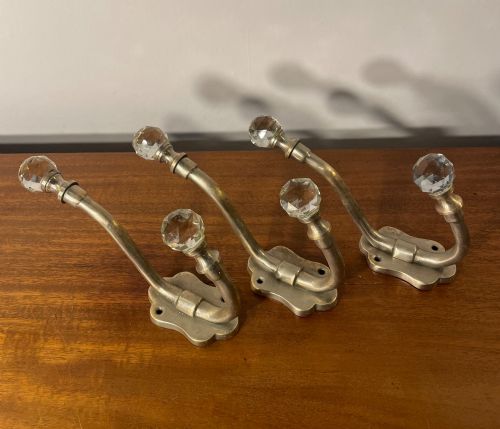
Brass hallway hooks encompass wall-mounted fixtures, coat racks, and mounted boards designed to organise entranceways from the nineteenth and early twentieth centuries. These pieces appear across Victorian, Edwardian, and Arts and Crafts styles, reflecting the domestic needs of their original eras.
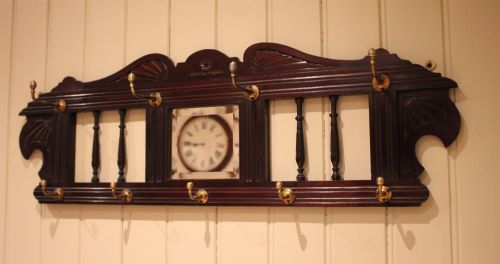
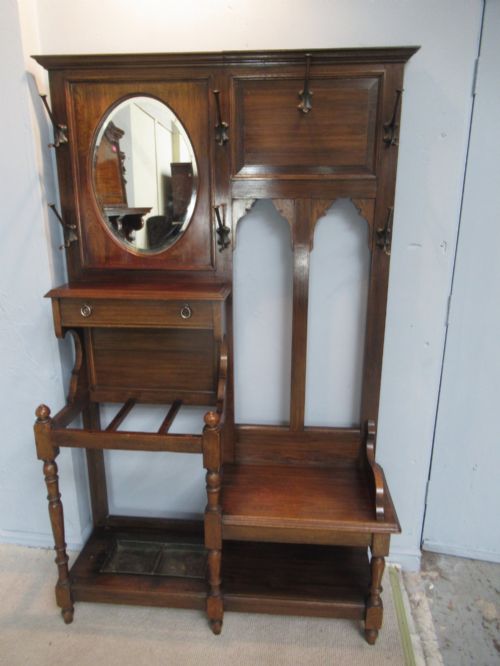
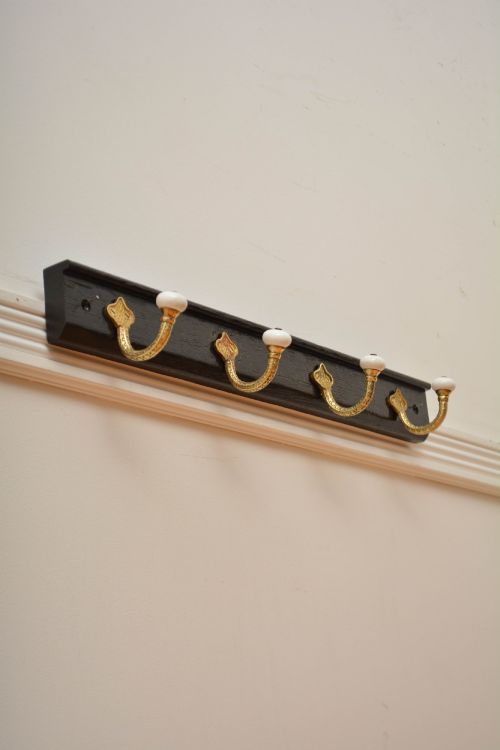
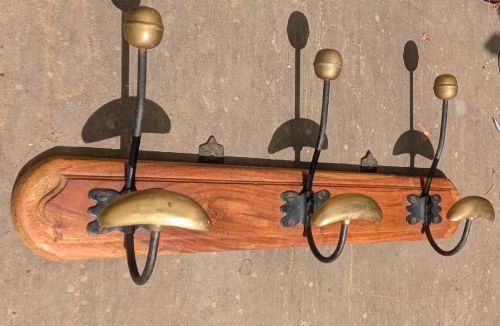
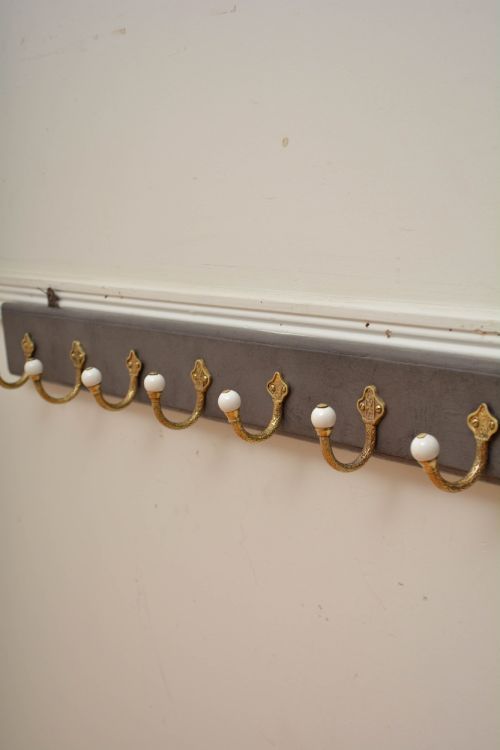
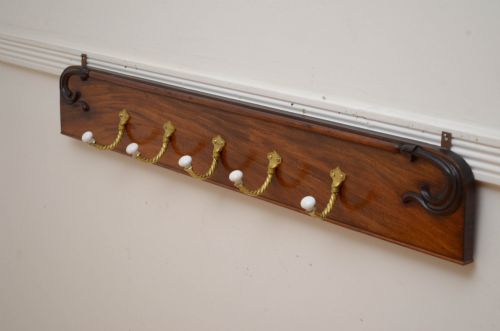
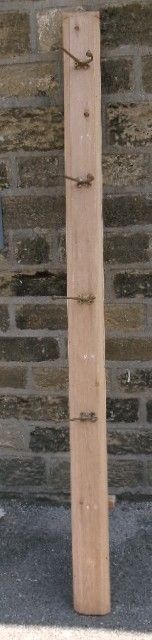
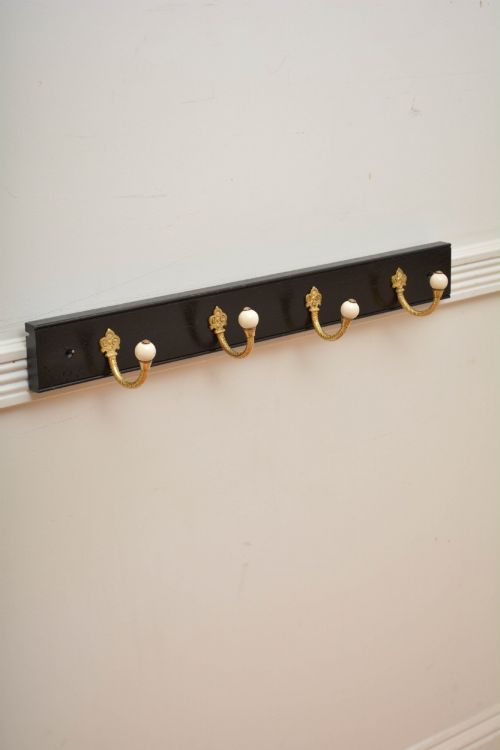
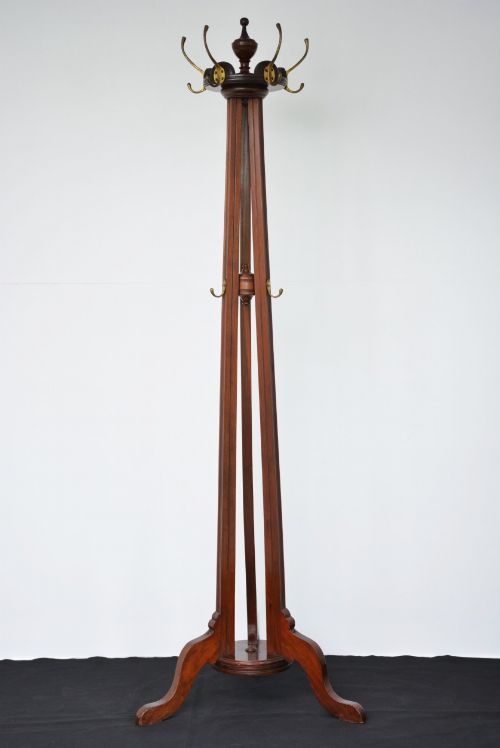
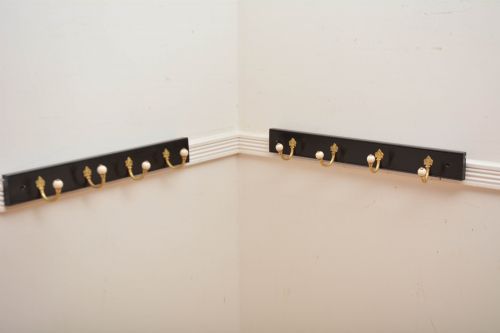
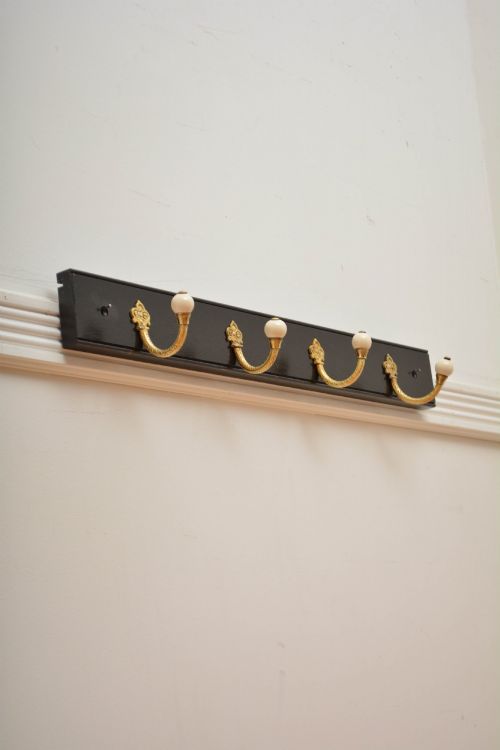
The most common versions on this page are mounted racks featuring multiple cast hooks fixed to timber backboards of mahogany, oak, walnut, or ebonised wood. Alongside simple double hooks, buyers frequently encounter complex hall stands, key racks, and French portmanteaus incorporating brass hardware.
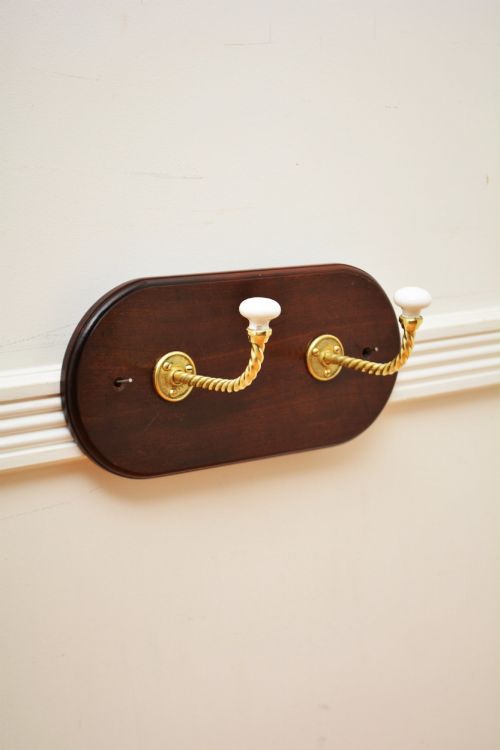
Origins stretch from traditional British workshops to French ateliers, bringing varied design elements such as ceramic knobs, twisted rope details, and bevelled mirror plates into hallway storage solutions.
What varies in quality
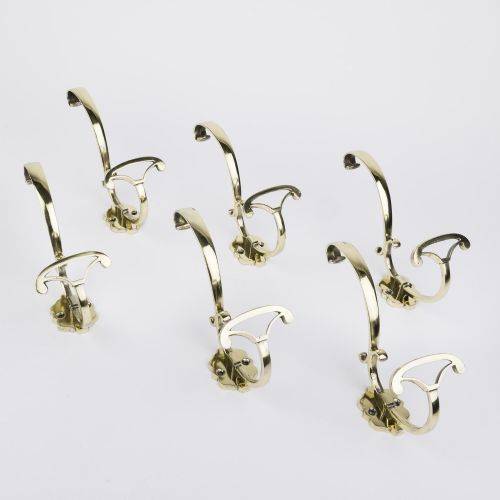
The crispness of casting detail on the brass elements separates standard production from finer examples, particularly where chased decoration or scalloped mounting plates appear.
Timber selection and construction integrity dictate durability, distinguishing solid mahogany and walnut backboards from simpler pine boards.
The retention of original matching ceramic or porcelain knobs and uniform screw fixings determines the overall integrity of the piece.
Some hotel reception key boards disguise themselves as modest oak shields, quietly waiting to sort a century of lost brass keys.
Jas. Shoolbred
The Brass Hallway Hooks Glossary
- Backboard
- The horizontal or vertical timber plank to which coat hooks are securely mounted. It protects hallway plaster and distributes weight evenly across the wall fixings.
- Ebonised
- Wood treated with a chemical stain or finish to imitate expensive ebony. This dark, polished surface provides a high-contrast background for bright brass hooks.
- Portmanteau
- A combined wall-mounted rack featuring brackets for both hats and coats. French examples often display elaborate casting and extended projecting arms.
- Chased
- Metal decorated by hammering or indenting patterns directly into the surface rather than casting them. This technique adds fine texture to brass hook plates.
Brass Hallway Hooks: Frequently Asked Questions
Are ceramic hook inserts original?
Many Victorian and Edwardian brass hooks incorporate porcelain or ceramic knobs designed to protect delicate fabrics from tearing. Original inserts generally show appropriate signs of age and match the fixing style across the entire rack.
Replacements do occur during restoration, so examine the seating of the ceramic within the brass casting to judge its authenticity.
How do I clean antique brass?
Antique brass accumulates a dark oxidation layer over decades, which many collectors prefer to leave undisturbed. Gentle dusting with a dry cloth removes surface grime without stripping the historical patina.
Avoid harsh chemical metal polishes that remove the characteristic warmth and depth associated with nineteenth-century brasswork.
What is the difference between a hall stand and a coat rack?
Coat racks mount directly to the wall as horizontal timber boards fitted with hooks. Hall stands are larger, freestanding pieces of furniture incorporating mirrors, umbrella stands, and sometimes seating.
Both items served the same entranceway purpose but catered to different hallway sizes and domestic budgets in the Victorian and Edwardian periods.