

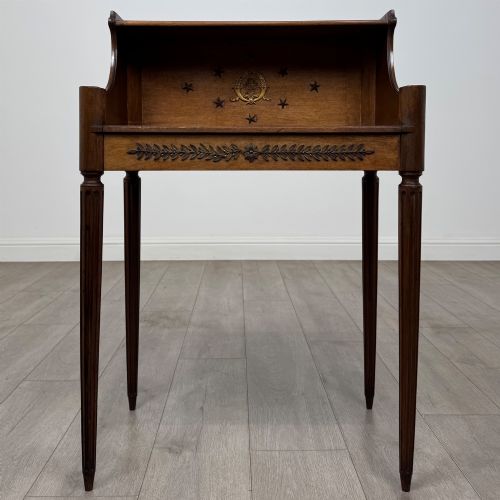
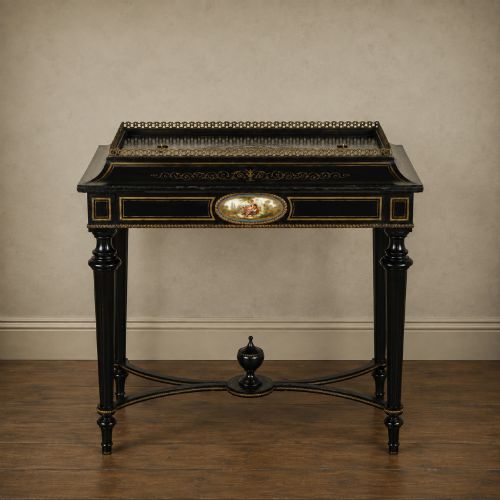
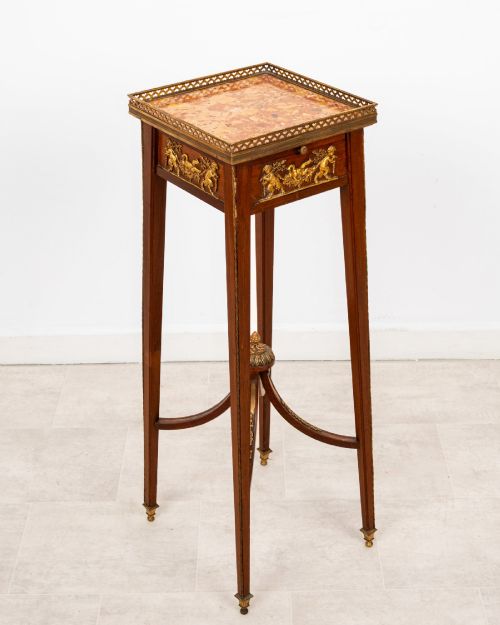

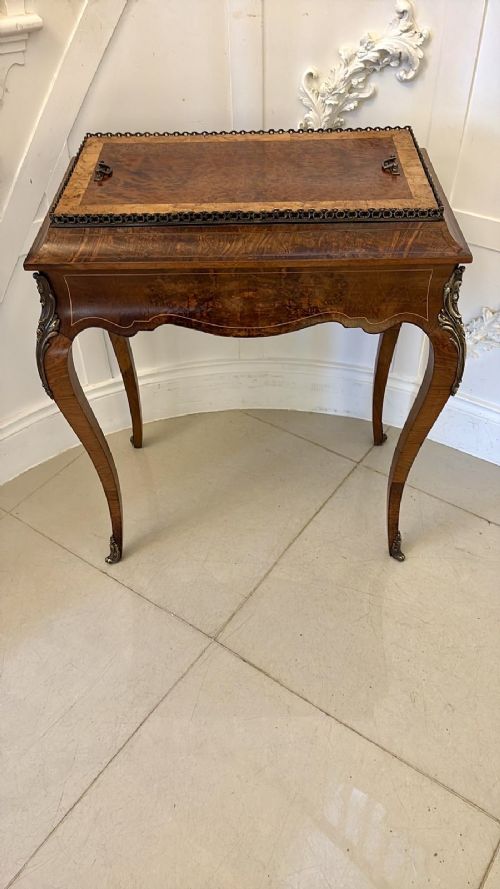


Brass Gallery Plant Stand
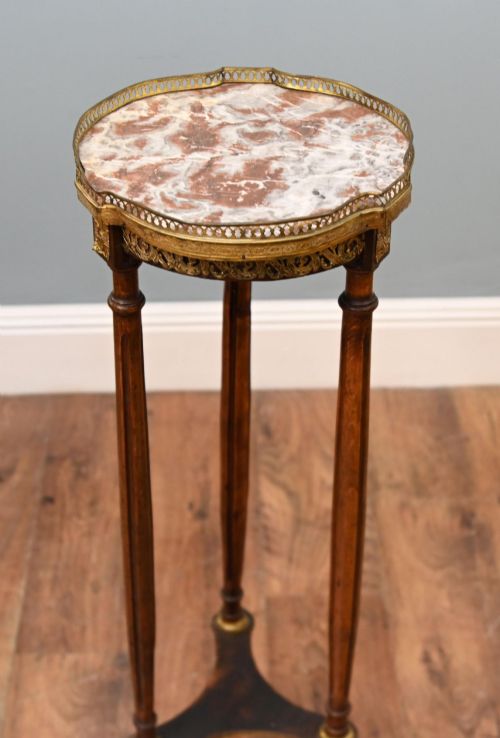
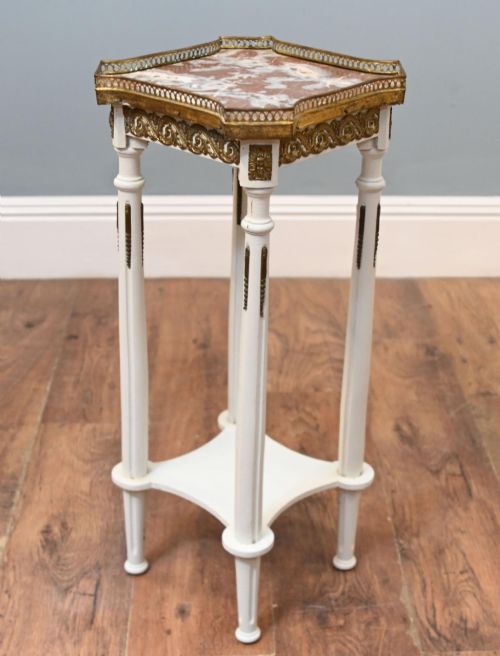
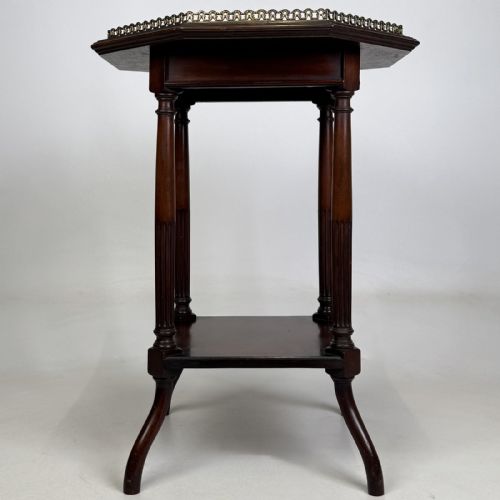
A brass gallery plant stand elevates greenery with a fine metal rail atop mahogany, walnut, or marble surfaces.
Brass Gallery Plant Stand
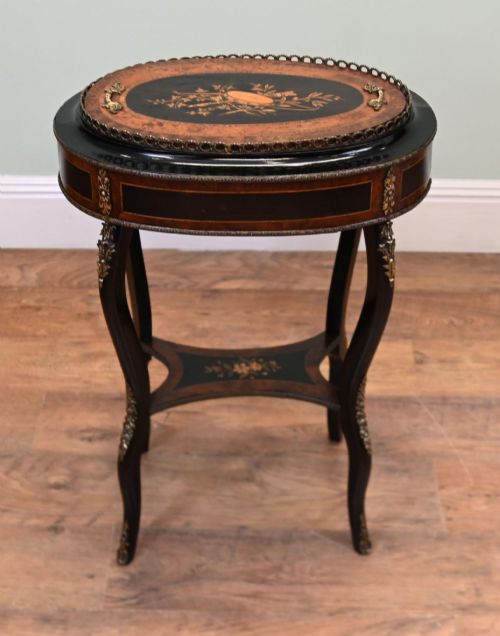
A brass gallery plant stand brings together side tables, etagères, and jardinières designed to display flora or serve as occasional furniture. These pieces appear across Victorian, Edwardian, and early twentieth-century periods with distinct French styling.
The version most commonly met on this page combines a timber frame with a pierced metal rail and stone or wood surfaces. Makers utilised mahogany, walnut, and ebonised wood alongside marble and onyx tops.
Forms range from multi-tiered etagères to circular side tables and dedicated plant holders. Many examples draw on French Neoclassical, Louis XV, and Empire design traditions.
How they were made
Construction relies on quality timbers including mahogany, walnut, kingwood, and satinwood, frequently enhanced with marquetry, parquetry, or brass mounts. Ormolu and gilt metal provide decorative accents on key structural elements.
Tops incorporate inset marble, onyx, or painted porcelain plaques secured within pierced brass galleries. Ebonised wood and intricate inlay techniques demonstrate the varied methods employed by nineteenth and twentieth-century makers.
Brass Gallery Plant Stand Retail Price Guide 2026
Typical asking prices for brass gallery plant stand among the pieces listed under this phrase on Sellingantiques today, from the lower quarter to the upper quarter. They describe what is for sale here now, not the wider market.
Listings feature items from the Victorian, Edwardian, and early twentieth-century periods constructed in mahogany, walnut, and marble.
What varies in quality
The refinement of the brass gallery and the choice of stone or timber determine the standing of each piece. Pierced metalwork shows sharper casting detail on better examples, while tabletops utilise carefully selected marbles and burr veneers.
Joinery and mounting execution separate standard production from finer output. Gilt metal and ormolu mounts integrate smoothly with the underlying mahogany or walnut frames on superior items.
François Linke·Donald Ross
The Brass Gallery Plant Stand Glossary
- Brass gallery
- A low pierced metal railing fitted around the perimeter of a tabletop to prevent items from sliding off. This feature defines many French and English side tables and plant stands.
- Jardinière
- A decorative stand or container specifically designed to hold plants or flowers. These items often include metal liners to protect the surrounding timber structure.
- Étagère
- An open piece of furniture with multiple tiers used for displaying objects or plants. They appear in circular and multi-tiered formats.
- Ormolu
- Gilt bronze mounted onto furniture as decorative enrichment. The technique was widely applied during the eighteenth and nineteenth centuries.
- Marquetry
- The art of applying decorative veneer pieces in geometric or pictorial patterns to a wooden surface. Walnut and mahogany examples frequently display this work.
Brass Gallery Plant Stand: Frequently Asked Questions
What is a brass gallery plant stand used for?
These pieces function primarily as elevated surfaces for potted plants, ferns, or decorative objects within a room.
They also serve as occasional or side tables for lamps and books while adding a decorative element to domestic interiors.
How do I identify the period of a stand?
Dating relies on timber selection, mounting styles, and construction methods characteristic of Victorian, Edwardian, or early twentieth-century workshops.
French stylistic influences such as Louis XV or Empire Revival provide further clues to the approximate date of manufacture.
Are marble and onyx tops original?
Stone inserts are typical for many French and English jardinères and etagères from the nineteenth century onwards.
They provide a durable surface that resists water damage from potted plants placed upon the table.
How should I care for timber and brass?
Regular dusting with a dry cloth keeps the wood and metal surfaces clean without damaging delicate veneers or patinated brass.
Avoid placing damp pots directly onto unlined wooden tops to protect the finish from moisture rings.