





Brass Framed Crystal Pendant
These brass framed crystal pendant lights bring glittering illumination and French or Italian flair to any room.
Brass Framed Crystal Pendant
A brass framed crystal pendant is a hanging ceiling light featuring a metal framework holding glass or crystal elements. When buyers search for brass framed crystal pendant, they look for overhead illumination that catches and refracts light through glass drops and beads.
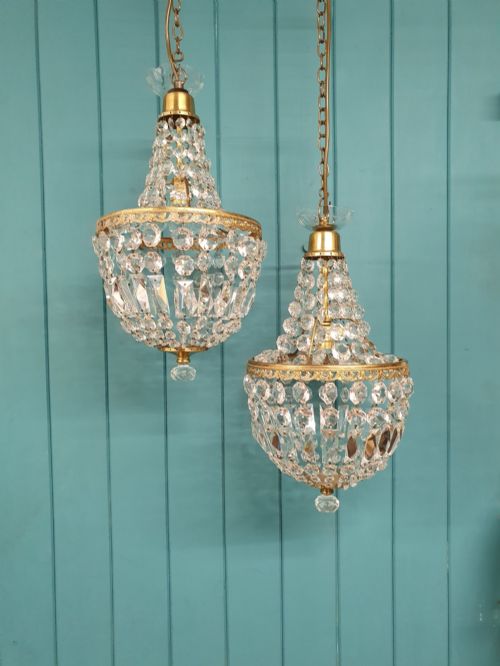
The pieces on this page span from the nineteenth century through the 1930s, encompassing Edwardian, Art Deco, and revival styles. Formats range from single light plafonieres to multi-tiered chandeliers and basket shapes.
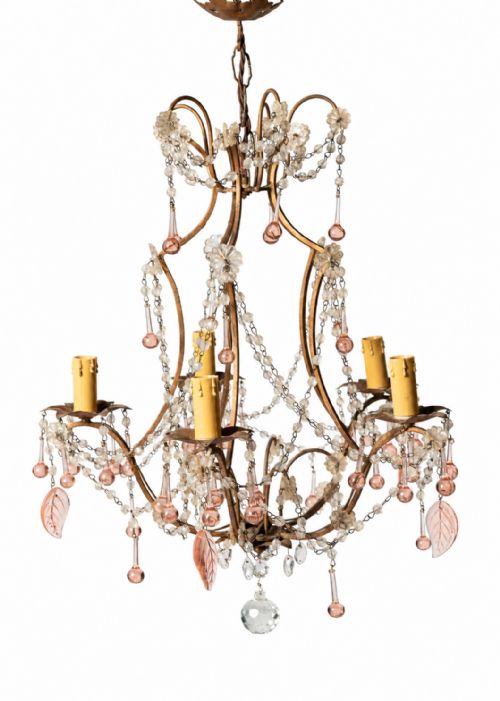
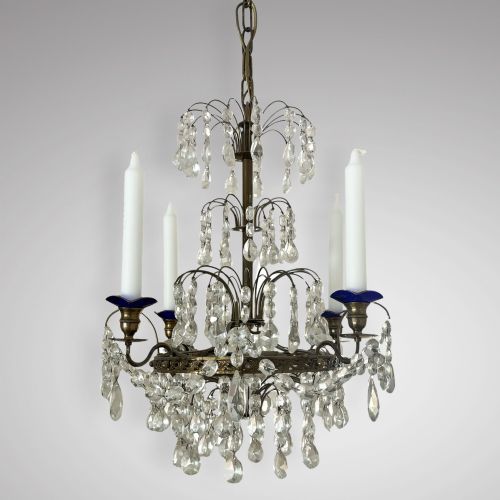
French and Italian designs dominate the selection, often taking the form of cage, birdcage, or waterfall configurations. Buyers frequently encounter pieces featuring gilt metal or dark frames adorned with long prisms and swags.
What varies in quality
The standard of metalwork dictates much of the quality, separating heavy, intricately cast brass and gilt frames from simpler, lighter structures. Heavier frames support more elaborate tiers and larger numbers of lights without bending.
The clarity and cutting of the crystal drops create another distinction across the pieces. Precision cut crystal refracts light with sharper dispersion than standard moulded glass, changing the visual weight of the fixture.
Brass Framed Crystal Pendant Retail Price Guide 2026
Typical asking prices for brass framed crystal pendant among the pieces listed under this phrase on Sellingantiques today, from the lower quarter to the upper quarter. They describe what is for sale here now, not the wider market.
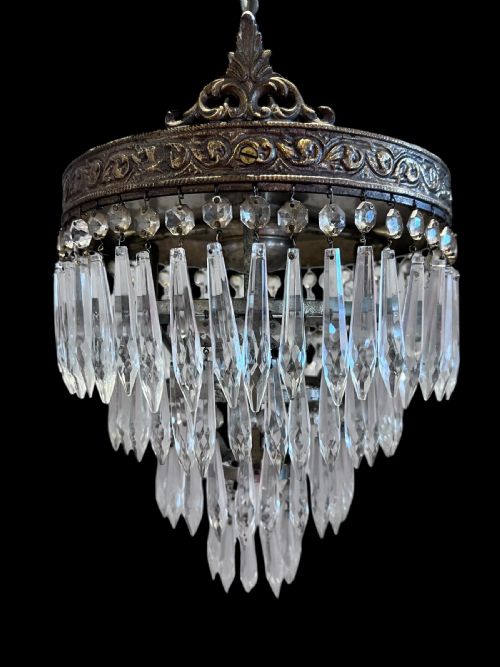
Early twentieth century makers designed seven-tier spike waterfall chandeliers specifically to catch every flicker of candlelight or early electric bulb.
The Brass Framed Crystal Pendant Glossary
- Plafonniere
- A ceiling light fixture that sits relatively flat against the ceiling or hangs closely to it on a short drop. This form suits rooms with lower ceiling heights where a long chandelier would hang too low.
- Cage chandelier
- A lighting fixture featuring a metal skeletal frame shaped like a birdcage, enclosed or draped entirely with glass beads and prisms. The frame shape gives the pendant its distinct rounded silhouette.
- Waterfall chandelier
- A multi-tiered lighting design where glass prisms cascade downward in overlapping layers resembling falling water. This style creates a dense sheet of reflective glass elements.
- Cut crystal
- Glass that has been hand or machine cut with facets to enhance its light-refracting properties. It differs from plain moulded glass by offering sharper edges and higher brilliance.
- Swag
- A draped garland of crystal beads or drops suspended between two points on the frame. Swags add a decorative swagged border to the profile of the light.
Brass Framed Crystal Pendant: Frequently Asked Questions
How do I hang a heavy brass and crystal pendant?
These fixtures require secure installation into a ceiling joist or a heavy-duty electrical box capable of supporting the weight of the metal frame and glass components.
Professional electrical installation is strongly recommended, particularly for larger multi-tier chandeliers and cage designs that carry substantial weight.
What rooms suit a waterfall crystal chandelier?
Waterfall and multi-tiered fixtures work well in spaces with adequate vertical clearance, such as living rooms, dining areas, or grand stairwells.
Smaller single light plafonieres and compact basket lights fit lower ceilings or entrance halls where space is restricted.
How do I clean a crystal pendant light?
Cleaning involves wiping individual crystal drops and the brass frame with a mild solution of warm water and a gentle cleaning agent while the fixture hangs.
For thorough cleaning, delicate prisms can be removed one by one, washed carefully, and reattached to the metal frame.
How can I tell an Edwardian pendant from a 1930s piece?
Edwardian and early twentieth century fixtures often incorporate ornate brass work and delicate crystal swags reflecting traditional French styling.
Pieces from the 1930s frequently align with Art Deco aesthetics, featuring bolder geometric metal frames and streamlined waterfall drop arrangements.