





Brass Footed Log Bucket
These brass footed log buckets bring heavy metal fireside utility into the hearth, offering a practical store for winter fuel.
Brass Footed Log Bucket
When you search for brass footed log buckets, you encounter hearth accessories designed to hold wood and coal near the fire. These pieces span the Regency, Victorian, and Edwardian periods, stretching from the mid-nineteenth century into the early twentieth century.
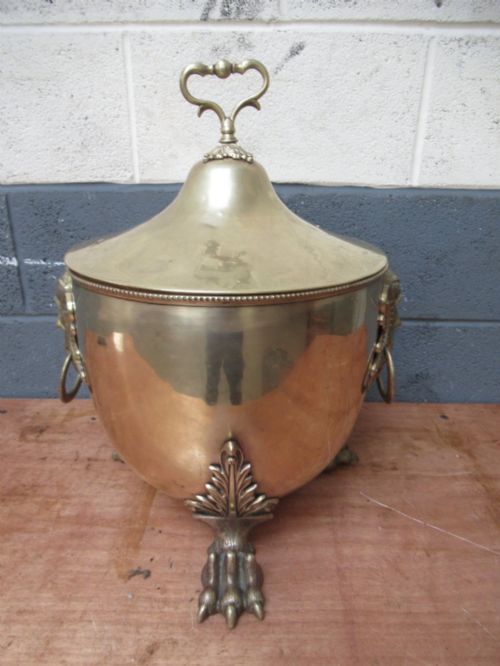
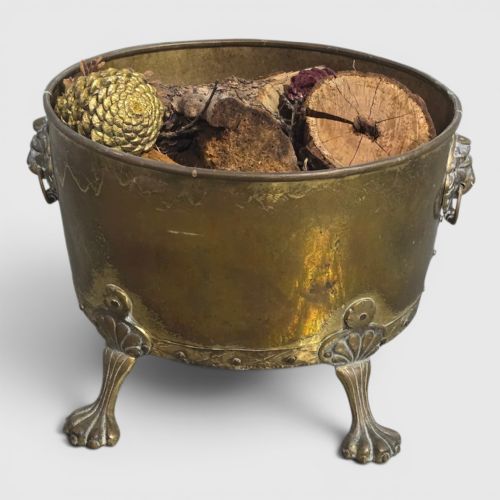
You will most frequently meet cylindrical bins, coal scuttles, and cauldrons fashioned for domestic firesides. The forms range from plain metal bowls to lidded bins with specific decorative handles.
Country house and rustic farmhouse styles appear alongside neoclassical revival patterns, showing how different homes housed their fuel. Makers utilised brass and copper extensively, often mounting vessels on distinct feet for hearth clearance.
How they were made
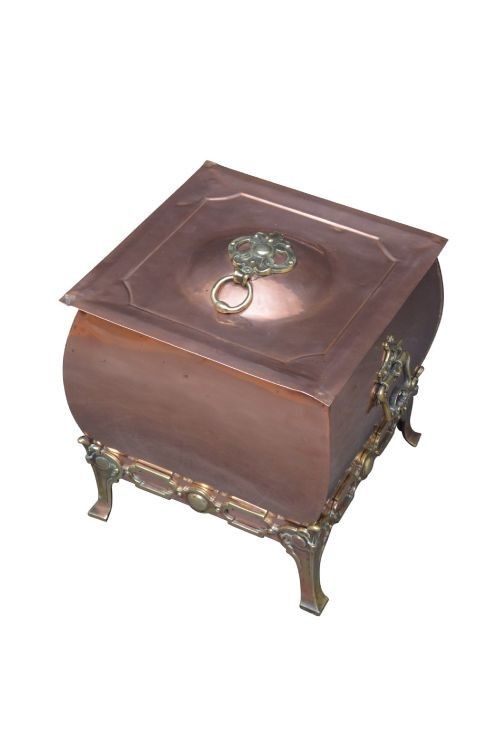
The primary construction relies on hammered or smooth sheet metal, combining brass and copper with iron fittings. Artisans formed bodies from rolled plates, securing joints with visible rivets.
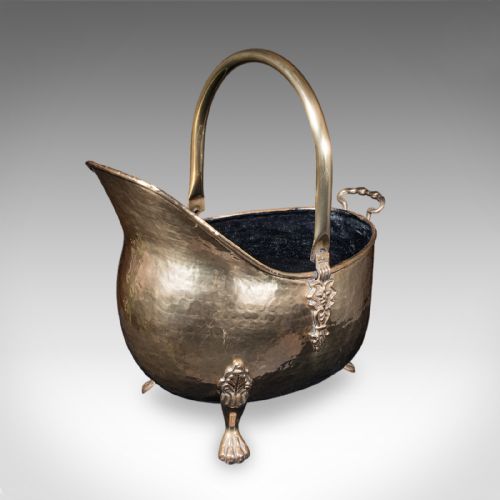
Some examples feature handbeaten surfaces where individual hammer marks remain visible across the metal body. Details such as ebony handles and cast bronze feet provide structural contrast to the main brass and copper vessels.
Brass Footed Log Bucket Retail Price Guide 2026
Typical asking prices for brass footed log bucket among the pieces listed under this phrase on Sellingantiques today, from the lower quarter to the upper quarter. They describe what is for sale here now, not the wider market.
Listings for brass footed log buckets feature items from the Victorian, Edwardian, and Regency periods, constructed from brass, copper, and iron.
What varies in quality
The weight of the metal and the robustness of the handles dictate the substance of the piece. Thicker gauge brass and solid riveted construction distinguish heavier vessels from lighter decorative bowls.
Finishes range from plain polished metal to handbeaten textures that show deliberate artisan effort. The presence of original cast feet and secure mounts separates standard utility bins from more finished fireside containers.
William Soutter And Sons
The Brass Footed Log Bucket Glossary
- Coal scuttle
- A container designed for carrying and storing coal by the fireplace, often featuring a hinged lid and a carrying handle. These vessels frequently use brass or copper bodies.
- Jardiniere
- An ornamental pot or stand for holding plants or flowers, sometimes repurposed as a log bin by fireside owners. They share similar metal construction with coal buckets.
- Regency
- A style period spanning the early nineteenth century characterised by neoclassical influences and restrained ornamentation. Pieces from this era often display clean lines.
- Handbeaten
- A surface technique where metalworkers shape the vessel using hammers, leaving distinct surface marks. This method adds texture to copper and brass bodies.
- Cauldron
- A large metal pot with a rounded base and carrying handles, historically used for boiling but found in firesides as fuel storage. These heavy vessels typically sit on raised feet.
Brass Footed Log Bucket: Frequently Asked Questions
How do I clean a brass log bucket?
Use a soft cloth to remove dust and light debris from the interior and exterior surfaces. Avoid harsh chemical cleaners that strip the aged patina from the metal.
For polished brass sections, apply a mild metal polish sparingly with a clean cloth. Wipe away any residue immediately to prevent spotting on the copper or brass.
Can these buckets hold wet logs?
Most historic metal bins accommodated seasoned dry firewood rather than damp logs. Moisture combined with residual coal dust can accelerate internal corrosion.
Lining the base with a protective mat helps preserve the original metal interior. Ensure wood is dry before placing it inside any antique vessel.
How do I date a Victorian brass bucket?
Examine the construction methods, such as the type of rivets and handle mounts used on the body. Mid-nineteenth-century pieces often feature handbeaten copper with heavy brass fittings.
Later Victorian and Edwardian examples tend to show more standardised machine rolling and simpler joining techniques. Review the overall design style against known period forms.
Where should I place a log bucket?
Position the bucket directly beside the fireplace or hearth for convenient access to fuel. The raised feet keep the metal base elevated above floor drafts and carpets.
Ensure there is enough clearance from excessive direct heat to protect any wooden or ebony handles. These pieces function as both practical fuel stores and decorative fireside focal points.