





Brass Footed Bucket
A brass footed bucket brings useful metalwork and rich warmth to a hearth or corner, spanning styles from Regency grace to Victorian utility.
Brass Footed Bucket
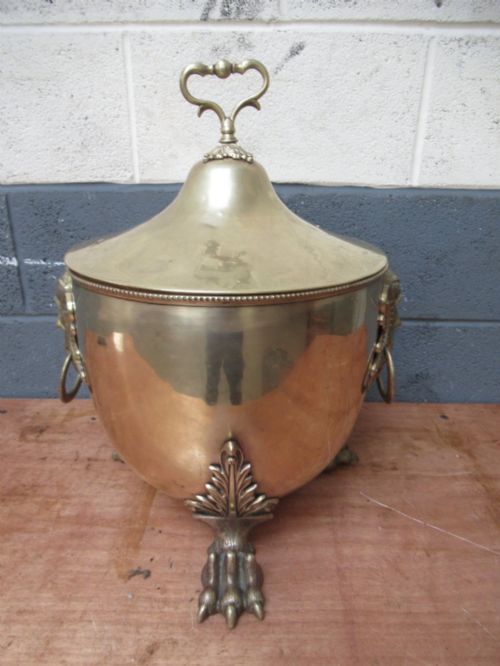
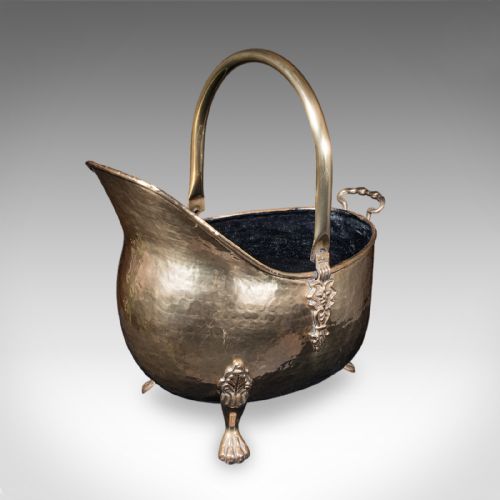
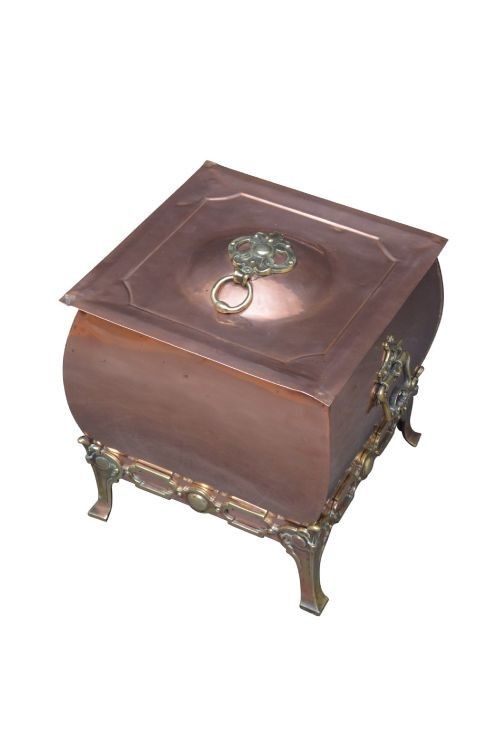
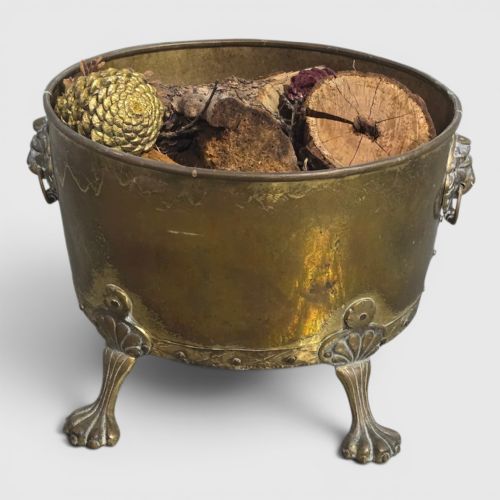
When you search for a brass footed bucket, you encounter heavy metal vessels designed primarily for fireside use or container display. These pieces range from coal scuttles and log bins to copper cauldrons and jardiniere planters.
The selections on this page draw from 18th Century, Regency, Georgian, Victorian, and Edwardian periods. Alongside solid brass, you will find combinations of copper, mahogany, walnut, and bronze.
Form follows function across these items, with sturdy bases supporting large cylindrical or oval bodies. They serve equally well holding firewood beside a grate or displaying plants in a living space.
Materials and construction
Construction relies heavily on sheet metals such as brass and copper, frequently shaped by handbeating or riveting. Makers joined seams securely to contain heavy loads of coal, logs, or earth.
Wooden elements appear in coopered mahogany and walnut bodies, often bound with metal hoops or supported by distinct feet. Bronzed metal and iron also feature in the broader mix of surviving vessels.
Brass Footed Bucket Retail Price Guide 2026
Typical asking prices for brass footed bucket among the pieces listed under this phrase on Sellingantiques today, from the lower quarter to the upper quarter. They describe what is for sale here now, not the wider market.
The listings on this page span the 18th Century, Regency, Georgian, Victorian, and Edwardian eras, utilising brass, copper, mahogany, and bronze.
Judging quality
Quality rests in the weight of the metal and the integrity of the joins. Handbeaten surfaces and secure riveting distinguish superior domestic metalwork from lighter, plain productions.
The refinement of the feet and handles dictates the character of the piece. Crisp detailing on Regency and Victorian examples elevates utilitarian coal bins into decorative furnishings.
William Soutter & Sons
The Brass Footed Bucket Glossary
- Coopered
- Constructed from wooden staves joined together side by side, much like a barrel, often seen in mahogany planters.
- Jardiniere
- An ornamental pot or stand for holding plants or flowers, frequently rendered in brass or copper.
- Coal scuttle
- A bucket or box specifically designed for holding coal near a fireplace, typically featuring a handle for carrying.
- Cellarette
- A lockable container used for holding bottles of wine, sometimes taking the form of a heavily mounted bucket on a stand.
Brass Footed Bucket: Frequently Asked Questions
What were these buckets used for originally?
These vessels primarily served domestic functions around the hearth, storing coal or holding firewood close to the fire. Many also doubled as wine coolers or decorative plant containers.
Over time, their robust construction made them adaptable for varied household uses, moving between practical storage and interior decoration.
How do I live with a brass bucket?
A brass footed bucket fits easily beside a fireplace as a functional log bin or coal store. Alternatively, placing one in a hallway or reception room creates an immediate focal point.
They also function well as planters for large houseplants, adding metallic contrast to green foliage.
How do I date a brass bucket?
Dating relies on observing stylistic markers, materials, and construction techniques like handbeating versus machine pressing. Regency and Georgian pieces often display classical proportions, while Victorian items lean toward heavier ornamentation.
Changes in metal thickness and handle attachments also provide clues to the era of manufacture.
What is the difference between a coal scuttle and a log bin?
Coal scuttles generally feature specific handle arrangements and shallower mouths designed for scooping or tipping fuel. Log bins tend to be deeper, wider cylinders built to hold bulky pieces of wood.
Both forms utilise durable metals or coopered wood to withstand heavy daily use.