




Brass Flush Mount Light
A brass flush mount light brings low-profile elegance to a ceiling, combining metalwork and glass to illuminate a room with classic proportion.
Brass Flush Mount Light
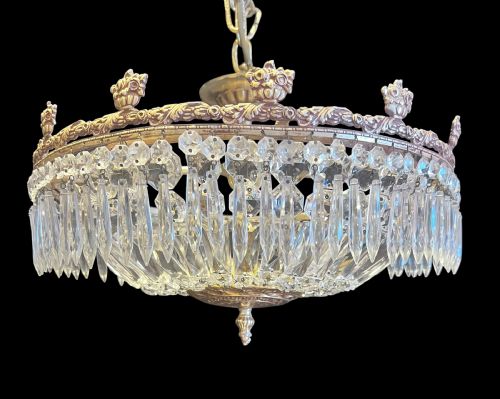
When you search for a brass flush mount light, you encounter compact ceiling fixtures, wall lights, and small chandeliers designed to sit close to the architectural surface. The examples listed here span the nineteenth century, the Edwardian era, and the nineteen-twenties and thirties, drawing heavily upon French design traditions.
French styles dominate the available forms, encompassing Neoclassical, Empire, Louis XVI, and Beaux-Arts influences alongside geometric Art Deco interpretations. Buyers encounter compact wall sconces and ceiling fixtures that suit spaces requiring restrained yet decorative lighting.
Materials and construction
Makers utilised brass, gilt brass, gilt bronze, and ormolu for the structural mounts and frames, often shaping the metal through casting and chasing. These metallic elements support glass components including cut glass, crystal, and moulded panels.
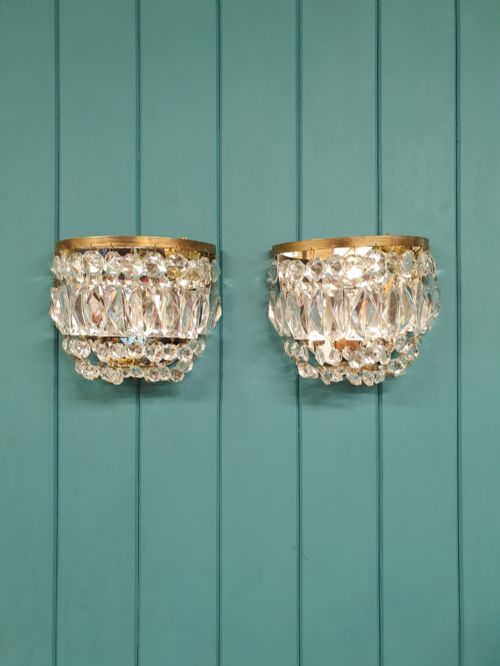
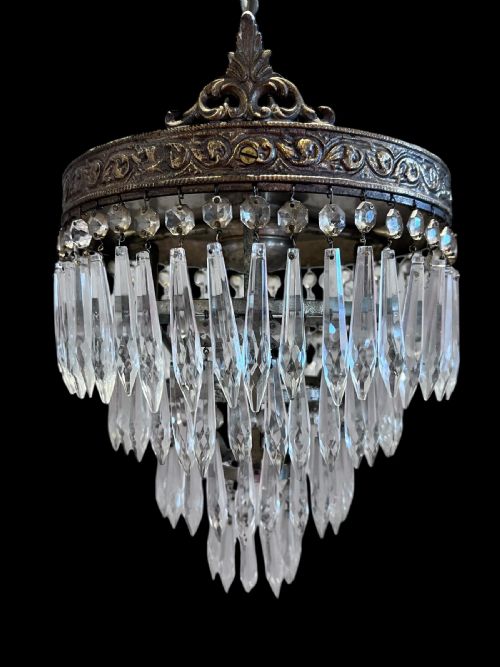
Prisms, beads, and drops of crystal glass are wired or pinned to the metal frameworks to refract the light. The combination of polished metal and faceted glass defines the visual weight and reflective quality of each fitting.
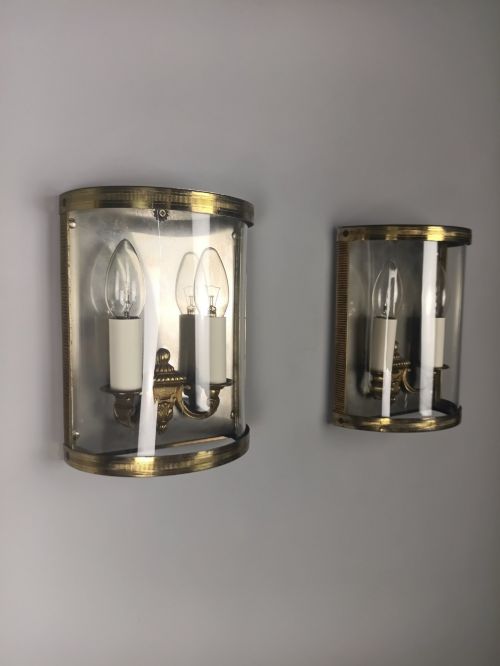
Some Edwardian wall lights carry the curious historical label of prison bag lights, bringing unexpected institutional grit to domestic interiors.
Assessing the execution
The distinction between tiers rests upon the crispness of the metalwork and the clarity of the glass. Finer examples display deeply chased gilt bronze or ormolu mounts with sharp botanical or classical motifs, whereas simpler items utilise plain spun brass.
Glass quality separates standard production from superior pieces through the depth of the hand-cutting and the brilliance of the crystal. Heavier, hand-cut beads and accurately faceted drops refract light more uniformly than moulded glass alternatives.
The Brass Flush Mount Light Glossary
- Plafoniere
- A shallow ceiling light or bowl fixture mounted directly against the ceiling. These pieces often feature decorative metal rims holding glass shades.
- Ormolu
- Finely chased and gilt bronze used for decorative mounts on lighting fixtures. The technique involves applying a gold amalgam to a bronze base.
- Cut glass
- Glass decorated by grinding facets or patterns into the surface using a wheel. This process enhances the refractive properties of crystal fittings.
- Beaux-Arts
- An ornate classical architectural and decorative style taught at the Ecole des Beaux-Arts in Paris. It influences many grand French lighting designs.
Brass Flush Mount Light: Frequently Asked Questions
How do I choose the right size?
Consider the ceiling height and room dimensions to ensure the fixture maintains proper proportion. Compact plafonieres and small lanterns suit lower ceilings where hanging chandeliers prove impractical.
Measure the diameter of the fitting against the floor space to avoid overwhelming a modest room or disappearing in a larger space.
Are these lights suitable for low ceilings?
Flush mounts and close-ceiling fixtures are specifically designed for rooms with restricted vertical clearance. They provide decorative illumination without intruding into the walking space below.
Styles such as plafonieres and half lanterns hug the architectural surface while delivering dispersed ambient light.
How do I date an antique brass light?
Examine the construction methods, mounting screws, and wiring channels to determine the period of manufacture. Hand-cut glass and chased ormolu mounts typically point towards nineteenth-century or early twentieth-century French workshops.
Stylistic cues such as Edwardian restraint or Art Deco geometry further help narrow the decade of production.
Can modern bulbs be used?
Most antique fixtures accommodate contemporary low-wattage bulbs or LED equivalents with standard fittings. Electricians can easily adapt older internal wiring to meet current safety standards while preserving the original metal and glass components.
Ensure the bulb wattage matches the thermal tolerances of the enclosed glass shade or bowl.