



Brass Flower Cachepot
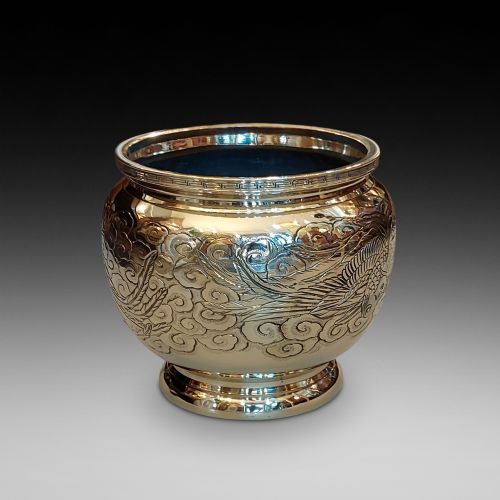
These brass flower cachepot pieces are decorative plant vessels built to hold indoor pots, offering a gleam of polished metal and rich historical character for the room.
Brass Flower Cachepot
A brass flower cachepot serves primarily as an ornamental container designed to house potted plants inside the home. Buyers seeking a brass flower cachepot will encounter various forms, including traditional jardinieres, standalone plant stands, and low bowls.
The pieces appearing on this page span several distinct periods, notably the Victorian era, the Edwardian period, and the turn of the twentieth century. Common stylistic influences range from British Arts and Crafts and continental Art Nouveau to Japanese Meiji metalwork and French revival designs.
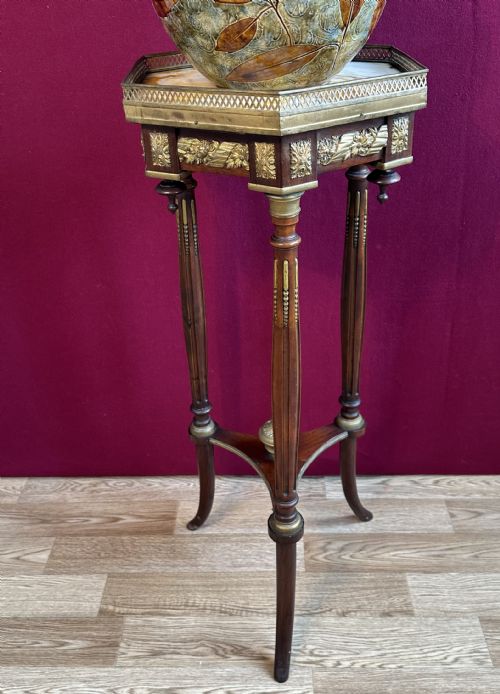
Most items take the form of round or square vessels made to sit upon tables or dedicated stands. Certain examples arrive complete with matching original stands, while others feature decorative handles such as lion masks.
Materials and construction
Metalworking techniques for these pieces rely heavily upon solid brass, copper, and bronze. Artisans shaped these metals through hand-beating, spinning, and casting to achieve both smooth polished surfaces and textured, organic forms.
Makers incorporated contrasting elements such as mahogany and marble in certain plant stands to support the heavy metal bowls. Surface finishes vary from bright polished brass to patinated copper and dark bronze.
Brass Flower Cachepot Retail Price Guide 2026
Typical asking prices for brass flower cachepot among the pieces listed under this phrase on Sellingantiques today, from the lower quarter to the upper quarter. They describe what is for sale here now, not the wider market.
Several heavy vessels arrive equipped with fierce lion mask handles, ready to guard your ferns from unwelcome drafts.
Assessing quality and execution
The distinction between standard vessels and superior examples rests upon the weight of the metal and the crispness of the chased or embossed details. Thicker gauge brass and substantial bronze bowls retain their structural integrity and resist denting.
Artistic execution sets individual works apart, particularly within Art Nouveau and Arts and Crafts pieces where stylized motifs and applied handles show deliberate hand craftsmanship. Maker attributions, such as marked pieces by known firms, also elevate the standing of a vessel.
J Sankey and Sons
The Brass Flower Cachepot Glossary
- Cachepot
- A decorative container used to hide an ordinary flowerpot. The word derives from the French for hiding a pot.
- Jardiniere
- An ornamental pot or stand for plants or flowers. These large vessels often feature prominent handles or decorative feet.
- Art Nouveau
- A style of decorative art characterised by flowing, organic lines. This aesthetic strongly influences many turn-of-the-century planters.
- Meiji
- A period in Japanese history spanning from 1868 to 1912. Metalwork from this era often exhibits fine bronze and brass casting.
Brass Flower Cachepot: Frequently Asked Questions
What is a brass flower cachepot used for?
These vessels house potted plants indoors to conceal utilitarian nursery pots. They protect furniture surfaces while adding a decorative metallic accent to domestic interiors.
Historically, they sat upon heavy tables, pedestals, or dedicated stands within Victorian and Edwardian parlours and drawing rooms.
How do I clean a brass flower cachepot?
Cleaning depends upon the desired appearance and the presence of historic patina. Gentle dusting and wiping with a soft dry cloth preserve darker aged surfaces.
Polishing brass requires a suitable metal cleaner applied sparingly to avoid damaging chased details or dark recessed areas.
Are these pots waterproof?
Many older metal vessels feature soldered seams that may weaken over long periods of exposure to stagnant moisture. Inserting a modern plastic liner inside the metal container prevents water damage.
Checking the interior for leaks before placing the vessel on polished wood furniture remains a sensible precaution.
How do I date a brass planter?
Dating relies upon stylistic markers, construction methods, and material choices. Art Nouveau examples typically display fluid organic plant motifs characteristic of the year 1900.
Victorian and Edwardian pieces often incorporate heavy cast brass, lion mask handles, or specific manufacturing stamps on the base.