




Brass Flintlock
When you search for brass flintlock, you encounter historic ignition-era firearms defined by metal barrels, wooden stocks, and mechanical striking systems designed for military, naval, and civilian use.
Brass Flintlock
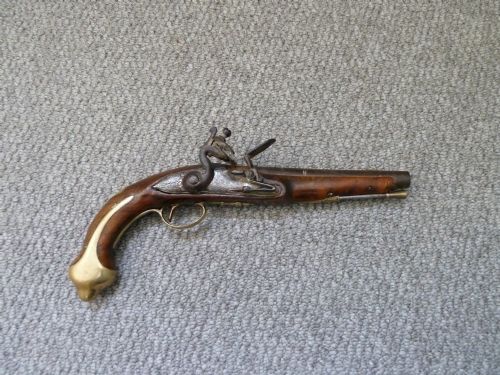
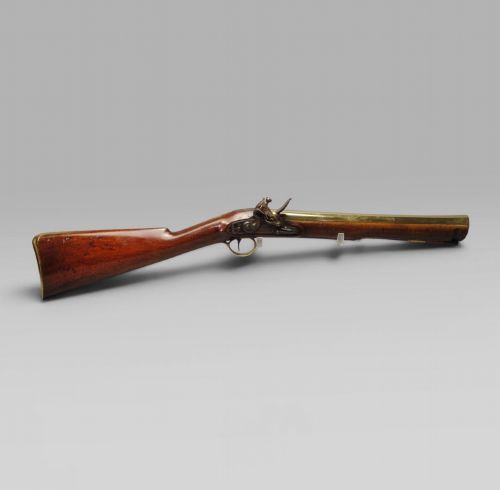
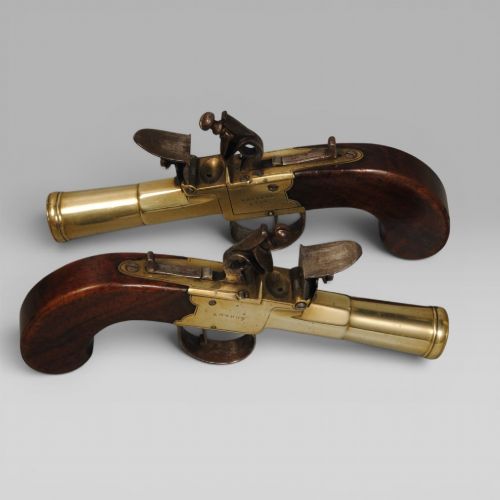
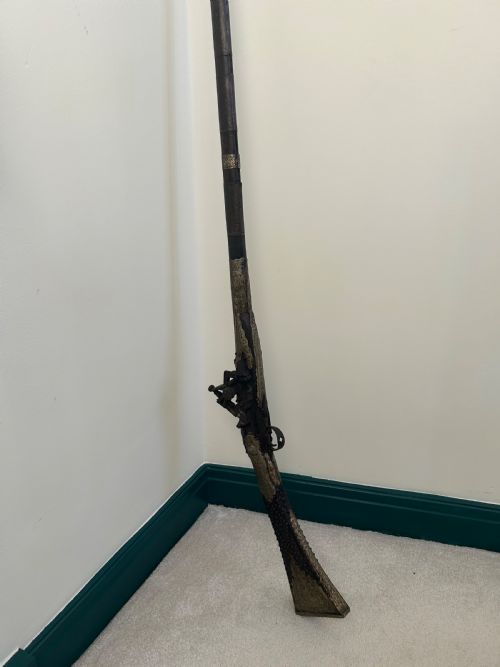
Brass flintlock arms encompass a diverse category of antique weaponry, ranging from heavy dragoon and holster pistols to large-bore blunderbusses and long-barrelled muskets. Buyers seeking these items will frequently encounter 18th-century and Georgian specimens, alongside regional variations from the Ottoman Empire and the Balkans.
The material combination typically centres on cast brass barrels or furniture paired with walnut or native wood stocks, often enhanced with iron and steel lock mechanisms. Domestic British service pieces from makers in London and Birmingham sit alongside continental European military issues and tribal arms from Afghan and North African origins.
How they were made
Gunsmiths constructed these arms by casting brass for barrels and mounts, utilising iron and steel for internal lock components such as the frizzen, cock, and spring. Wooden stocks, predominantly shaped from walnut or dense local timbers, were channelled by hand to receive the barrel and tang.
Decoration relied upon metal engraving, silver inlay, and the application of bone or mother-of-pearl panels into the stock. Mechanisms required precise metalworking to ensure the flint struck the steel surface reliably, producing the sparks necessary to ignite the black powder charge.
Brass Flintlock Retail Price Guide 2026
Typical asking prices for brass flintlock among the pieces listed under this phrase on Sellingantiques today, from the lower quarter to the upper quarter. They describe what is for sale here now, not the wider market.
Listings feature 18th-century and 19th-century specimens combining brass, steel, walnut, and mother-of-pearl across European and Ottoman forms.
What varies in quality
The standard of a piece is determined by the crispness of maker signatures on the lock plate and the depth and clarity of barrel proof marks. Refined filing of metal components and the symmetry of wood carving distinguish provincial utility pieces from workshop output produced for officers or export.
Originality of components dictates value within this category, particularly where brass mounts, trigger guards, and ramrods remain unaltered from the period of manufacture. Surviving surface patination and the integrity of the flintlock action further separate standard service issues from exhibition-grade arms.
Harrison of London·Henry Nock·La Motte·Sargant and Son·H.W. Mortimer and Son·Thomas Henshaw·I Parr·John Rimes·J Robinson
The Brass Flintlock Glossary
- Flintlock
- A firearm ignition mechanism that uses a piece of flint held in a cock to strike a steel frizzen, creating sparks to ignite the priming powder. This system dominated military and civilian arms from the seventeenth through the early nineteenth century.
- Blunderbuss
- A muzzle-loading firearm with a flared barrel designed to scatter shot at close range. These weapons were widely utilised by coach guards and naval personnel.
- Miquelet
- A form of snaplock ignition featuring an external mainspring and a combined steel and battery face. It is commonly found on firearms originating from Spain, Italy, North Africa, and the Ottoman Empire.
- Turn-off pistol
- A firearm featuring a barrel that unscrews from the breech to facilitate loading. This design allows the bullet to be loaded directly into the chamber without a ramrod.
- Rat-tail
- A distinctive swelling or elongated spine on the back of a pistol lock plate, typical of certain eighteenth-century Balkan and Ottoman firearms. The feature provides additional structural reinforcement around the pan bolt.
Brass Flintlock: Frequently Asked Questions
What is a brass flintlock?
A brass flintlock is a historic firearm utilising a flint-striking ignition system housed within a metal frame featuring a brass barrel or brass furniture. These pieces span military service arms, private duelling pistols, and regional carbines.
Most examples date from the eighteenth and early nineteenth centuries, reflecting the period when brass was favoured for its resistance to marine corrosion and its decorative potential.
How were these pistols used?
These arms served primarily for personal defence, military combat, and law enforcement duties such as mail coach protection. Shorter barrelled overcoat and pocket versions suited civilian travellers.
Larger holster and dragoon pistols were issued to cavalry units, while blunderbusses guarded coaches and ship decks against multiple assailants.
How do I care for a brass flintlock?
Preservation requires storing the firearm in a stable, dry environment to protect the wooden stock from splitting and the iron mechanism from active corrosion. Metal surfaces benefit from light applications of specialist museum-grade wax or oil.
Avoid aggressive polishing of brass components, as preserving the natural historic patina maintains the integrity and visual character of the antique.
How do I identify the period?
Dating relies on examining proof marks, lock plate engraving styles, and the overall architecture of the stock and brass mounts. Maker signatures and crown stamps often tie specific pieces to military contracts or documented workshop active dates.
Stylistic shifts, such as the transition from flat lock plates to curved forms, help narrow the manufacture window between the seventeenth and nineteenth centuries.