



Brass Fitting Mirror
A brass fitting mirror brings functional glass and durable metalwork together into furniture and lighting, offering practical reflection alongside period craftsmanship.
Brass Fitting Mirror
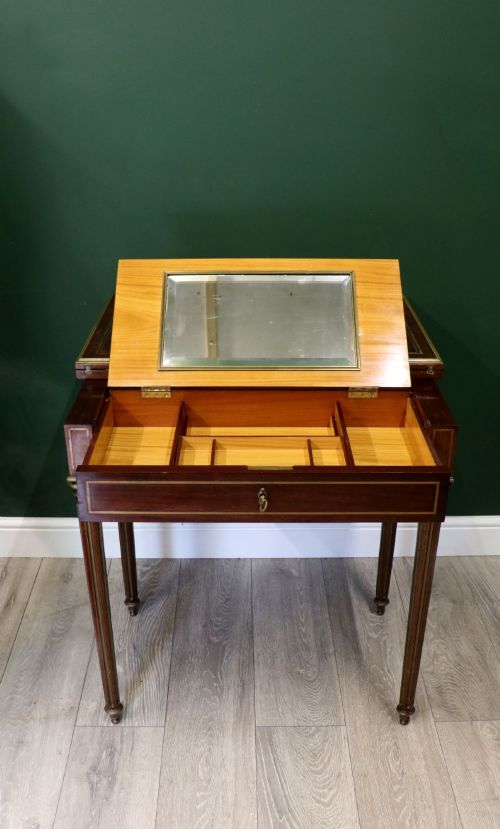
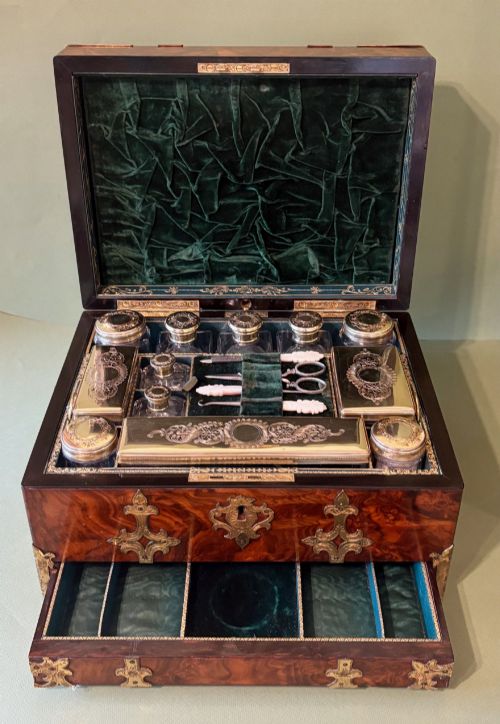
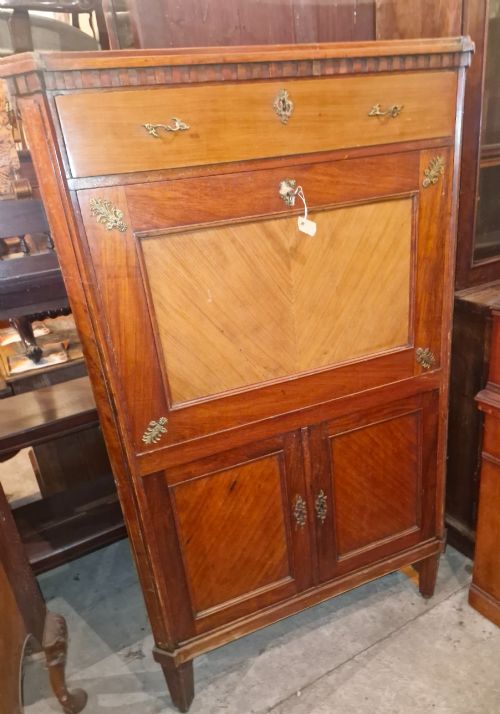
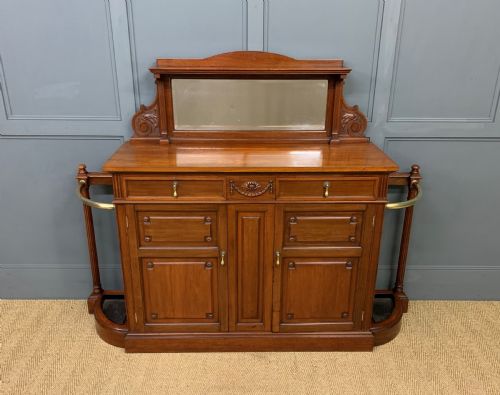
A brass fitting mirror appears across several forms on this page, including campaign dressing chests, shield mirrors, hall cupboards, and dressing cases. These objects span the Georgian, Victorian, Edwardian, and Art Deco periods, showing how metal mounts and frames secure reflective glass in daily use.
The objects listed incorporate brass fittings into larger pieces of furniture and lighting rather than existing solely as wall-hung looking glasses. Mahogany and walnut provide the primary wooden structures for cases and cabinets, while specialised items range from pendant lights to drinks cabinets.
Victorian and late 19th-century examples dominate the current selection, often combining solid hardwoods with cast or beaten metalwork. Buyers encounter both domestic furniture fitted with utilitarian brass hardware and decorative hanging items designed to catch and reflect light.
Materials and construction
Makers utilised dense timbers such as mahogany and walnut to build the foundational carcasses of dressing cases, armoires, and hall cupboards. These woods offer stability and a smooth grain suitable for polished surfaces and inlaid details.
Metal components, specifically brass and copper, are fastened to the timber frames as hinges, locks, hanging loops, and decorative mounts. Mercury mirrored glass provides the reflective surface in pendant lights and display interiors, creating depth through traditional silvering techniques.
Brass Fitting Mirror Retail Price Guide 2026
Typical asking prices for brass fitting mirror among the pieces listed under this phrase on Sellingantiques today, from the lower quarter to the upper quarter. They describe what is for sale here now, not the wider market.
Current listings feature items from the 1860s to the 1920s, combining brass, glass, mahogany, walnut, silver, and velvet.
Assessing quality and execution
The standard of a brass fitting mirror depends on the precision of the metal hardware integration and the choice of primary timber. Heavier cast brass mounts and solid mahogany construction signal higher workshop standards than thin plated metals applied to secondary veneers.
Design cohesion also separates the items, where custom-cast fittings complement the grain of the surrounding walnut or mahogany. Pieces that retain their original mercury glass and functional brass mechanisms demonstrate greater structural integrity.
Shoolbred and Co·John Lilley and Son London
The Brass Fitting Mirror Glossary
- Campaign dressing chest
- A portable set of drawers fitted with brass corners and recessed handles designed for travel. These items allowed officers to transport personal grooming equipment securely.
- Mercury mirrored glass
- A type of reflective glass produced by pouring a liquid tin-mercury amalgam behind the glass plate. This method yields a deep, slightly cloudy reflection distinct from modern aluminium backing.
- Shield mirror
- A looking glass framed in the shape of an upright shield, frequently mounted on a pivoting stand or wooden backboard. They appeared commonly on dressing tables during the Georgian and Victorian eras.
- Artificial horizon
- A navigational instrument utilising a reflective surface, such as black glass, to determine latitude and longitude by measuring the angle of stars. These sets rely on precise brass and glass construction for accuracy.
- Pendant light
- A hanging light fixture suspended from the ceiling by a chain, cord, or metal rod. In historical examples, brass fittings secure the glass shades and electrical or gas components.
Brass Fitting Mirror: Frequently Asked Questions
What periods do these pieces date from?
The selection spans from the Georgian era through the Victorian period and into the early twentieth century, including Edwardian and Art Deco examples.
Specific dates depend on the object type, with campaign furniture and shield mirrors leaning towards the eighteenth and nineteenth centuries.
How were these mirrors used?
Mirrors with brass fittings served practical functions in domestic interiors, travel equipment, and scientific instruments. They aided personal grooming in dressing cases, reflected light in pendant fixtures, and assisted navigation in artificial horizon sets.
Many items combined storage with reflection, integrating looking glasses into hall cupboards and cabinets.
Are the brass fittings original?
Many items retain their period brass handles, hinges, and mounts, which show appropriate signs of age and wear. The consistency of the metalwork relative to the timber helps indicate whether components remain as the maker intended.
Detailed examination of screw types and mounting marks reveals the history of the hardware.