
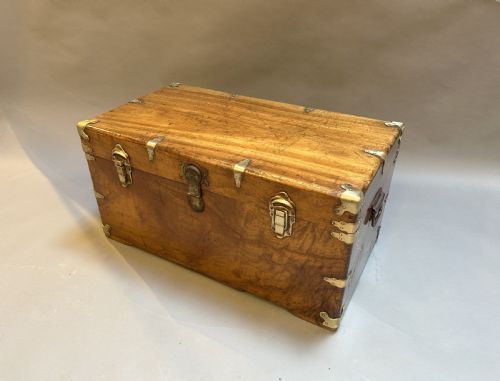
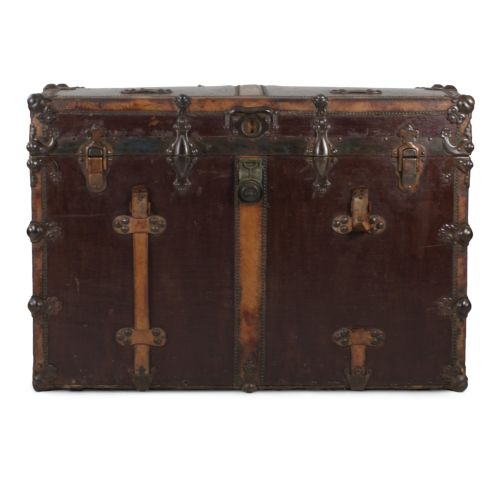
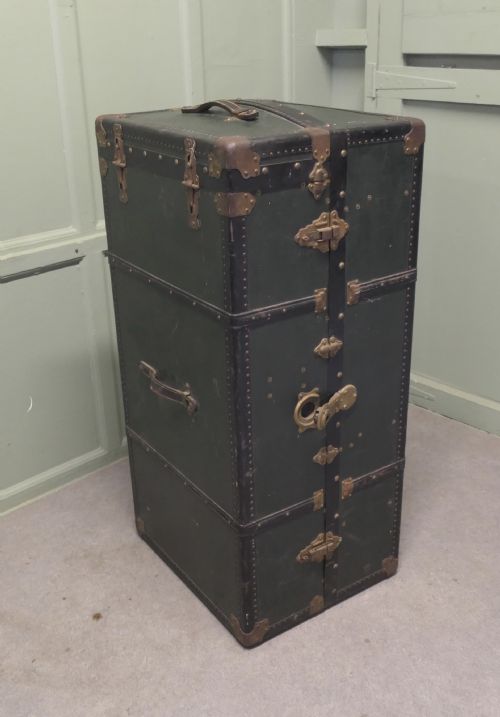
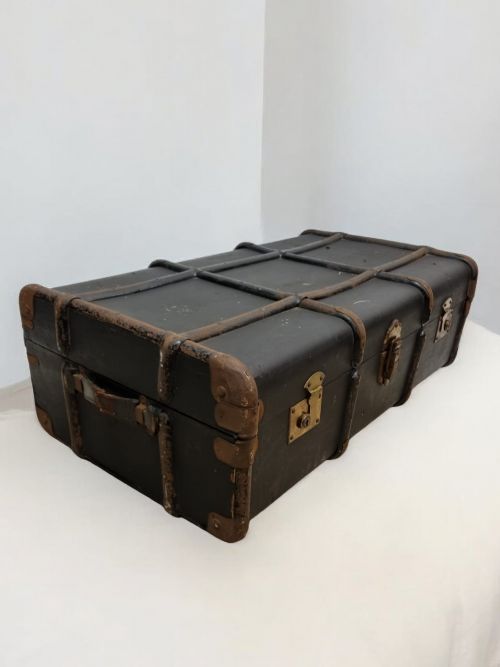
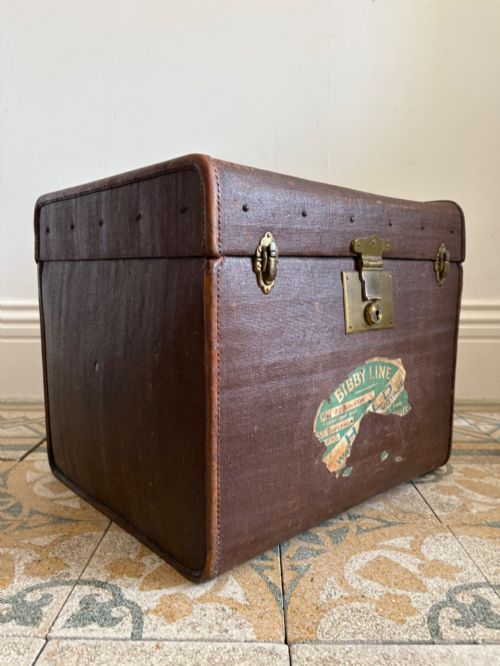


Brass Fitted Steamer Trunk
A brass fitted steamer trunk brings robust early travel heritage and clever internal storage straight into a modern interior.
Brass Fitted Steamer Trunk
A brass fitted steamer trunk is a sturdy piece of antique luggage designed for long-distance journeys by ship, train, and carriage. These durable cases combine heavy wooden carcases with protective exterior coverings and reinforced metal hardware to withstand the rigours of transit.
Most examples seen here date from the late nineteenth century up through the nineteen-twenties, encompassing the Victorian, Edwardian, and early twentieth-century eras. They range from simple storage chests to elaborate cabin wardrobes fitted with internal compartments and hanging space.
Buyers frequently encounter variations covered in canvas, leather, vellum, or vulcanised fibre, often accented with riveted metal corners and secure latches. These travel pieces double as striking coffee tables or blanket boxes in contemporary homes.
How they were made
Makers constructed these trunks using a strong timber core, frequently employing woods such as camphor or general hardwoods to ensure structural integrity. Exterior surfaces were then wrapped in protective hides, treated canvas, or vellum to guard against moisture and handling damage.
The defining characteristic is the integration of brass hardware, including protective edge bindings, reinforced corner pieces, secure locks, and sturdy carrying handles. Artisans fastened these metal elements with numerous tiny tacks or rivets to reinforce every point of stress.
Internal spaces often featured clever engineering, including removable trays, compartmentalised drawers, and specialised hat boxes designed to keep garments orderly during passage. Quality stitching along leather seams and hand-applied travel labels completed the construction.
Materials recorded across the selection include brass, camphor wood, leather, canvas, vellum, vulcanised fibre, and general structural metals.
What varies in quality
The calibre of a brass fitted steamer trunk depends heavily on the integrity of its internal fittings and the sophistication of its compartments. Simpler storage chests offer basic open spaces, whereas high-end wardrobe trunks incorporate complex folding mechanisms and bespoke small drawers.
Material choice and hardware execution also separate standard utilitarian luggage from premier examples. Heavier gauge brass, superior leather bindings, and original branded locks or maker stamps elevate the standing of a piece significantly.
Louis Vuitton·Seaward
The Brass Fitted Steamer Trunk Glossary
- Steamer trunk
- A lower-profile luggage chest designed specifically to fit beneath the berth of a passenger ship. These pieces usually feature a flat or slightly rounded top for stacking convenience.
- Vellum
- A fine parchment material prepared from calfskin, utilised as an outer covering on select luxury travel trunks. It offers a smooth, pale finish that darkens gracefully over time.
- Vulcanised fibre
- A tough, resilient sheet material made from cellulose, frequently applied to trunks for its lightweight durability and resistance to wear. It became popular during the late Victorian and Edwardian periods.
- Camphor wood
- A fragrant timber valued for its insect-repellent properties, commonly used for the interiors of travel chests and steamer trunks. The distinct scent helps protect stored textiles.
- Malle
- The French term for trunk, frequently encountered on European luggage pieces and associated with luxury travel makers. These large cases often contained sophisticated internal hanging wardrobes.
Brass Fitted Steamer Trunk: Frequently Asked Questions
How were steamer trunks used?
Passengers utilised these trunks to pack wardrobes, shoes, and personal effects for extended voyages by ocean liner or train. Their shallow proportions allowed them to slide easily into ship cabins or beneath sleeping berths.
Once at the destination, many functioned temporarily as portable wardrobes or bedside storage chests within hotel rooms.
Can I use one as a coffee table?
Their flat tops and sturdy wooden construction make these trunks suitable for use as coffee tables or end tables in a living space. The internal cavity provides discreet storage for blankets, board games, or seasonal items.
When positioning a trunk in a room, ensure the surface is protected from sharp objects and direct moisture.
How do I date a trunk?
Dating relies on examining the materials, construction methods, and hardware styles present on the piece. Canvas, vellum, and vulcanised fibre coverings typically point toward the late nineteenth century and the early decades of the twentieth century.
Maker stamps, patent dates on locks, and remnants of vintage travel labels also help narrow down the specific era of manufacture.
What is a cabin wardrobe trunk?
A cabin wardrobe trunk is an upright opening luggage piece designed to split vertically into two sections. One side typically contains drawers or compartments, while the other holds a hanging rail and clothes hangers.
This clever layout allowed travellers to access their garments easily without fully unpacking the entire contents during transit.
Are original travel labels desirable?
Original shipping labels and hotel stickers document the history of the journeys undertaken by the trunk. Many collectors and decorators prize these paper remnants for the authentic character they add to the exterior.
They reflect the golden age of international travel and give each piece a distinct, individual narrative.