




Brass Fireplace Ash Bucket
These brass fireplace ash bucket designs bring heavy Victorian metalwork to the hearth, offering sturdy daily coal storage.
Brass Fireplace Ash Bucket
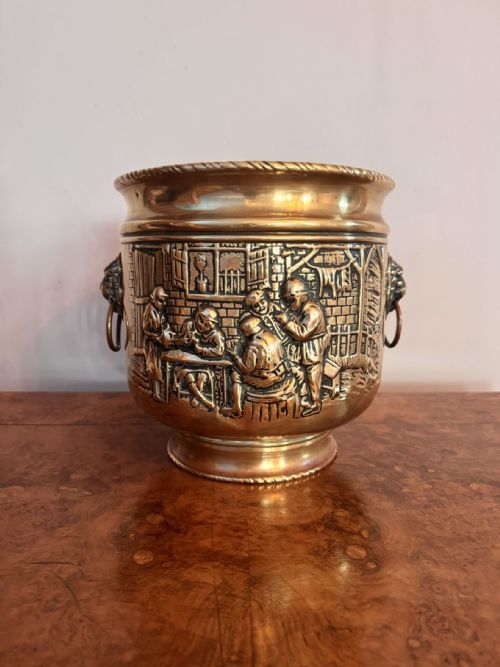
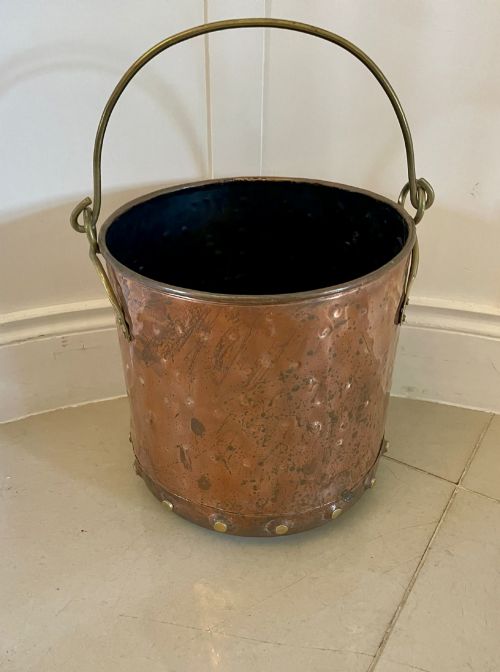
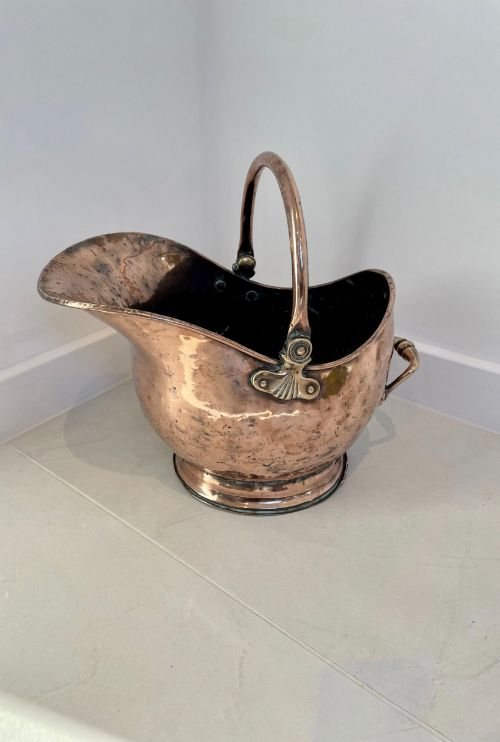
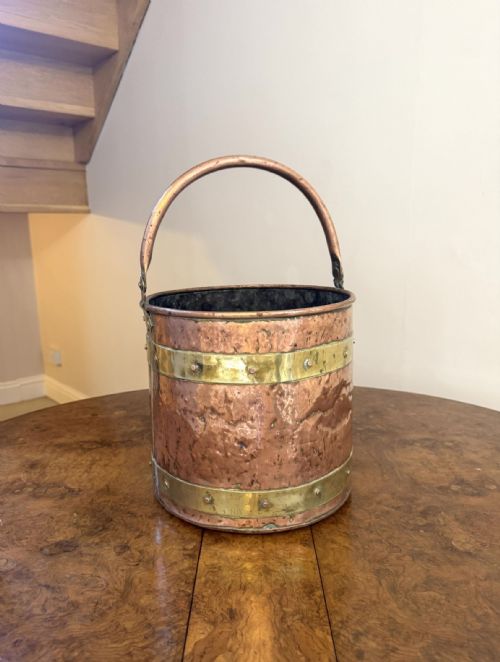
A brass fireplace ash bucket sits beside the hearth to hold fuel or waste, taking forms such as coal scuttles, bins, hods, and pails. The Victorian and Edwardian periods supply most examples on this page, alongside Georgian and 1930s pieces.
Makers shaped these utilitarian vessels from brass, copper, wood, iron, and ebonised wood to serve fireside accessories and log bins. Stylistic influences span Arts and Crafts, Art Deco, and Art Nouveau alongside traditional Victorian manufacture.
How they were made
Metalworkers combined brass and copper sheets, often employing handbeaten techniques or structural banding to reinforce the walls. Handles and swing bails utilised iron or forged brass, fixed securely to withstand heavy loads of coal.
Wooden elements such as ebonised wood or ebony appeared in handles and trims, offering a contrast to polished metal surfaces. Liners of galvanised metal or separate containers protected the outer shell from moisture and ash.
Brass Fireplace Ash Bucket Retail Price Guide 2026
Typical asking prices for brass fireplace ash bucket among the pieces listed under this phrase on Sellingantiques today, from the lower quarter to the upper quarter. They describe what is for sale here now, not the wider market.
Listings feature brass, copper, wood, iron, and ebonised wood across Victorian, Edwardian, Arts and Crafts, and Art Deco styles.
What varies in quality
Weight and gauge of the metal separate sturdy vessels from lighter stampings, with thicker brass and copper maintaining rigidity under heavy use. Superior examples feature robust riveted construction rather than simple soldered joints.
Detailing on handles, feet, and decorative chasing distinguishes standard utilitarian items from finer decorative work. The inclusion of original metal liners and matching shovels adds integrity to the piece.
Benham & Froud
The Brass Fireplace Ash Bucket Glossary
- Coal scuttle
- A container designed for carrying and storing coal near a fireplace, typically featuring a sloping body and a hinged handle. Many Victorian versions take a helmet shape with a wide mouth and a smaller rear grip.
- Dinanderie
- A term for objects made of beaten brass or copper, often associated with decorative vessels from the Arts and Crafts and Art Deco eras. These pieces display hand-worked surface textures.
- Coal hod
- A traditional bucket or bin used specifically for holding fuel, usually deeper than a standard scuttle and fitted with a sturdy carrying handle.
- Ebonised wood
- Timber treated with a finish to imitate ebony, providing a deep black accent against polished brass and copper bodies. This material frequently appears on handles and knobs.
Brass Fireplace Ash Bucket: Frequently Asked Questions
What is a brass fireplace ash bucket used for?
These vessels store coal, logs, and kindling beside the fireplace, keeping fuel within reach while concealing ash and debris. Their robust construction handles the weight of dense fuel loads.
Historically, they served a purely utilitarian role in Victorian and Edwardian homes, though today they function equally as decorative fireside containers and plant bins.
How do I clean brass and copper?
Maintenance involves removing dust with a soft dry cloth and applying mild metal cleaner only when necessary to reduce tarnishing. Many owners prefer to leave an aged patina rather than polishing the surface to a bright shine.
Harsh abrasives should be avoided, especially on handbeaten or dinanderie surfaces where excessive rubbing can remove the outer layer of metal.
How do I date a coal bucket?
Dating relies on stylistic clues, manufacturing methods, and material combinations such as ebonised wood and handbeaten copper. Victorian and Edwardian pieces often feature specific helmet shapes and riveted seams.
Markings from makers like Benham & Froud provide a direct link to a workshop, while Arts and Crafts or Art Deco forms point to early twentieth-century production.
Are these buckets waterproof?
Many examples include internal galvanised metal liners designed to contain moisture from wet logs or residual ash. Without a liner, older riveted joints may weep moisture if used directly for wet contents.
Checking for an original removable liner helps determine if the container remains suitable for holding damp fuel or plants.