



Brass Fireguard Kerb
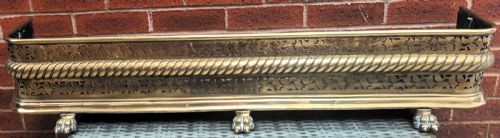
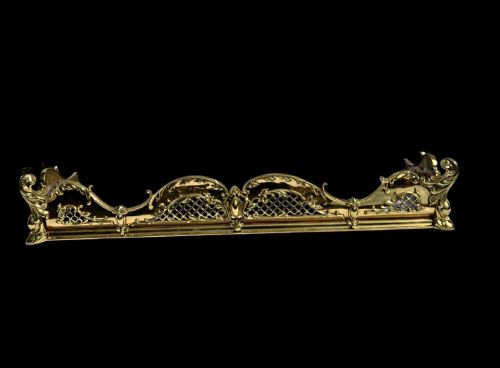
These brass fireguard kerb pieces are sturdy hearth boundaries designed to contain embers and protect your room, crafted in styles from the Victorian era to Art Deco.
Brass Fireguard Kerb
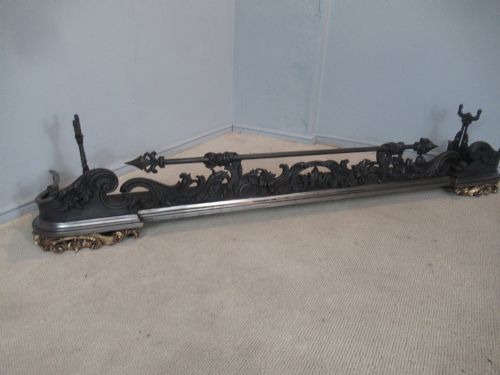
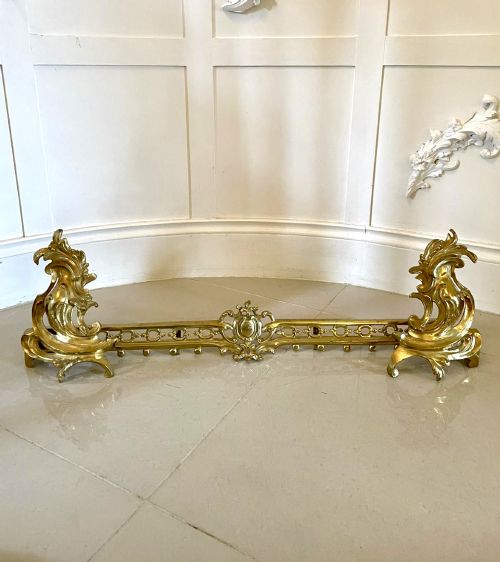
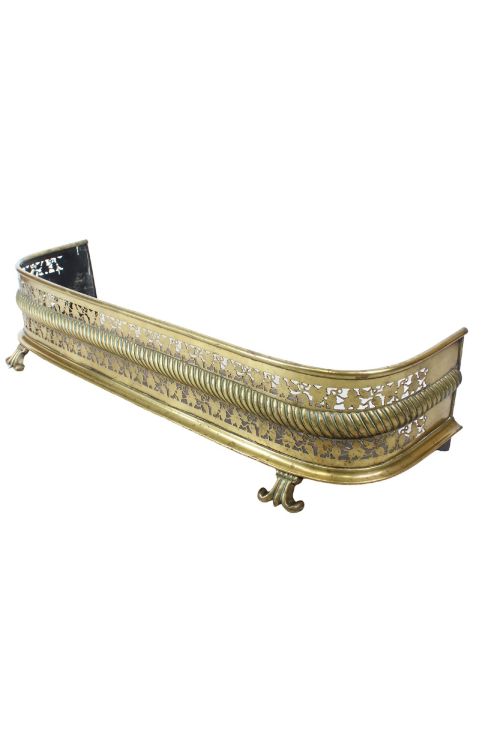
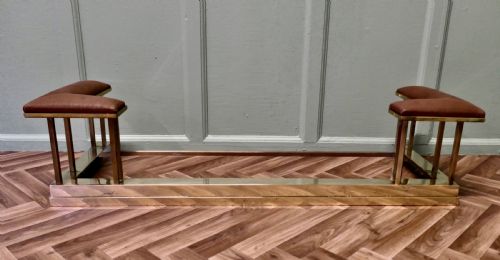
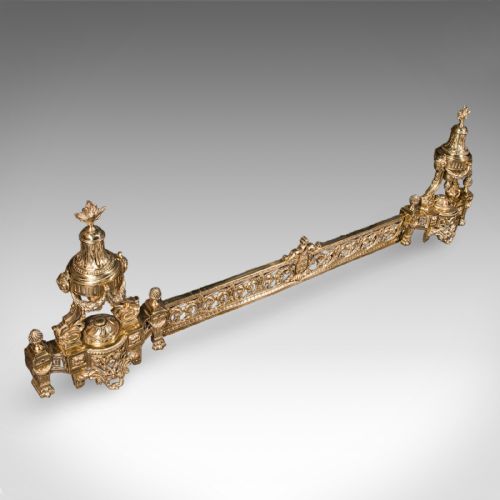
A brass fireguard kerb creates a decorative and protective barrier around the hearth, stopping hot coals from reaching the carpet while framing the fireplace. When searching for a brass fireguard kerb, you encounter various configurations including extending designs, club fenders with leather seats, and simple spindle guards.
Most examples found here date from the Victorian period, though you also encounter Regency, William IV, and Art Deco pieces. These accessories appear primarily as fireplace fenders and hearth fenders made predominantly of brass, often combined with steel, cast iron, or leather.
How they were made
Maker workshops utilised brass as the principal material, shaping it through casting, piercing, and polishing to create ornate pierced galleries and solid kerbs. Many pieces incorporate steel or cast iron elements for structural strength alongside the polished or gilded brass surfaces.
Some specialised designs feature upholstered leather seats on club fenders, combining metalwork with traditional saddlery techniques. Metal components were joined using mechanical fasteners or casting methods, resulting in heavy-gauge frames built to withstand daily hearth use.
Brass Fireguard Kerb Retail Price Guide 2026
Typical asking prices for brass fireguard kerb among the pieces listed under this phrase on Sellingantiques today, from the lower quarter to the upper quarter. They describe what is for sale here now, not the wider market.
Some Victorian brass fenders were built with such industrial weight that moving them required serious muscle.
What varies in quality
Quality in a brass fireguard kerb reveals itself in the thickness of the metal gauge and the crispness of the cast or pierced detailing. Heavy-gauge brass construction and refined ornamentation distinguish superior pieces from standard production items.
The sophistication of the stylistic execution - ranging from simple Victorian spindles to intricate French Rococo or Neoclassical motifs - defines the upper tier of the range. Additionally, functional complexity such as adjustable lengths or integrated leather seating alters the character and build complexity of the fender.
E F Caldwell New York
The Brass Fireguard Kerb Glossary
- Kerb fender
- A low metal barrier placed around the hearth to contain ash and embers. It sits directly on the floor to frame the fireplace opening.
- Club fender
- A hearth fender featuring upholstered leather seats on top of the metal frame. They provide low seating close to the fire.
- Pierced brass
- Metal sheet perforated with decorative patterns such as lattices or geometric motifs. This technique lightens the visual weight of the brass.
- Ormolu
- Gilded bronze or brass applied to decorative metalwork. It gives a rich golden finish characteristic of revival styles.
- Spindle fender
- A hearth guard constructed with vertical metal rods or balusters. These uprights form an open barrier around the fire.
Brass Fireguard Kerb: Frequently Asked Questions
What is a brass fireguard kerb used for?
A brass fireguard kerb functions as a protective barrier around the base of a fireplace. It keeps rolling embers and logs contained within the hearth area.
Beyond safety, it provides a clean visual boundary between the fireplace opening and the room's flooring. Many designs also serve as fender seats or decorative accents.
How do I measure for a kerb fender?
Measure the width and depth of your fireplace opening, then decide whether the fender should sit flush against the chimney breast or extend further out onto the hearth. Account for any protruding hearth stones or side clearances.
Some models feature adjustable frames that allow you to fine-tune the length to fit your specific hearth dimensions precisely.
How do I clean antique brass fenders?
Dust the metal regularly with a soft cloth to prevent surface dirt buildup. Avoid harsh chemical cleaners that can strip away aged patination or gilding.
If polishing is necessary, use a mild brass cleaner applied sparingly with a soft cloth. Take care not to get polish onto adjacent leather or steel sections.
How do I tell Victorian fenders apart from Regency ones?
Regency and William IV pieces often display classical restraint, featuring cleaner lines, curved corners, or early neoclassical motifs. They typically date from the early nineteenth century.
Victorian examples span a wider range of heavy casting, intricate pierced galleries, and eclectic revivals like Gothic or French Rococo styles. They frequently employ heavier brass gauges.