





Brass Fire Poker
A brass fire poker is the hearth tool you reach for to shift coal and coax a sullen grate back into life.
Brass Fire Poker
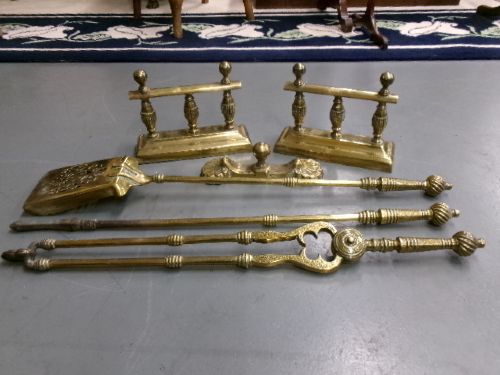
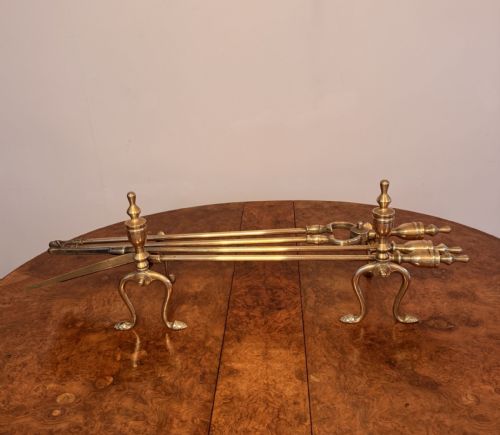
When you search for a brass fire poker, you encounter single implements and parts of larger companion sets designed for coal grates and hearths. The pieces span periods from the Georgian and Regency eras through Victorian, Edwardian, and Arts and Crafts designs, reflecting shifting domestic fashions around the fireplace.
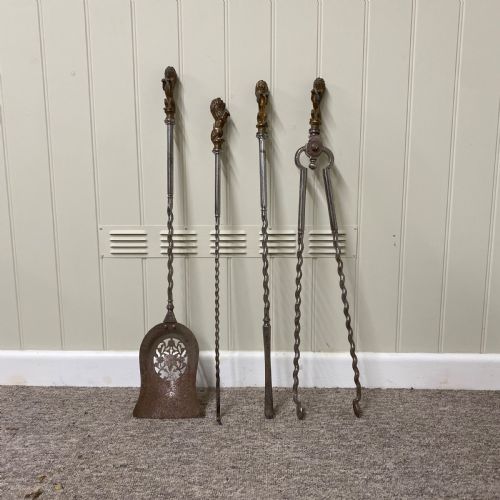
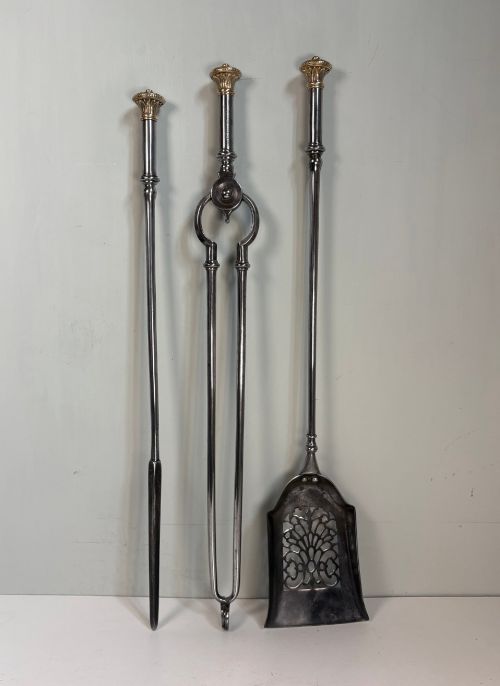
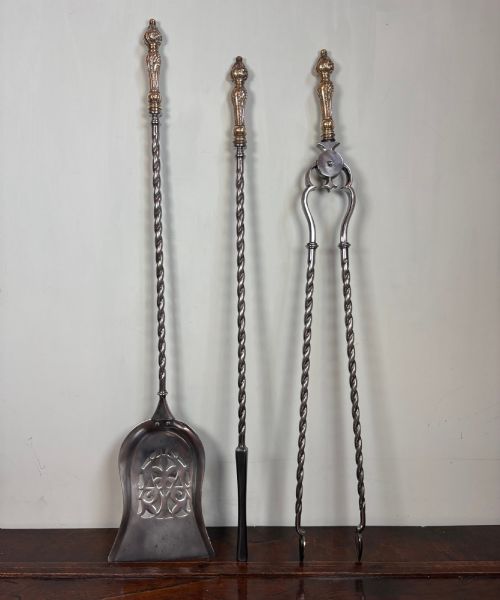
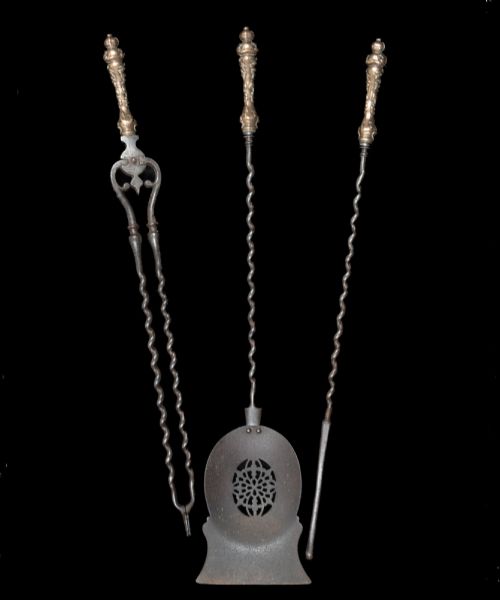
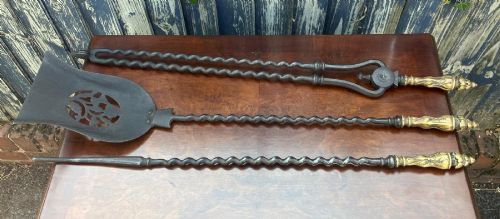
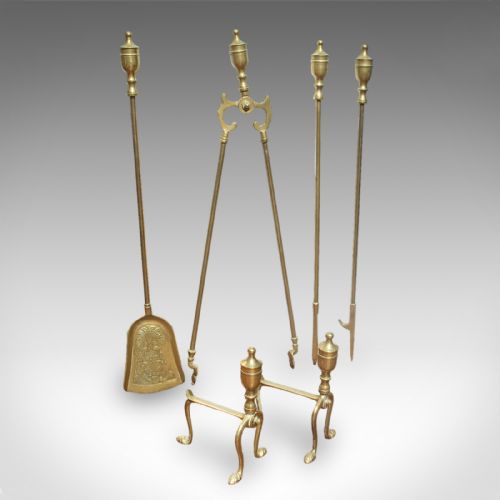
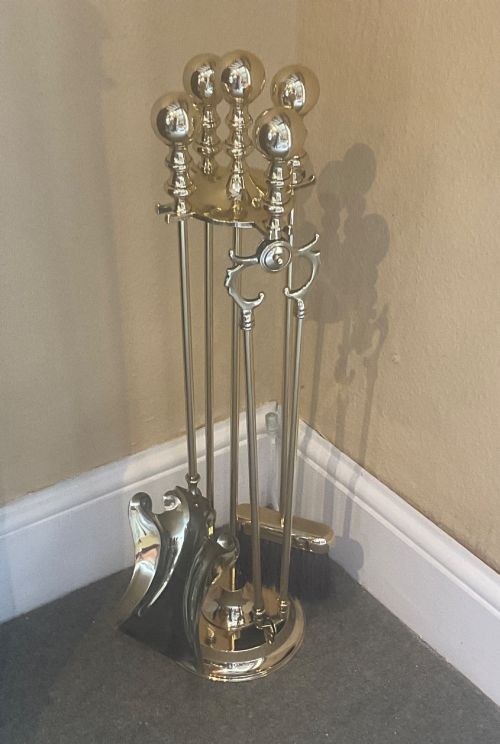
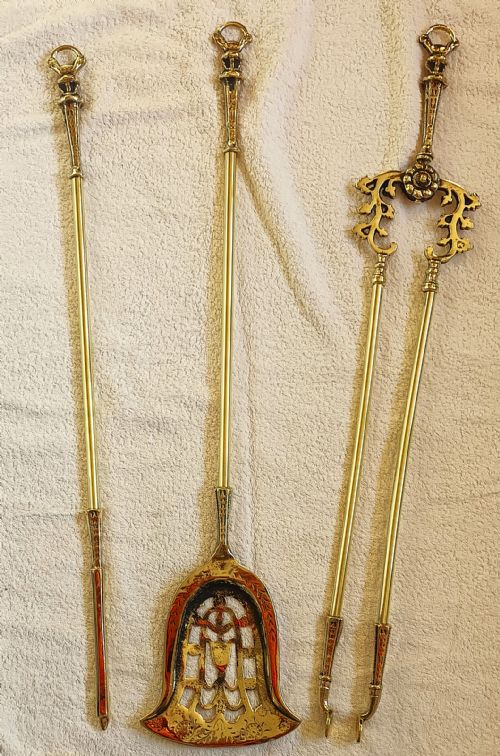
You are most likely to meet Victorian and 19th-century examples on this page, often formed as part of sets that include tongs and shovels. These range from plain utilitarian pokers to items featuring decorative rope twist handles and cast ornamentation.
Originating largely from English workshops, these tools combine decorative metalwork with robust utility. They sit beside fenders and fire dogs, serving both a functional role in managing the fire and a decorative one in the formal reception rooms of period houses.
How they were made
Makers combined brass with steel and iron, using steel for the high-stress shafts and tips while mounting polished or gilt brass for handles and decorative elements. This hybrid construction ensured the tool could withstand the heat of the fire without bending while maintaining a bright appearance on the hearth.
Techniques included casting handles in decorative styles such as Rococo revival or straightforward rope twists, then attaching them securely to forged metal rods. Gilt brass and gunmetal also appear in certain pieces, showing the variety of metal finishes applied to fireside equipment.
Brass Fire Poker Retail Price Guide 2026
Typical asking prices for brass fire poker among the pieces listed under this phrase on Sellingantiques today, from the lower quarter to the upper quarter. They describe what is for sale here now, not the wider market.
The inventory includes fireplace tools spanning Georgian, Regency, Victorian, Edwardian, Arts and Crafts, and Rococo Revival styles.
What varies in quality
The distinction between standard utility items and finer examples lies in the weight of the metal and the crispness of the casting on the handle. Superior pieces display substantial heft in the hand, with hand-finished details and solid joints between the handle and the poker shaft rather than simple mass-produced assembly.
Design sophistication also separates the range, as seen in items with thoughtful proportions, integrated rope twist detailing, or distinct stylistic periods like Arts and Crafts or Regency. Simpler, later 20th-century companion sets tend to show less definition in the metalwork and lighter construction.
The Brass Fire Poker Glossary
- Companion set
- A matched group of fireplace tools, usually comprising a poker, tongs, and coal shovel, designed to hang together on a stand or rest beside the hearth.
- Fire irons
- The collective term for the metal implements used to tend a domestic fire, encompassing pokers, tongs, and shovels.
- Gilt brass
- Brass that has been treated with a thin layer of gold or gold-coloured finish to enhance its lustre and appearance in the drawing room.
- Rope twist
- A decorative spiral pattern carved or cast into the handle of a poker or fire iron, popular during the Victorian period.
Brass Fire Poker: Frequently Asked Questions
What is a brass fire poker used for?
A brass fire poker is designed to stir burning coal, break up clinkers, and adjust logs within an open fireplace. It allows you to manage the airflow through the fuel bed to control the heat.
While the tip is forged for durability against high temperatures, the brass handle remains cool enough to grip safely during use.
Are antique fire pokers strong enough to use?
Most period pokers feature a steel or iron shaft combined with a brass handle, providing the necessary strength for daily hearth maintenance. They were built for practical service in 19th-century homes.
Care should be taken with hollow or purely decorative brass examples, which are better suited for display alongside a period fender.
How do I date an antique brass fire poker?
Dating relies on stylistic clues such as the form of the handle, the method of construction, and the presence of design movements like Regency, Victorian, or Arts and Crafts. Heavier casting and specific decorative motifs often point to the mid-19th century.
Comparing the poker to complete companion sets from the same era helps confirm its period origin.
How do I clean a brass fire poker?
Maintenance involves removing soot and ash with a soft cloth and mild soapy water, avoiding harsh abrasives that can wear down the historic surface. Polishing should be done sparingly to preserve the aged patina.
Steel shafts require a light application of oil to prevent rust from forming in damp environments.