





Brass Etagere Table
A brass etagere table brings tiered display and surface space to a room, combining metal framing with timber or mirrored tiers.
Brass Etagere Table
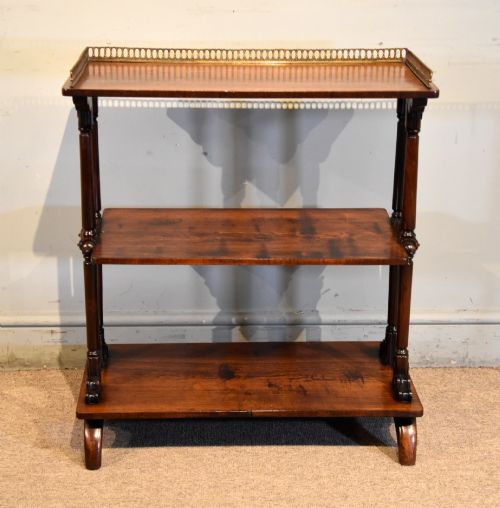
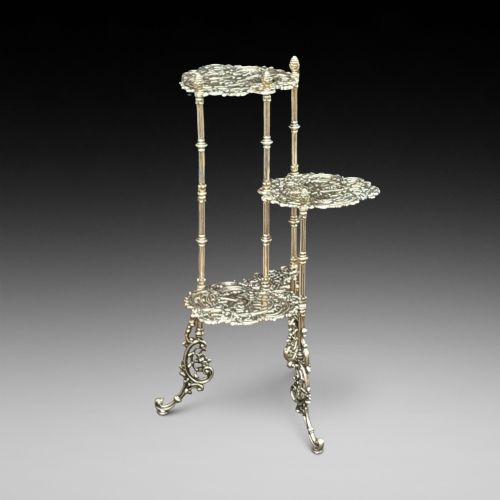
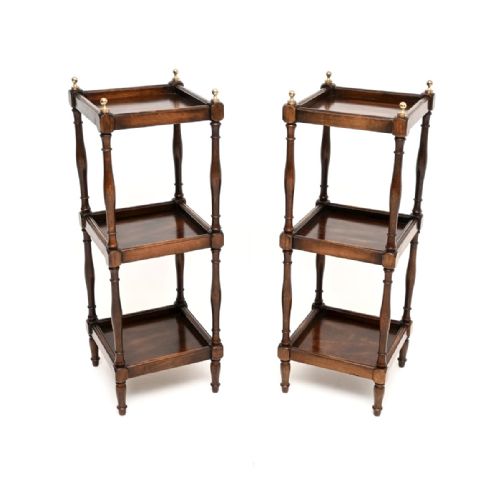
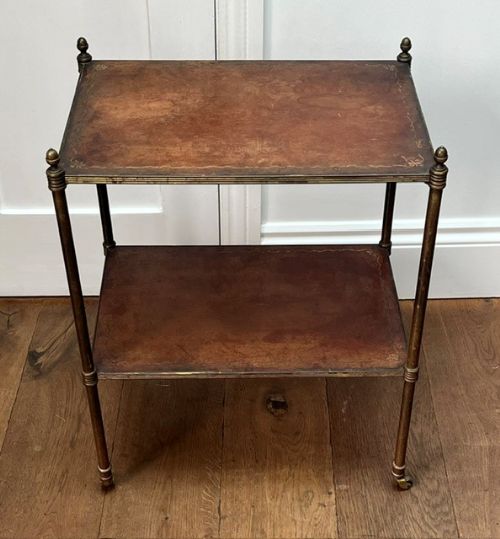
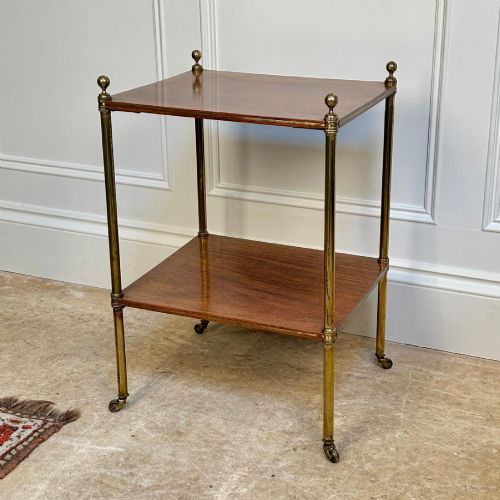
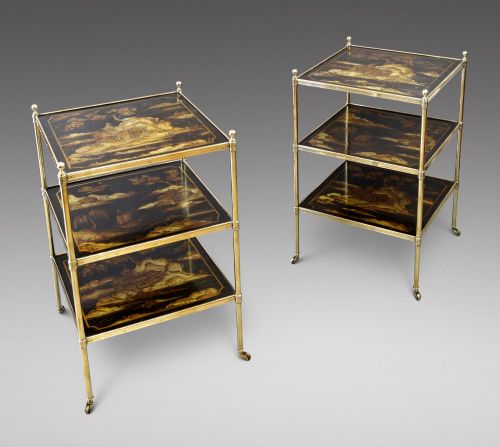
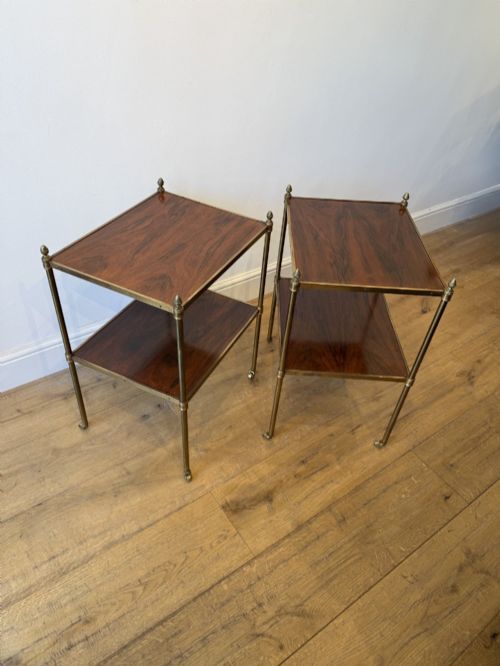
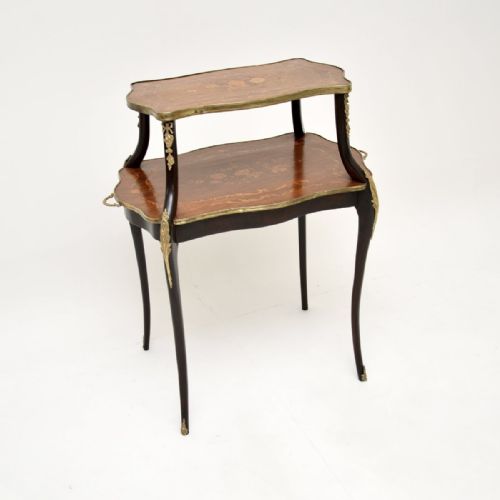
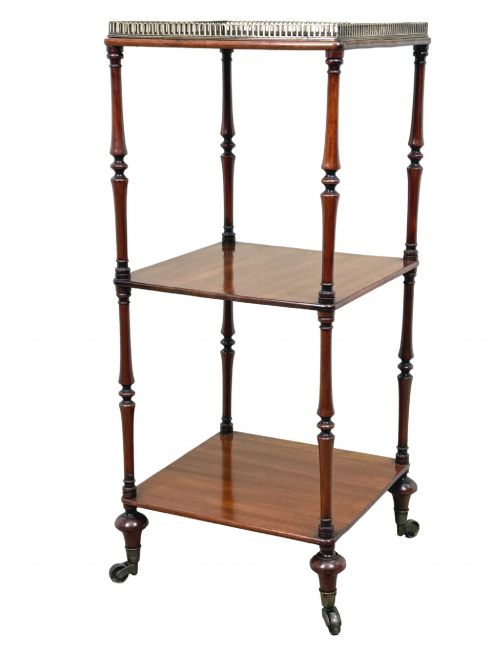
A brass etagere table combines multiple tiers for display with a metal frame, frequently appearing alongside terms such as whatnot or side table in nineteenth and early twentieth century work. These pieces span compact two-tier tea tables and larger plant stands or display shelves, offering open surface space arranged vertically.
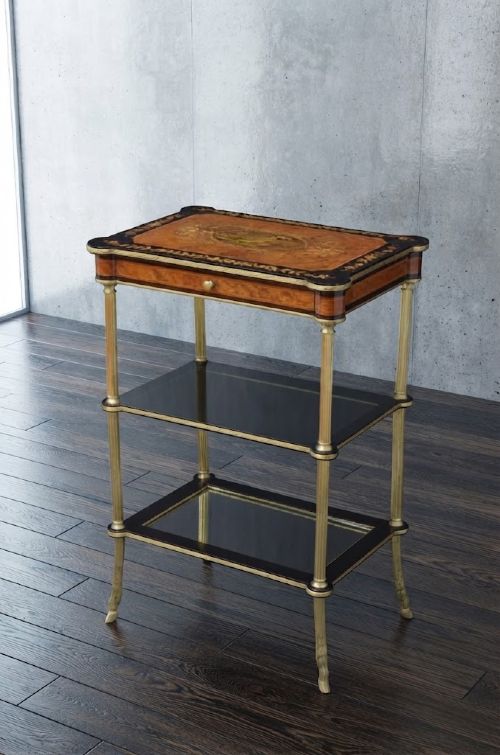
The version most commonly met on this page is a multi-tiered occasional table featuring brass framing, galleries, or mounts combined with rich timbers. British and French workshops produced these items across the Victorian and Edwardian eras, incorporating French stylistic influences like Louis XV and Napoleon III alongside domestic campaign and side table forms.
Makers and designers referenced in these pieces range from Mallett of London and W. Turner Lord & Co to Donald Ross, working within established traditions of tiered furniture. Structural layouts vary from rectangular frames to oval and shaped shelves designed for corner placement or bedside use.
Materials and construction methods
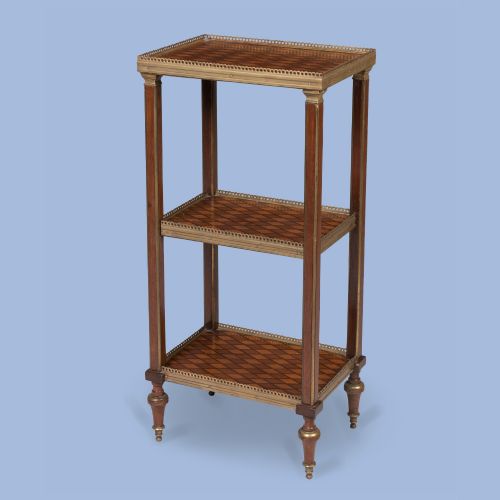
Makers built the structural frames of brass etagere tables using solid brass, often combined with polished brass mounts, ormolu, and delicate galleries enclosing each shelf. These metal elements support tiers fashioned from diverse timbers including mahogany, rosewood, walnut, satinwood, kingwood, amboyna, and ebonised wood.
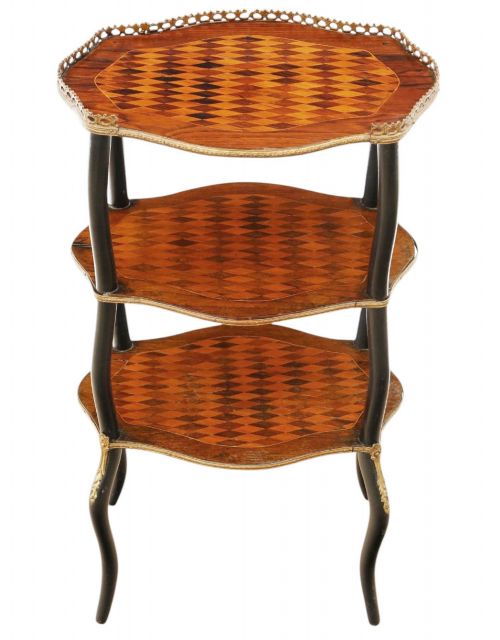
Surfaces frequently display intricate marquetry, parquetry inlay, or tooled leather inserts, while select examples utilise mirrored tiers or birdseye maple. French influences guided the application of floral marquetry and bronze ormolu mounts, contrasting with the plainer brass-mounted mahogany of British campaign washstands and side tables.
Listings feature brass etagere tables paired with rosewood, mahogany, walnut, and satinwood across the nineteenth and early twentieth centuries.
Distinctions in construction and design
Quality in a brass etagere table reveals itself in the precision of the timber inlay, the weight and finish of the cast brass framing, and the stability of the tiered structure. Finer pieces demonstrate meticulous marquetry across multiple tiers, using exotic woods like kingwood and rosewood with seamless grain matching.
The refinement of the brass galleries and ormolu mounts separates standard production from exceptional examples attributed to noted makers or specific revival styles. Heavier gauge brass and solid timber cores provide structural integrity, ensuring that stacked tiers remain rigid and balanced.
Mallett of London·W. Turner Lord & Co·Donald Ross
The Brass Etagere Table Glossary
- Etagere
- A piece of furniture consisting of a set of open shelves for displaying small objects or serving. These tables provide multiple tiers supported by slender uprights.
- Whatnot
- A multi-shelved piece of furniture used for storing or displaying ornaments, closely related in form to the etagere. They appear frequently in nineteenth-century interiors.
- Ormolu
- Gilded bronze used for decorative mounts and furnishings, popular in French revival pieces. It adds a bright metallic accent to timber frames.
- Marquetry
- Decorative veneer applied to furniture in geometrical patterns or pictorial designs using various coloured woods. This technique adorns the tiers of many French tables.
- Gallery
- A raised ornamental border edging the shelf of a table or etagere to prevent items from sliding off. These railings are frequently cast in brass.
Brass Etagere Table: Frequently Asked Questions
What is a brass etagere table used for?
These tables serve as versatile display surfaces for decorative objects, lamps, or tea service across a living room or bedroom. Their multi-tiered design maximises surface area without taking up excessive floor space.
Historically, they functioned as occasional tables, tea tables, or bedside units. Today, they remain practical for holding books, plants, and smaller ornaments while introducing metallic and timber textures into an interior.
How do I tell Victorian from Edwardian pieces?
Victorian examples often feature darker timbers like rosewood and mahogany, heavy brass mounts, and ornate French revival styling. The construction tends to be robust and deeply coloured.
Edwardian pieces frequently display lighter satinwood, more restrained inlay work, and slightly more delicate framing. The influence of earlier French styles persists, but the overall aesthetic shifts toward brighter, airier tones.
Are etageres and whatnots the same thing?
The terms are largely interchangeable in antique furniture, though whatnot historically referred to multi-tiered shelving units used for ornaments. Both forms feature stacked open shelves supported by upright columns.
On this page, pieces described under both names share the core characteristic of tiered surfaces framed in brass or timber. Regional naming conventions often determined whether a maker called a piece an etagere or a whatnot.
How do I clean the brass and wood?
Dust timber tiers regularly with a soft, dry cloth and maintain the wood with appropriate furniture wax applied sparingly. Avoid harsh chemical cleaners that can strip antique polish.
Clean brass galleries and mounts gently with a specialised metal polish, taking care not to let cleaning agents touch the surrounding wood veneer. Gentle maintenance preserves the original patina of both the metal and the timber.