




Brass Etagere Side Tables
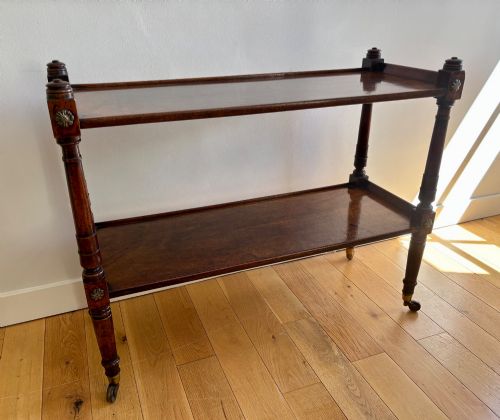
These brass etagere side tables combine multi-tiered display surfaces with metal framing, offering a practical way to hold lamps and books in a room.
Brass Etagere Side Tables
Brass etagere side tables appear across the nineteenth and early twentieth centuries, blending the function of a side table with the open shelving of a whatnot. They emerge primarily in French and English workshops during the Victorian, Edwardian, and Regency periods.
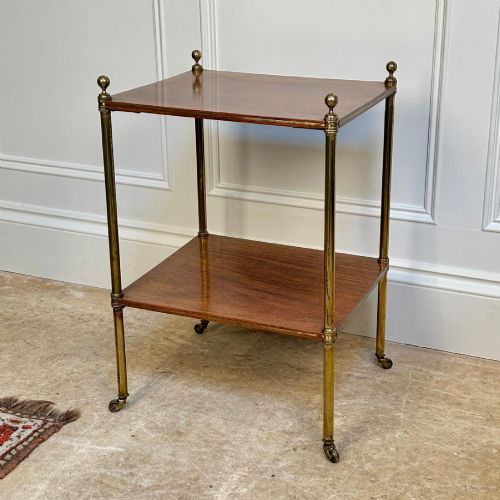
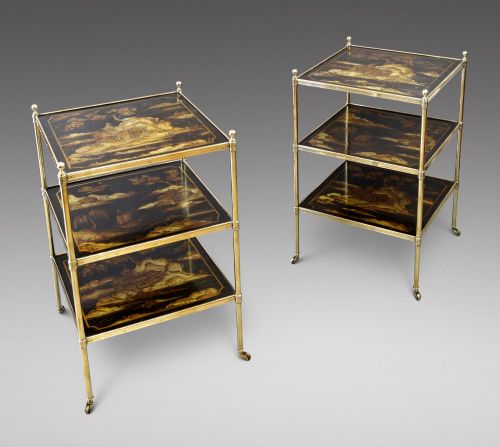
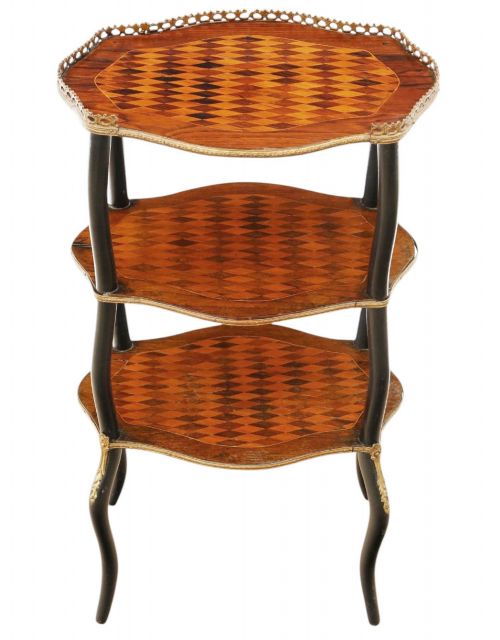
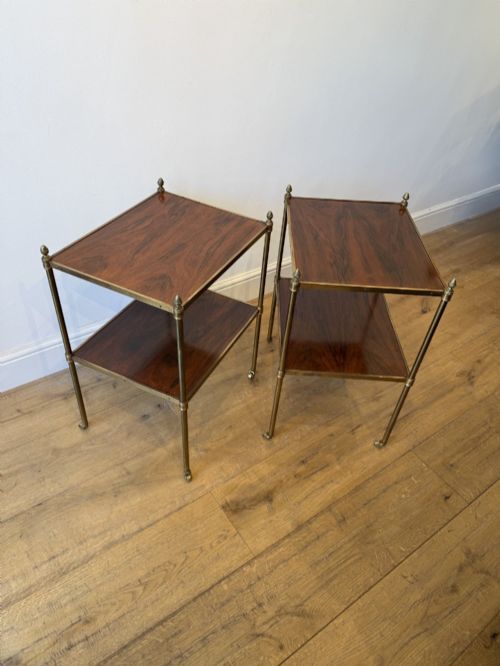
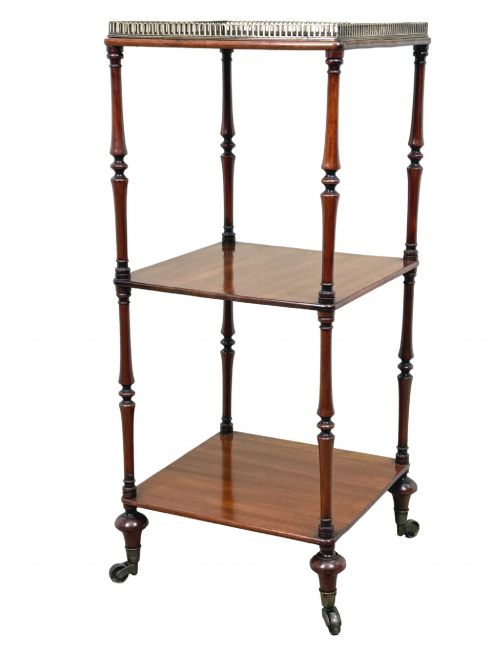
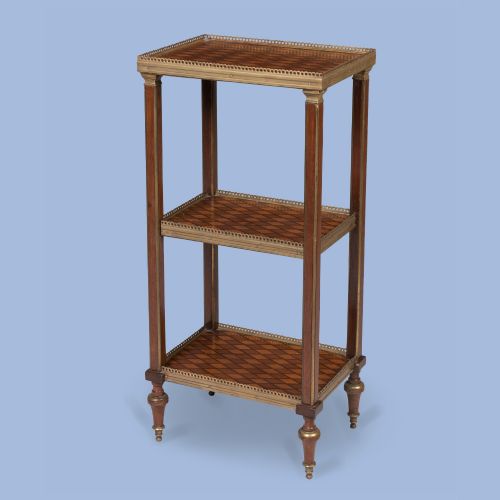
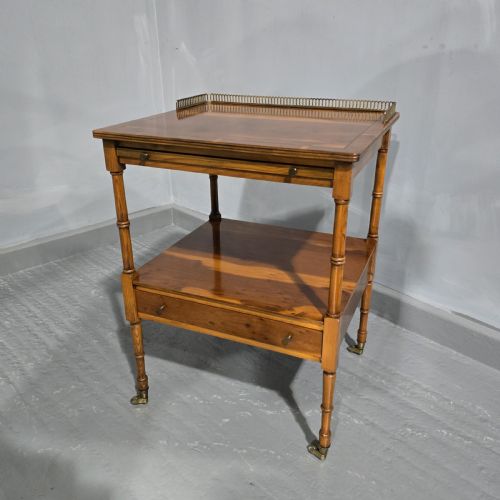
The form relies on stacked tiers held by vertical supports, often designed with two or three levels to hold small objects and drinks. Walnut, mahogany, and rosewood form the wooden shelves, which are frequently edged with brass galleries.
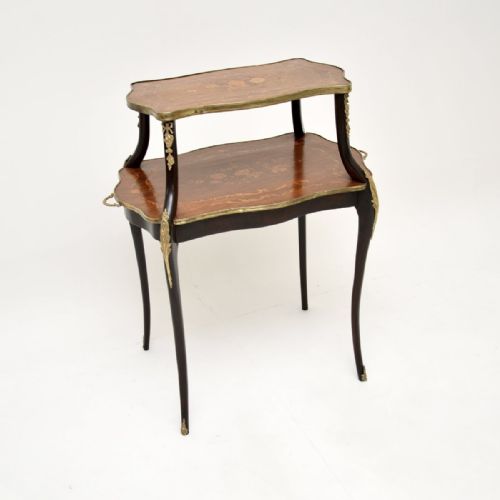
Makers adapt the tier arrangement into low tea tables, display stands, and campaign washstands. Buyers encounter pieces influenced by French Louis XV and Napoleon III styles alongside simpler English occasional tables.
How they were made
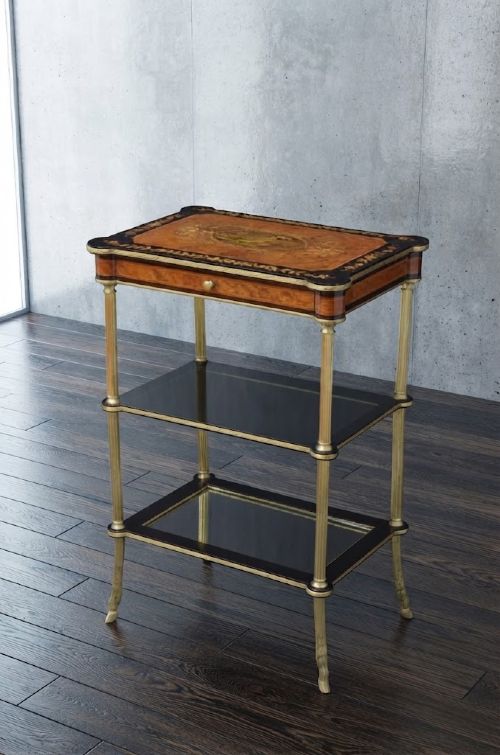
Cabinetmakers construct the tiers from dense hardwoods like mahogany and walnut, frequently applying intricate marquetry or parquetry veneers in satinwood, kingwood, and rosewood. Ebonised wood provides a dark contrast against inlaid floral motifs and geometric patterns.
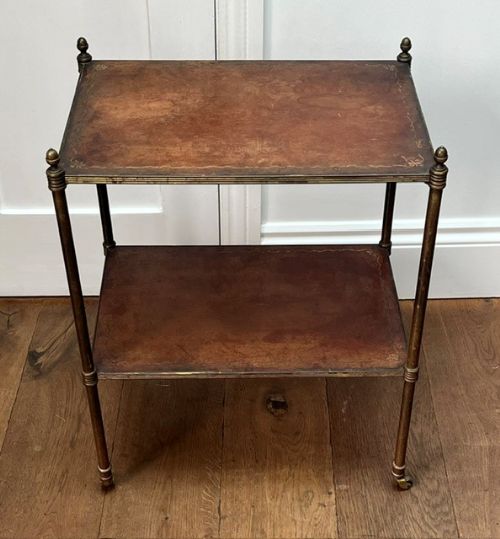
Metal components utilise brass for framing, rods, and galleries, occasionally supplemented by bronze ormolu mounts. Tooled leather inserts appear on selected surfaces, while mirrored glass forms the base of specific tiers.
Listings feature mahogany, walnut, and rosewood alongside ebonised wood and satinwood across the nineteenth and early twentieth centuries.
What varies in quality
Quality rests in the precision of the timber inlay and the weight of the metal framing. Finer examples display tight marquetry work and heavy cast brass supports rather than pressed sheet metal.
The joinery of the tiers and the rigidity of the upright columns determine structural success. Superior pieces maintain stable alignment across multiple levels without wobble in the brass joints.
Mallett of London·W. Turner Lord and Co·Donald Ross
The Brass Etagere Side Tables Glossary
- Étagère
- A piece of furniture consisting of open shelves for displaying small objects or serving. The form develops in France during the eighteenth century and remains popular through the Victorian era.
- Whatnot
- A multi-shelved stand used for storage or display in nineteenth-century interiors. It shares structural similarities with the etagere.
- Marquetry
- Decorative veneer work forming pictures or patterns using various coloured woods. Craftsmen apply these thin wood slices to the main carcase of the table.
- Ormolu
- Gilded bronze applied as decorative mounts on furniture. It provides metallic ornamentation around table edges and legs.
- Gallery
- A raised ornamental border surrounding the edge of a table shelf. It prevents items from sliding off the tier.
Brass Etagere Side Tables: Frequently Asked Questions
What is an etagere table?
An etagere table is a multi-tiered piece of furniture designed for display and surface storage. It provides open shelves arranged vertically rather than a single surface.
These tables function as side tables, tea tables, or lamp stands in reception rooms. The stacked design maximises surface area while occupying minimal floor space.
How do I date a brass etagere?
Dating relies on timber choices, brass mounting techniques, and stylistic influences. Regency and early nineteenth-century pieces often use solid mahogany, whereas later Victorian and Edwardian examples favour intricate marquetry and ebonised woods.
Cast brass components and timber veneers shift in thickness and composition across decades. Comparing the construction methods to known period pieces helps narrow the decade of manufacture.
Where should I place an etagere?
These tables suit corners, hallways, and beside seating where multiple surfaces prove useful. The open tiers allow light to pass through, keeping small rooms feeling spacious.
They accommodate lamps, books, and decorative objects without overwhelming surrounding furniture. Avoid placing them in direct sunlight to protect the wood veneers and brass finishes.
What woods appear on these tables?
Construction timber includes mahogany, walnut, and rosewood, paired with exotic veneers. Satinwood, kingwood, and amboyna provide contrasting colour for marquetry panels.
Ebonised wood creates a dark, uniform surface that highlights brass mounts and gilt details. Secondary woods form the unseen internal structure of the shelves.