
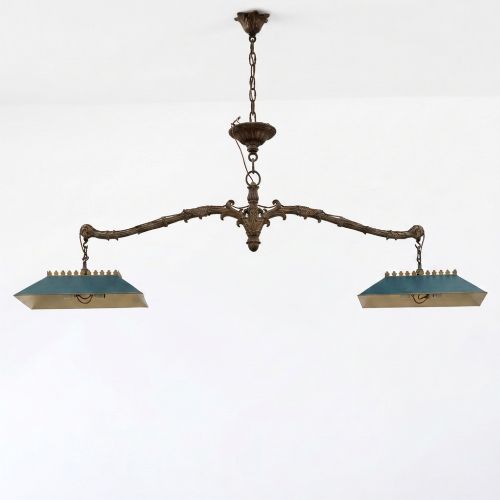


Brass Double Pendant Light
A brass double pendant light brings genuine period character and warm illumination to high ceilings and dining spaces.
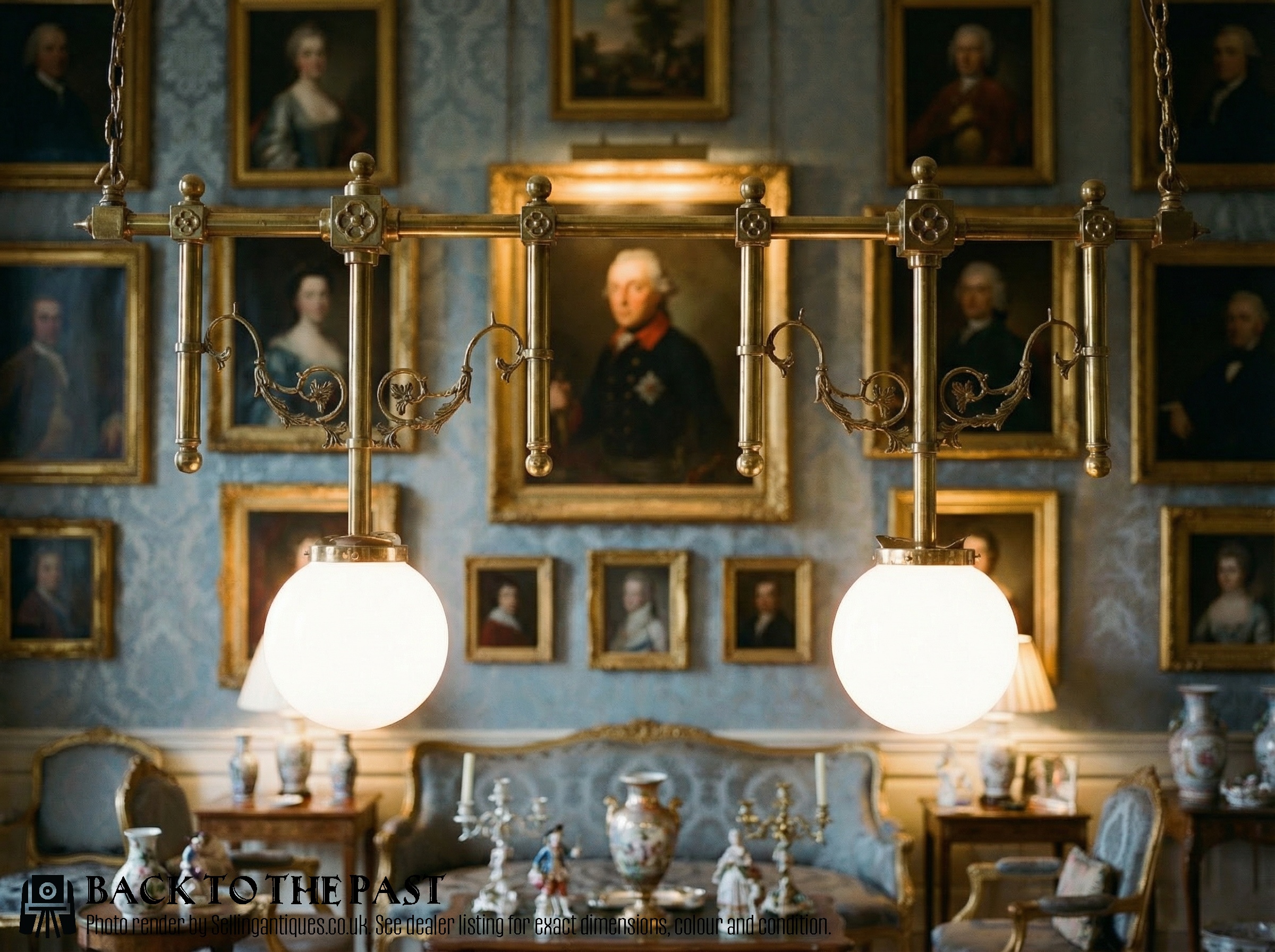
Brass Double Pendant Light
A brass double pendant light encompasses multi-bulb ceiling fixtures designed to suspend from chains or rods, bringing direct and ambient illumination to a room. When you search for a brass double pendant light, you encounter pieces spanning the nineteenth century through to the nineteen-forties, with strong representation from Edwardian and interwar periods. These fixtures emerge in various forms, from twin-light lanterns and prismatic shades to multi-tiered chandeliers.
The objects listed here reflect diverse origins and stylistic influences, ranging from Gothic Revival and Dutch Baroque to industrial and French mid-century aesthetics. You will most frequently meet Edwardian brass designs incorporating glass globes alongside French and Italian interpretations. Each piece utilises twin or multiple light configurations to distribute illumination effectively across larger spaces.
Construction and Materials
Makers constructed these fixtures using robust metals including brass, copper, bronze, and steel, often combining materials to achieve structural integrity and visual contrast. Cast bronze and gilt bronze frequently appear alongside plain brass and steel components, demonstrating diverse foundry techniques of the nineteenth and early twentieth centuries. Structural elements are paired with glass components such as prisms, globes, and crystals to diffuse the light.
Techniques varied from industrial assembly in utilitarian pendants to intricate hand-finishing in French chateau and Gothic Revival styles. Metalwork involves casting, gilding, and shaping brass and copper sheets or tubes to form secure housings for electrical fittings. Glass shades, notably prismatic Holophane designs, are engineered to refract illumination while maintaining structural durability.
Materials represented across these ceiling lights include brass, copper, bronze, steel, and glass.
Distinctions in Quality
Quality in these lighting fixtures rests upon the weight of the metal components, the clarity and integrity of the glass elements, and the finesse of the surface finishing. Heavier castings in bronze and brass alongside crisp detailing in styles like Gothic Revival or Louis XV indicate superior workmanship by the maker. The presence of original prismatic glass or hand-cut crystal elements further separates standard utilitarian production from high-end decorative commissions.
The sophistication of the design execution and the preservation of original gilding or patination define the upper tier of the range. Fixtures that maintain integrated brass and steel structures with balanced proportions reflect thoughtful design rather than mass production. Better examples showcase harmonious integration between the metal framework and the glass diffusers.
The Brass Double Pendant Light Glossary
- Prismatic glass
- Glass moulded with geometric ridges or prisms designed to refract and diffuse light efficiently while reducing glare. This material appears frequently in early twentieth-century industrial and commercial pendants.
- Gilt bronze
- Bronze that has been coated with a thin layer of gold or gold leaf to produce a rich, luminous metallic finish. This technique is common in decorative French and Italian chandeliers.
- Gothic Revival
- An architectural and decorative style drawing inspiration from medieval forms, featuring pointed arches and ornate metalwork. Chandeliers in this style utilise heavy brass and glass globes.
- Chandelier
- A branched ceiling fixture designed to hold multiple light sources and suspend from a central point. These objects range from twin-light lanterns to multi-tiered structures with numerous arms.
- Double tiered
- A lighting configuration featuring two distinct horizontal levels of light sources arranged vertically on the frame. This layout allows for high output and imposing visual scale in large rooms.
Brass Double Pendant Light: Frequently Asked Questions
Where should I hang a brass double pendant light?
These fixtures suit spaces with generous ceiling heights, such as over dining tables, in entrance halls, or within large living rooms where multi-light illumination is necessary.
Ensure adequate clearance beneath the lowest point of the pendant for comfortable movement below.
How do I identify the period of a brass pendant?
Examine the materials, manufacturing techniques, and stylistic markers such as Edwardian gothic influences or industrial steel construction.
Detailed cast bronze work and specific glass types like prismatic Holophane offer strong chronological clues.
Are these lights compatible with modern wiring?
Most antique and vintage fixtures require professional rewiring to meet current electrical standards and safety regulations.
A qualified electrician can adapt the internal fittings while preserving the original exterior metal and glass components.
What is the difference between a pendant and a chandelier?
Pendant lights typically suspend from a single point or rod with one or two shades, whereas chandeliers feature branched arms holding multiple bulbs across one or more tiers.
Both serve as overhead illumination but create distinct visual proportions in a room.