



Brass Display Counter
These brass display counters are shop fittings built to showcase retail goods through glass framed in brass and mounted on timber bases.
Brass Display Counter
A brass display counter is a commercial shop fitting designed to hold and protect merchandise while offering a clear view to customers. These pieces combine glazed sections with robust frames, serving both practical retail functions and decorative display roles.
The versions most commonly met on this page span from the late nineteenth century through the Edwardian era and into the Art Deco period. They appear in forms ranging from large floor-standing retail counters to compact countertop cabinets and specialised drapers' stands.
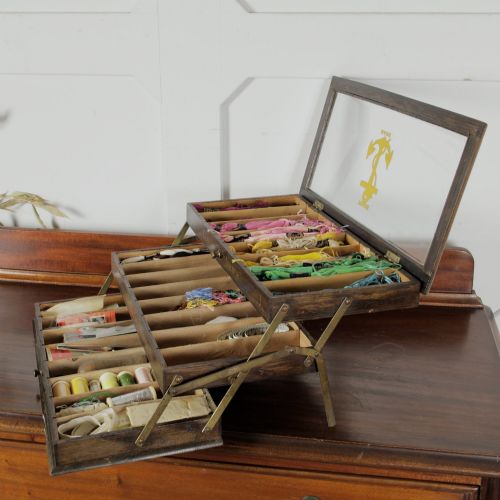
Makers and materials reflect traditional commercial environments, utilising structural timbers such as mahogany and oak alongside brass framing and cast iron elements. Interior surfaces occasionally feature velvet linings or mirrored panels to enhance the presentation of jewellery, cotton reels, and small artefacts.
How they were made
These fixtures are constructed using durable cabinet-making techniques, joining timbers like mahogany and oak to support heavy glass panels and metal frames. Brass framing provides structural rigidity around the glazing while offering a polished or patinated perimeter.
Cast iron and steel are incorporated into stands and heavy bases for stability, ensuring the furniture could withstand daily commercial use. Internal fittings often include mirrored backs and velvet linings to reflect light and cushion delicate goods.
Brass Display Counter Retail Price Guide 2026
Typical asking prices for brass display counter among the pieces listed under this phrase on Sellingantiques today, from the lower quarter to the upper quarter. They describe what is for sale here now, not the wider market.
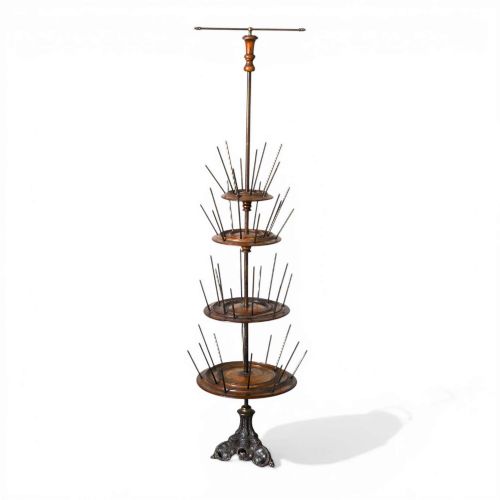
Cotton reel display trees once offered shoppers a tiered arboreal view of sewing threads.
What varies in quality
Quality in these commercial fittings is defined by the integrity of the joinery and the caliber of the materials used in the frame and base. Pieces produced by established shop-fitters exhibit refined detailing in the brass work and precise housing of the glass panels.
The choice of secondary woods and the sophistication of interior elements, such as mirrored interiors or specialised shelving, distinguish standard utilitarian cases from high-end retail furniture.
F. Sage & Co.·Saml. Elliott & Sons
The Brass Display Counter Glossary
- Haberdashery cabinet
- A specialised shop fitting originally designed for storing and displaying sewing accessories, textiles, and small haberdashery items. These typically feature multiple shallow drawers or glass-fronted compartments.
- Shop fitting
- Fixtures and furniture built specifically for commercial retail premises, ranging from wall cases to freestanding counters. They are engineered for durability and visual merchandising.
- Apothecary jar
- A glass container originally used by chemists and pharmacists to store dry drugs, herbs, or preparations. They often feature ground glass covers and characteristic labeling.
- Countertop display
- A smaller scale cabinet or stand designed to sit upon an existing shop counter for close-up viewing by customers. These items focus attention on high-value or seasonal merchandise.
- Admiralty pattern
- A design specification commissioned or approved by the British Admiralty for naval or official use. Such pieces adhere to strict durability and utility standards.
Brass Display Counter: Frequently Asked Questions
Where were these counters used?
These brass display counters were utilised in nineteenth and early twentieth century retail shops, drapery stores, and jewellers. Merchants placed them on shop floors to present small goods securely to customers.
They also served in specialised commercial environments where visibility and protection of merchandise were paramount.
How do I date a counter?
Dating relies on observing construction methods, timber choices, and stylistic indicators such as Edwardian proportions or Art Deco geometric lines. Maker marks and brass framing techniques also provide chronological clues.
Comparing the hardware and secondary woods helps place the piece within the Victorian, Edwardian, or interwar periods.
Can I use one at home?
These cabinets suit modern interiors as display furniture for collections, jewellery, or curiosities. Their glass panels and brass frames protect items while offering clear visibility in domestic rooms.
Countertop models fit easily on sideboards, while larger floor-standing versions function as statement display furniture.
What is Admiralty pattern?
Admiralty pattern denotes items built to specifications required by the British naval authorities. These pieces emphasise functional reliability and robust construction.
Such items often feature secure locking mechanisms and sturdy brass and glass fabrication.