



Brass Desktop Barometer
These brass desktop barometers combine practical weather recording with handsome desk presence.
Brass Desktop Barometer
When you search for a brass desktop barometer, you encounter precision meteorological instruments housed in polished metal casings, often mounted on timber bases or configured as part of larger desk compendiums. The examples recorded here span the Victorian, Edwardian and later periods, capturing an era when scientific observation shared space with domestic writing furniture.
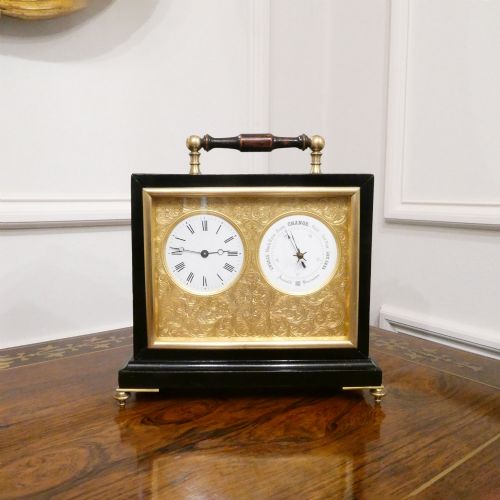
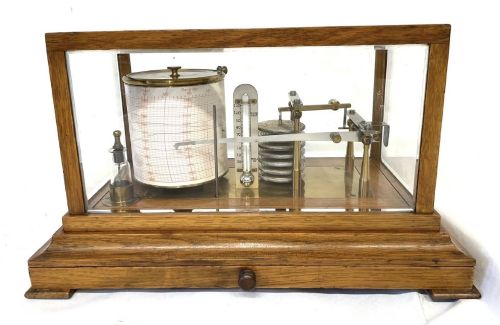
The most frequent forms met on this page include mahogany and oak cased barographs featuring chart drawers and bevelled glass panels, alongside smaller mantel clock combinations and dedicated desk instruments. Makers such as Negretti & Zambra and Short & Mason dominate the better records, placing their signatures on dial faces and instrument beds.
How they were made
Casing construction relies heavily on turned and polished brass elements paired with dense cabinet timbers like mahogany, oak, walnut and ebonised wood. Joinery on the instrument boxes incorporates bevelled glass windows and fitted chart drawers designed to hold weekly recording papers.
Internal recording mechanisms utilise sensitive aneroid metal diaphragms or mercury columns linked to silvered metal dials and enamel scales. The combination of heavy cast brass frames, delicate glass protection and precise mechanical linkages defines the standard manufacturing approach of these scientific pieces.
Brass Desktop Barometer Retail Price Guide 2026
Typical asking prices for brass desktop barometer among the pieces listed under this phrase on Sellingantiques today, from the lower quarter to the upper quarter. They describe what is for sale here now, not the wider market.
Listings feature brass instruments housed in oak, mahogany, walnut, and ebonised wood.
What varies in quality
Quality separates ordinary utilitarian weather glasses from distinguished library pieces through the crispness of the brass casting and the legibility of the silvered metal or enamel dial. Better examples exhibit refined cabinet work in the timber surrounds, with precise dovetailing on chart drawers and thick, clear bevelled glass panes.
Signed instruments by established makers command attention because their mechanical assemblies demonstrate superior machining tolerances and enduring reliability. The integration of auxiliary instruments, such as thermometers and clock movements within a single desk compendium, further elevates the sophistication of the piece.
Negretti and Zambra·Short and Mason·Depree and Young Ltd Exeter
The Brass Desktop Barometer Glossary
- Barograph
- A self-recording aneroid barometer that charts atmospheric pressure over time onto a rotating drum. This mechanical device uses a pen arm driven by expanding metal bellows.
- Aneroid barometer
- An instrument that measures air pressure without liquid by using a flexible metal box that expands or contracts. Changes in pressure move a pointer across a graduated dial.
- Silvered metal
- A copper or brass dial plate coated with a thin layer of silver dust and tartar to create a bright, reflective metallic surface. Graduations and maker names are typically engraved and darkened through this layer.
- Desk compendium
- A multi-instrument desk set housing a barometer alongside clocks, thermometers or calendars within a unified frame. These items combine several desk accessories into one coordinated heavy piece.
- Bevelled glass
- Pane glass featuring an angled edge ground down to a decorative slope around the perimeter. This treatment adds depth and catches light within brass and timber instrument frames.
Brass Desktop Barometer: Frequently Asked Questions
What is a barograph?
A barograph is a mechanical recording barometer that uses an aneroid chamber to trace atmospheric pressure lines onto paper charts over the course of a week.
These instruments sit within glazed wooden cases, often fitted with a drawer below to store unused weekly recording charts.
How do I read a brass barometer?
You read the instrument by observing the position of the pointer against the pressure scale marked in inches of mercury or millibars. A secondary movable pointer, controlled by a front glass knob, allows you to track daily pressure movements.
Rising pressure generally indicates improving weather, while falling pressure suggests approaching storms or rain.
Where should I place a desktop barometer?
These instruments belong on stable wooden surfaces like a library desk, study table or mantelpiece where they remain free from heavy vibrations and direct heat sources. Because they were designed for domestic and office interiors, they require no special wall mounting.
Keeping them away from open windows protects the delicate brass and timber finishes from sudden humidity shifts.
How do I date a brass barometer?
Dating relies on stylistic clues in the woodwork, dial typography, and maker signatures recorded on the metal face. Victorian examples often display heavier cast brass mounts and ornate mahogany cases, while Edwardian and later pieces tend toward simpler oak or walnut framing.
Engraved maker names provide the most reliable path to establishing an exact manufacturing period.