

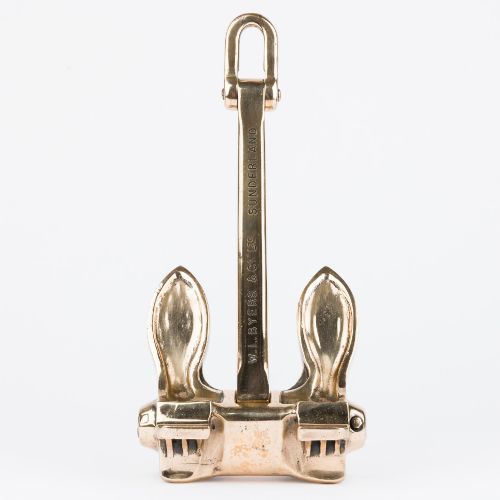
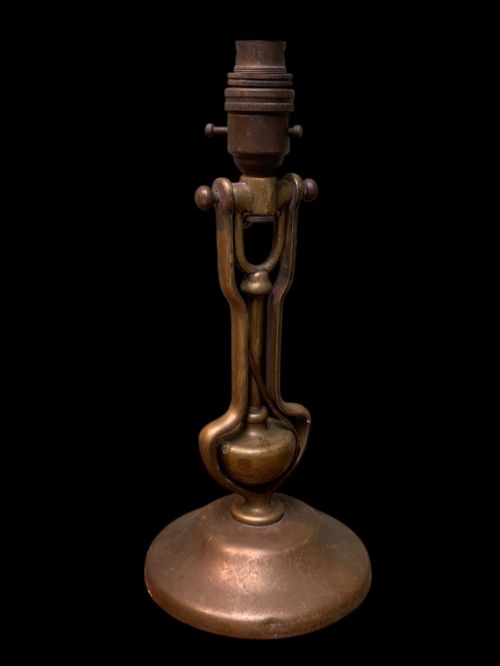


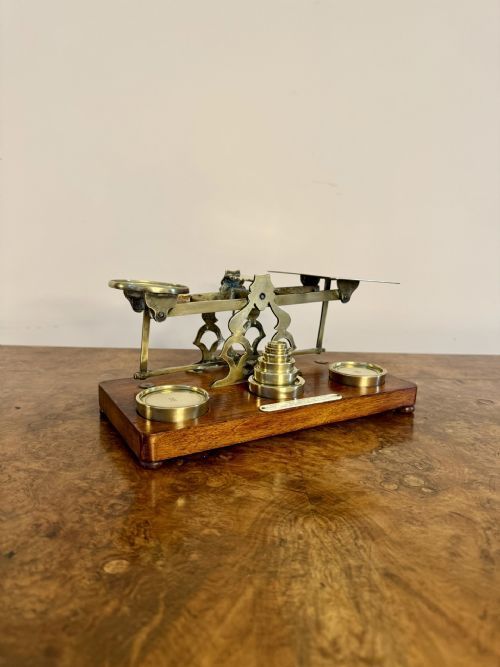


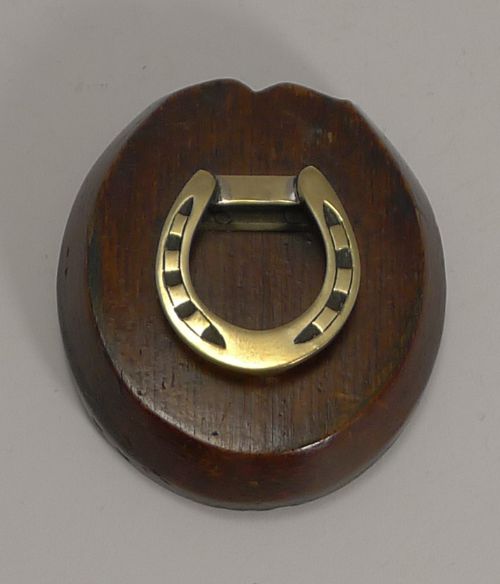


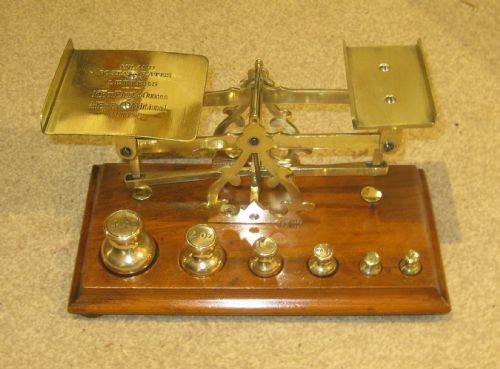


Brass Desk Weight
These brass desk weight items span Victorian and Edwardian postal scales, clips and magnifiers, offering period utility for the desk.
Brass Desk Weight
A brass desk weight encompasses functional Victorian and Edwardian desk accessories, predominantly postal scales, letter clips, and magnifiers. When searching for a brass desk weight, buyers encounter utilitarian instruments designed for nineteenth-century correspondence and office management.
The objects frequently combine cast brass with mounted timber bases in mahogany, oak, or walnut, whilst specific variants include nickel-plated ship fittings and hanging letter clips. These functional desk pieces reflect the material culture of late nineteenth and early twentieth-century administration.
Materials and construction
Makers constructed these pieces using cast brass for working mechanisms, clips, and scale pans, frequently pairing the metal with dense hardwoods like mahogany and oak for stability. Selected items incorporate nickel-plated brass or glass lenses, demonstrating the period's reliance on durable metalwork and turned wood.
Moulding and casting techniques formed the structural brass components, whilst woodwork involved precision joinery and mounted platforms to support counterbalanced scale arms and spring-loaded clips.
Brass Desk Weight Retail Price Guide 2026
Typical asking prices for brass desk weight among the pieces listed under this phrase on Sellingantiques today, from the lower quarter to the upper quarter. They describe what is for sale here now, not the wider market.
Listings feature Victorian and Edwardian pieces combining cast brass with mahogany, oak, walnut, and glass across postal scales and letter clips.
Assessing quality
Quality differentiates through the precision of the brass casting, the crispness of maker inscriptions, and the integrity of the mounted timber bases. Finer examples retain balanced moving parts and original finishes on both metal and wood.
Superior items exhibit robust mechanical action in postal scales and letter clips, whereas lesser pieces display simpler construction and softer cast detail without specific maker attribution.
The Brass Desk Weight Glossary
- Postal scales
- A weighing device designed specifically for letters and parcels, typically featuring a brass beam and calibrated weights. These instruments sat on Victorian desks to calculate postage rates.
- Letter clip
- A spring-loaded mechanical device mounted on a wooden or cast brass base to hold correspondence securely. They represent a common form of desk accessory from the mid-nineteenth century onwards.
- Gimbal
- A pivoted ring system that allows a lamp or compass to remain horizontal regardless of the motion of a ship. Maritime pieces often incorporate this hardware.
- Cast brass
- An alloy poured into moulds to create shaped decorative and structural components. This technique produced the durable frames seen on period desk accessories.
Brass Desk Weight: Frequently Asked Questions
What is a brass desk weight?
A brass desk weight typically refers to functional desk accessories from the Victorian and Edwardian eras, including postal scales, letter clips, and magnifying glasses.
These pieces combine cast brass components with wooden bases, serving both practical administrative roles and decorative functions on historical writing tables.
How were postal scales used?
Postal scales measured the weight of letters and small parcels to determine the correct postage required for mail delivery in the nineteenth century.
Users placed correspondence on the brass pan and checked the balance against matching calibrated weights stored in the wooden base.
How do I date these items?
Dating relies on stylistic markers, material combinations, and specific mechanical designs associated with the Victorian and Edwardian periods.
Maker stamps and registration marks stamped into the brass also provide reliable chronological evidence for manufacturing dates.
How should I clean brass desk items?
Cleaning antique brass requires minimal intervention to preserve the aged surface patina and historical character built up over decades.
Avoid harsh abrasives or chemical polishes that strip away surface oxidation, opting instead for a soft, dry cloth to remove dust.