

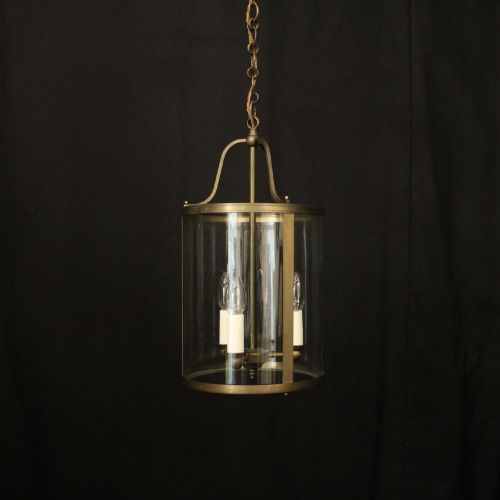
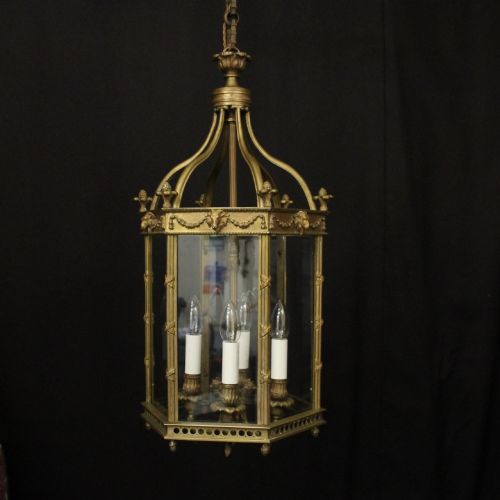
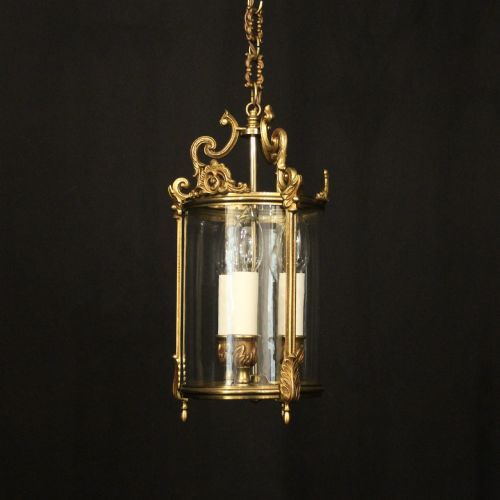
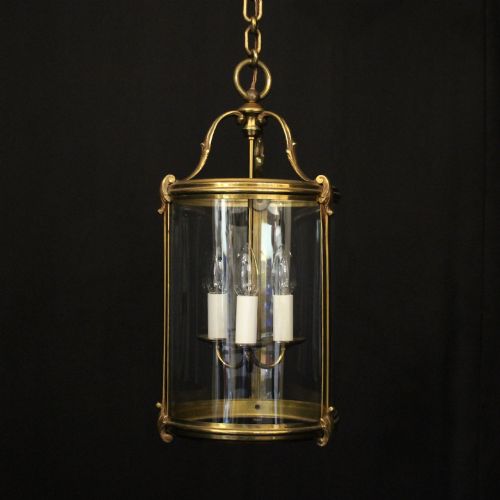


Brass Cylinder Lantern
A brass cylinder lantern brings immediate focus to an entrance, combining metal and glass to throw clean light across a hallway.
Brass Cylinder Lantern
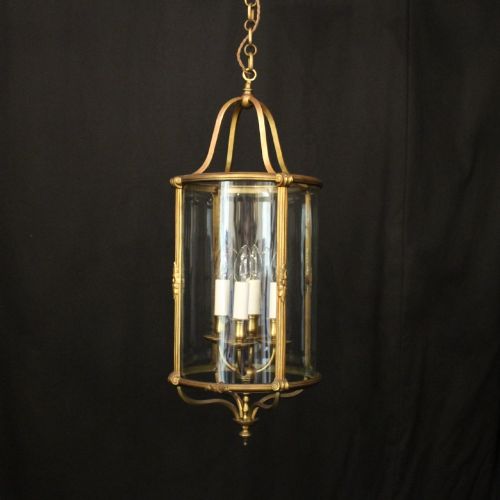
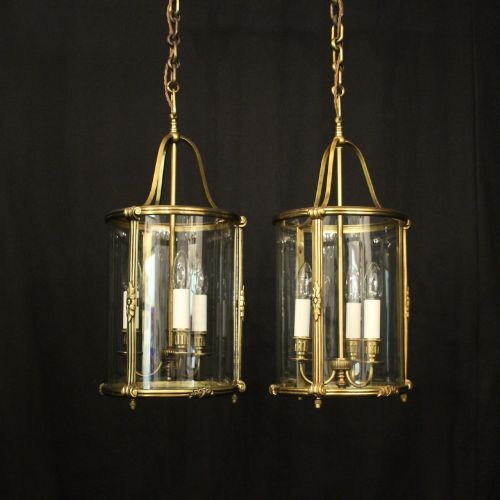
A brass cylinder lantern is primarily found in hanging ceiling forms, functioning as a hall lantern, pendant light, or ceiling light to illuminate narrow spaces. These pieces span from nineteen hundred through nineteen thirty, with Edwardian examples and specific nineteen-ten Arts and Crafts pieces also appearing.
French designs dominate the selection, heavily featuring French Neoclassical, French Chateau, and French Rococo styles alongside English Regency and Georgian Revival interpretations. Most examples employ a convex glass body held within a metal framework, often designed to house multiple internal lights.
Makers and designers are uncredited in the records, leaving the focus entirely on the physical characteristics of the metalwork and glass configuration. Buyers frequently encounter pieces described simply as large hanging lanterns or specific triple-light and four-light variants.
How they were made
Construction relies upon brass, gilt brass, bronze, and gilded bronze combined with clear or frosted glass panes. Metal frameworks are cast or fabricated to support curved convex glass panels that shape the output of the internal bulbs.
Surface treatments range from plain polished brass to heavy gilding on bronze frames, providing distinct reflectivity under interior illumination. Structural assembly typically involves interlocking metal collars and vertical glazing bars secured around a cylindrical or slightly rounded profile.
Brass Cylinder Lantern Retail Price Guide 2026
Typical asking prices for brass cylinder lantern among the pieces listed under this phrase on Sellingantiques today, from the lower quarter to the upper quarter. They describe what is for sale here now, not the wider market.
Some lanterns have survived a century of hallway drafts and still possess their original convex glass panels.
What varies in quality
The weight and finish of the metalwork set the foundation for quality, distinguishing thick cast bronze or substantial brass from lighter gauge alternatives. Gilt finishes show variation in depth and remaining coverage across the decorative mounts and frames.
Glass selection introduces another distinction, particularly where convex or frosted panes are utilised to diffuse the internal light. The complexity of the frame design, ranging from simple early twentieth-century geometry to elaborate Rococo or Neoclassical casting, dictates the overall character.
The Brass Cylinder Lantern Glossary
- Convex glass
- Curved glass panels that bulge outward to soften and disperse the light emanating from within the lantern frame. This shape adds depth to the cylindrical profile.
- Gilt bronze
- Bronze metal treated with a thin layer of gold or gold-coloured finish to enrich the surface appearance. It is frequently seen on French period lighting.
- Hall lantern
- A ceiling-hung lighting fixture specifically scaled for corridors, vestibules, and entranceways. These pieces direct illumination downward while casting light through side panels.
- Arts and Crafts
- A design movement prioritising honest construction, plain materials, and simple utility over excessive ornamentation. Pieces from this tradition avoid historicist revival motifs.
- French Neoclassical
- A style drawing upon classical Greek and Roman proportion, symmetry, and restraint. It appears in the restrained linear mounts of early twentieth-century hanging lights.
Brass Cylinder Lantern: Frequently Asked Questions
Where should a brass cylinder lantern hang?
These lanterns suit entrance halls, stairwells, and high-ceilinged corridors where vertical hanging space allows the piece to be viewed from below.
Position them centrally to ensure the glass and metalwork distribute light evenly across the surrounding walls.
How do I clean the glass panels?
Remove dust with a soft microfibre cloth before applying a mild glass cleaner directly to the cloth rather than the lantern.
Take care near gilt or brass surfaces to avoid transferring moisture or cleaning agents onto the metal frames.
Can these lanterns be rewired for modern use?
Many surviving examples undergo rewiring to meet contemporary electrical standards while retaining their original brass and bronze bodies.
Check the internal lamp holders and wiring path with a qualified professional before installation.