

Brass Cut Glass Chandeliers
These brass cut glass chandeliers bring radiant illumination and period elegance to any interior space through their shimmering glass drops and gleaming metal frames.
Brass Cut Glass Chandeliers
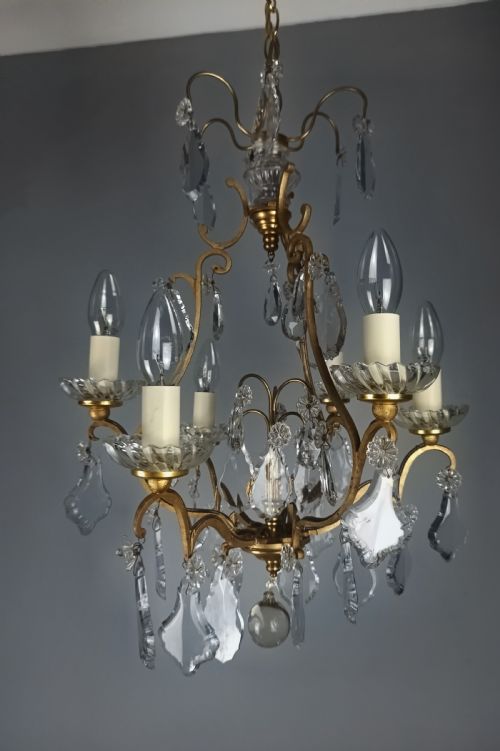
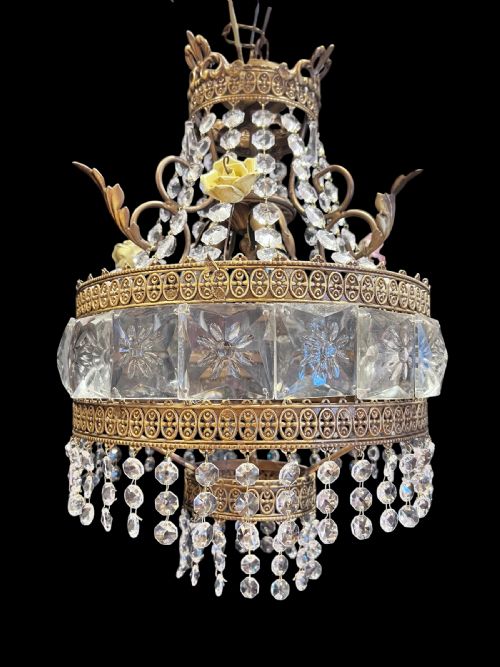
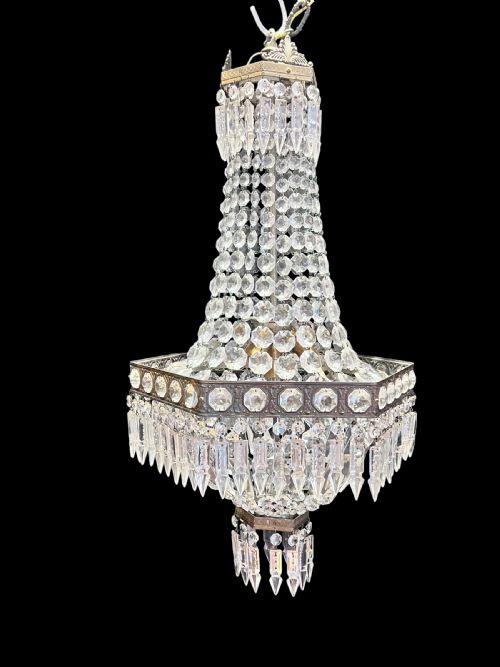
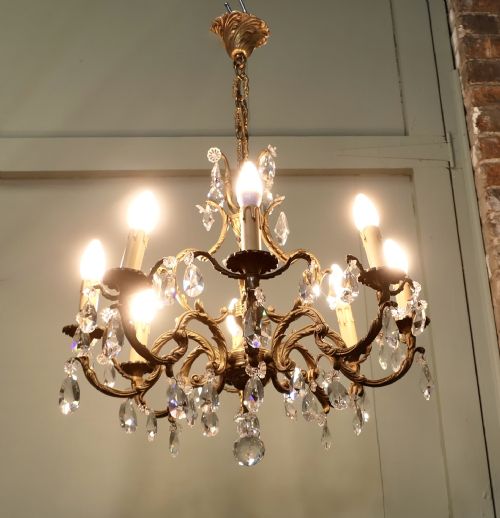
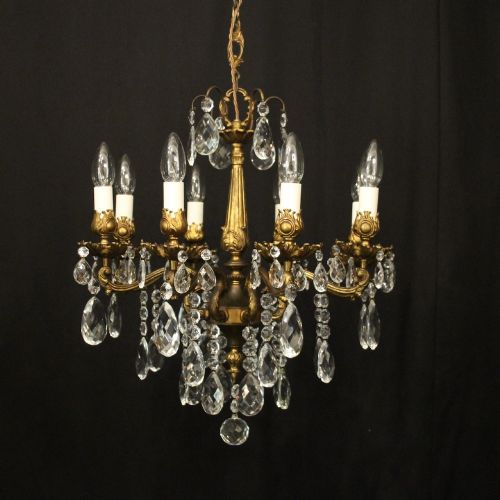
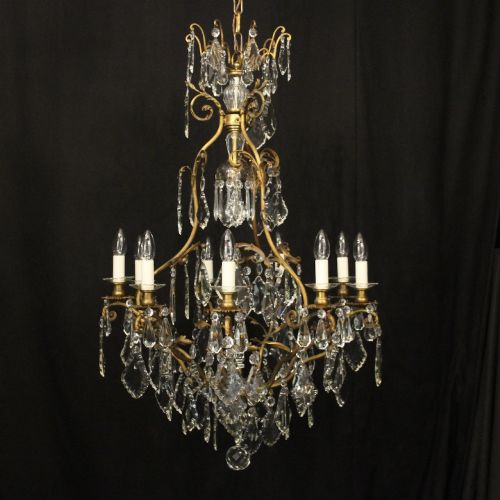
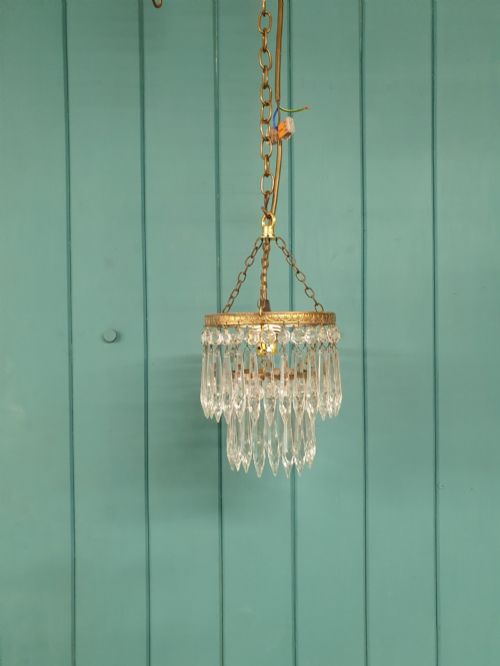
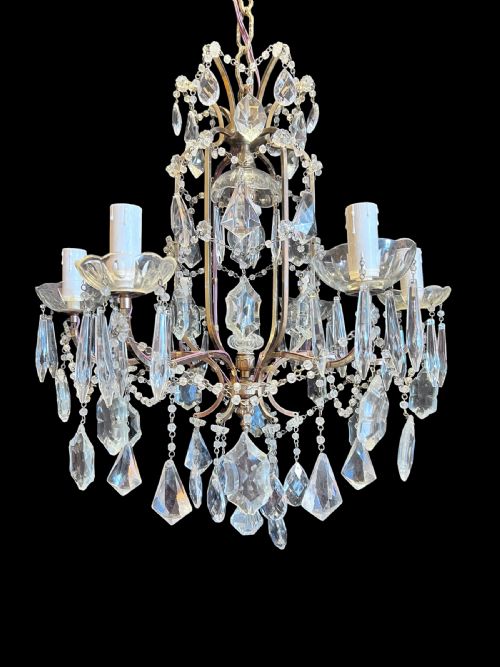
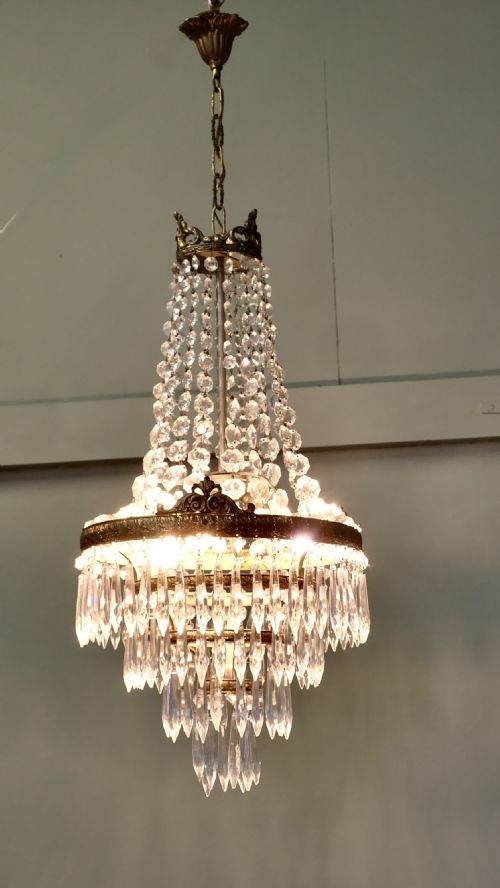
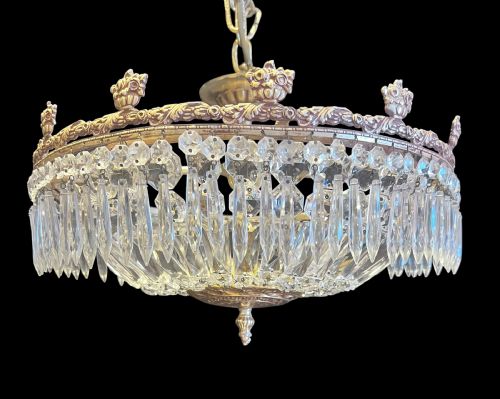
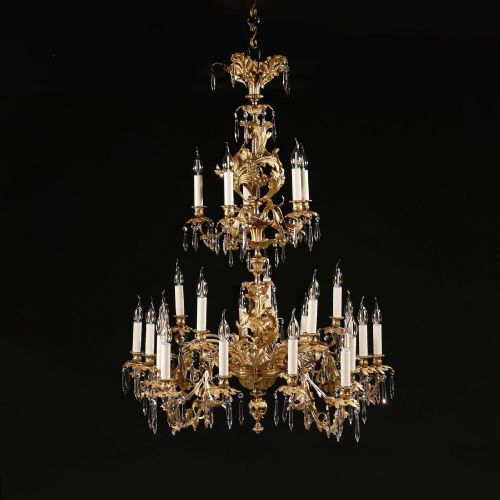
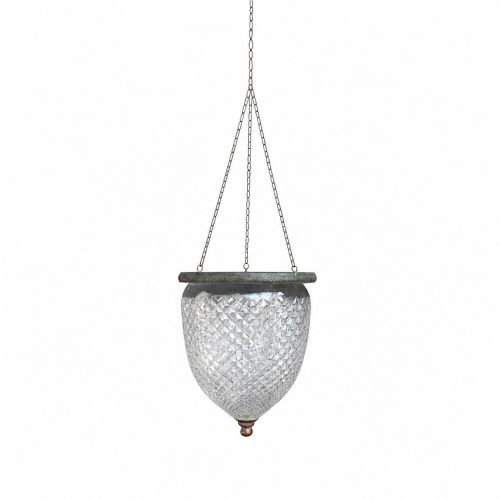
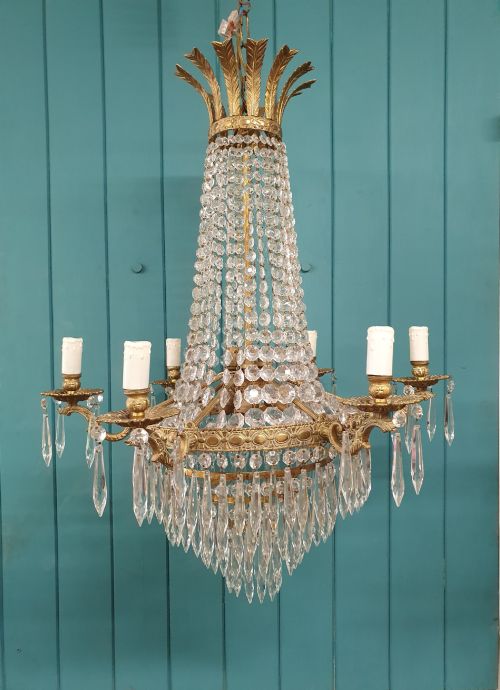
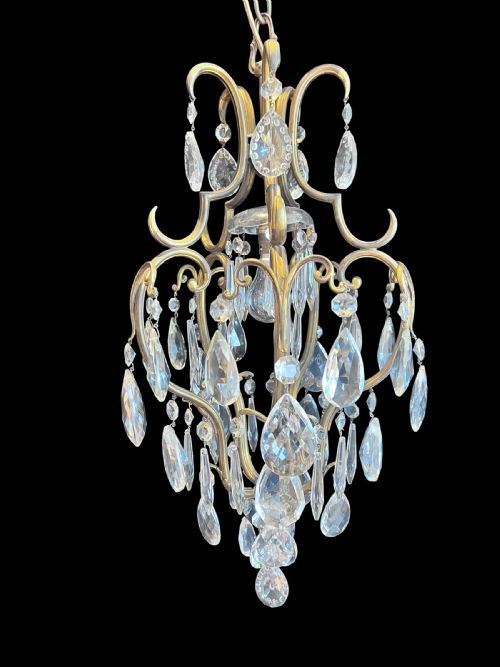
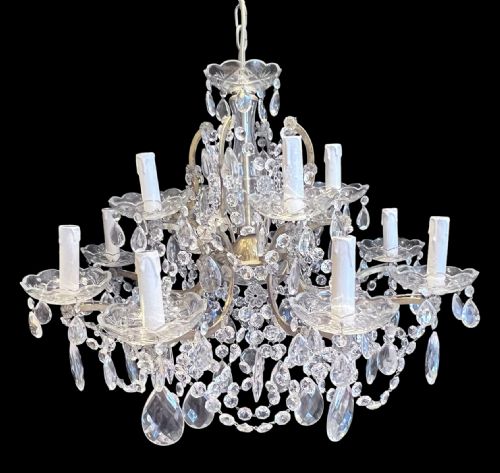
When you search for brass cut glass chandeliers, you encounter elaborate hanging light fixtures designed to catch and refract light across a room. These pieces range from compact Edwardian bag lights to grand multi-armed fixtures originating from French and Italian workshops.
The selection on this page most frequently presents early twentieth-century examples alongside nineteenth-century and Edwardian designs. Common forms include birdcage frames, basket structures, and tent and bag configurations suspended from ceilings.
Makers often drew upon established aesthetic movements such as French Empire, Rococo Revival, and Neoclassical styles. Brass frames provide the structural support while extensive glass components create the characteristic visual sparkle.
How they were made
Artisans constructed the structural framework using cast or spun brass, gilt bronze, and gilt metal to form arms, bands, and decorative mounts. These metal elements required precise joining to support the substantial weight of suspended glass.
Glass elements including lustres, beads, and prisms were shaped by hand cutting, moulding, or blowing. Individual pieces were then wired or pinned together using small brass pins or wire connectors to form intricate tents, cascades, and bag shapes.
What varies in quality
The calibre of a fixture depends heavily on the precision of the glass cutting and the clarity of the crystal components. High-end examples utilise heavy, hand-cut glass that refracts light with sharp brilliance, whereas simpler pieces employ moulded or pressed glass with softer edges.
Metalwork execution similarly separates the output; cast brass mounts carrying detailed chasing or lion mask motifs indicate superior workshop output compared to plain spun metal rings. The density and complexity of the glass dressing, from simple single tiers to multi-layered waterfalls, determine the visual richness of the final piece.
The Brass Cut Glass Chandeliers Glossary
- Plafonnier
- A ceiling-mounted light fixture that sits flush or very close to the ceiling surface rather than hanging on a long drop chain.
- Lustre
- A cut glass pendant or hanging droplet suspended from the chandelier frame to catch and reflect light.
- Tent and bag
- A specific structural arrangement where glass beads form a triangular tent shape at the top above a gathered bag of drops below.
- Marie Theresa
- A distinct style of chandelier characterised by flat metal arms completely covered in glass plates and secured with crystal rosettes.
- Birdcage
- A rounded metal frame resembling an avian enclosure that supports interior candles or electric lights surrounded by cascades of glass beads.
Brass Cut Glass Chandeliers: Frequently Asked Questions
How do I clean brass cut glass chandeliers?
Maintenance involves gently wiping each glass pendant and brass element with a mild soapy solution while the fixture hangs in place.
Care should be taken to support fragile drops and dry them thoroughly to maintain their reflective sparkle.
Can these antique chandeliers be wired for electricity?
Most surviving examples have already been converted from their original candle-burning configuration to modern electrical wiring.
Qualified electricians can easily adapt internal wiring to meet current safety standards without altering the external antique appearance.
What ceiling height do I need?
Selecting the right scale depends on the room proportions and the physical drop length of the specific fixture.
Smaller bag and dome styles suit standard ceiling heights, while multi-armed or waterfall designs require elevated spaces to hang properly.
How do I distinguish Edwardian pieces from nineteenth-century ones?
Edwardian examples frequently favour lighter brass frames and compact bag or spike formats suited to urban townhouses.
Nineteenth-century counterparts tend toward heavier gilt bronze mounts, larger proportions, and more complex classical revival ornamentation.