



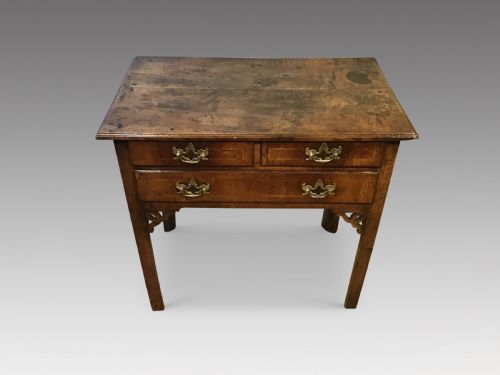


Brass Corner Side Tables
Brass corner side tables bring practical surface space to awkward angles, combining timber frames with metal mounts for period interiors.
Brass Corner Side Tables
These pieces occupy transitional spaces in rooms, fitting neatly into junctions where standard furniture proves too bulky. The selection on this page includes variants from the eighteenth century through to the early twentieth century, drawing on Georgian, Regency, and Art Nouveau influences.
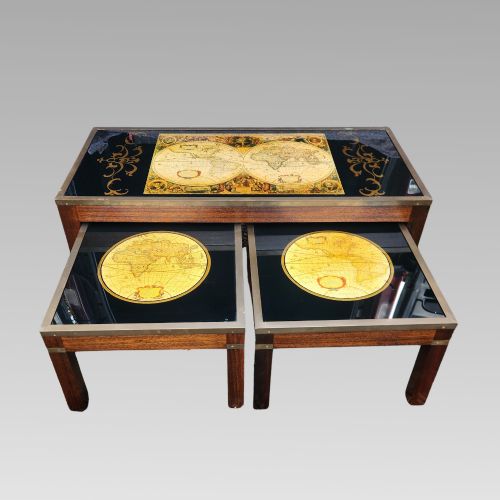
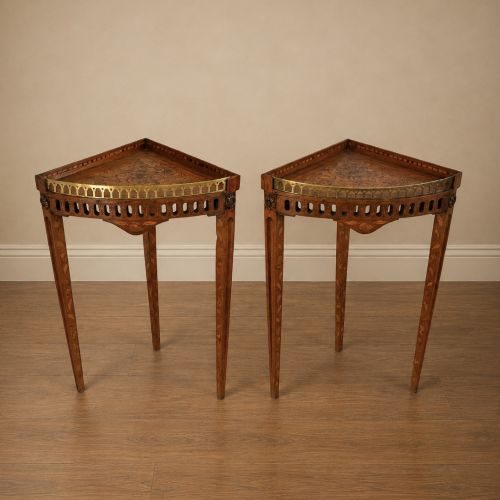
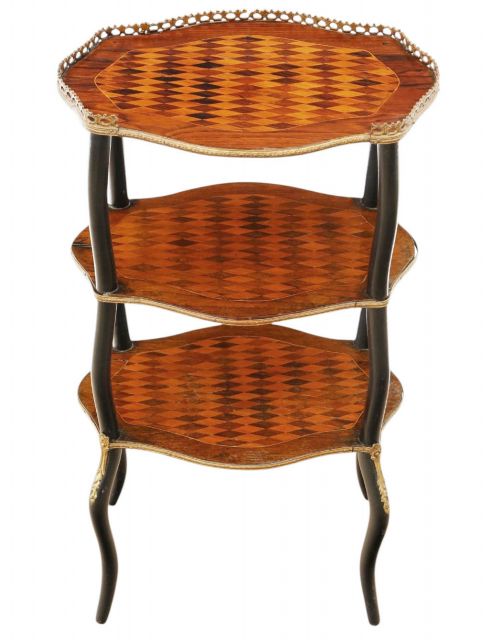
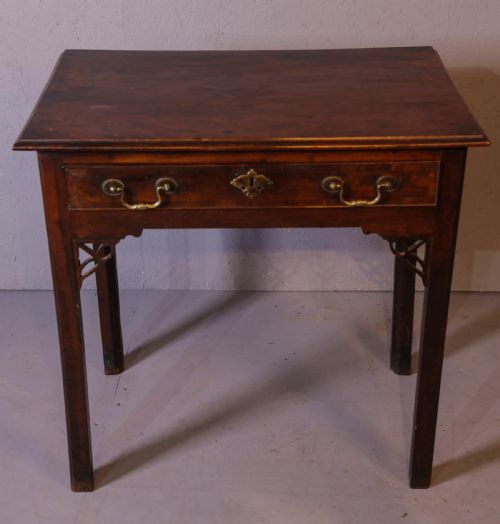
Forms extend beyond simple ledges to encompass marquetry inlaid lamp tables, campaign items, and multi-tiered etageres. Timber choices span mahogany, walnut, yew, birdseye maple, and mixed timber parquetry, paired with cast brass galleries and mounts.
Buyers encounter items originating from distinct historic periods, including structured 18th century Neoclassical designs and later French revival interpretations. Each iteration uses the corner footprint efficiently while maintaining decorative presence.
Construction and materials
Construction relies on cabinetmaking traditions using dense hardwoods such as mahogany and walnut, alongside decorative veneers like satinwood and birdseye maple. Parquetry and marquetry techniques introduce geometric and floral patterns across table tops and shelf surfaces.
Metalwork forms an integral structural and decorative component, utilising cast brass galleries to secure items on table tops and trays. Engraved copper trays and ebonised wood details appear in specific continental pieces from the early twentieth century.
Brass Corner Side Tables Retail Price Guide 2026
Typical asking prices for brass corner side tables among the pieces listed under this phrase on Sellingantiques today, from the lower quarter to the upper quarter. They describe what is for sale here now, not the wider market.
Current listings feature materials spanning solid mahogany, walnut, yew, birdseye maple, ebonised wood, and mixed timber parquetry.
Assessing quality in construction
Quality rests upon the precision of the timber joints and the crispness of the parquetry inlay. Superior examples demonstrate harmonious grain selection in woods like yew and mahogany, where veneers align naturally across corners and angles.
The integration of brass elements defines the execution standard, distinguishing cast galleries with sharp definition from heavier, less refined metalwork. Original surface colour and the retention of historic patination elevate the standing of any piece.
The Brass Corner Side Tables Glossary
- Gallery
- A raised decorative border, frequently pierced brass, fitted around the edge of a table top to prevent objects from sliding off. It adds both structural security and a distinct metallic contrast to the underlying timber.
- Parquetry
- A geometric mosaic of wood pieces used for decorative floors and furniture surfaces. It creates patterned top surfaces using contrasting timbers such as walnut and ebonised wood.
- Marquetry
- The art of applying pieces of veneer to a structure to form decorative designs. Floral or pictorial motifs appear frequently on eighteenth-century tabletops.
- Etagere
- A piece of furniture consisting of a set of open shelves for displaying small objects. These tiers are often supported by slender columns in corner configurations.
- Campaign
- Furniture designed to dismantle or fold for military travel. Pieces feature recessed brass handles and reinforced corners for durability.
Brass Corner Side Tables: Frequently Asked Questions
What periods do these tables span?
The inventory encompasses items from the eighteenth century, the Regency era, and the early twentieth century. Styles range from Georgian neoclassical work to Edwardian and Art Nouveau creations.
Each period brings distinct timber choices and decorative vocabulary, moving from solid yew and mahogany towards complex parquetry and brass-mounted display tiers.
How do I place a corner table?
These tables are built specifically to occupy room angles that standard rectangular furniture leaves empty. They provide functional surfaces for lamps, display items, or general storage without obstructing pathways.
Matching the period of the table to existing room architecture helps integrate the piece naturally into the corner space.
What timbers were used?
Cabinetmakers utilised dense hardwoods including mahogany, walnut, and yew for primary frames and structural elements. Decorative surfaces incorporate satinwood, birdseye maple, and mixed timber parquetry.
Ebonised wood also appears on specific etageres and display pieces to provide dark contrast against lighter brass mounts.
What is a brass gallery?
A brass gallery is a protective railing fitted around the perimeter of a table top or shelf. It secures items placed on the surface while introducing a polished metal accent.
These galleries range from simple pierced brass strips to elaborate cast structures found on lamp and side tables.