



Brass Column Shelving
Brass column shelving brings together structural metal supports and fine timbers to create display space that commands any room.
Brass Column Shelving
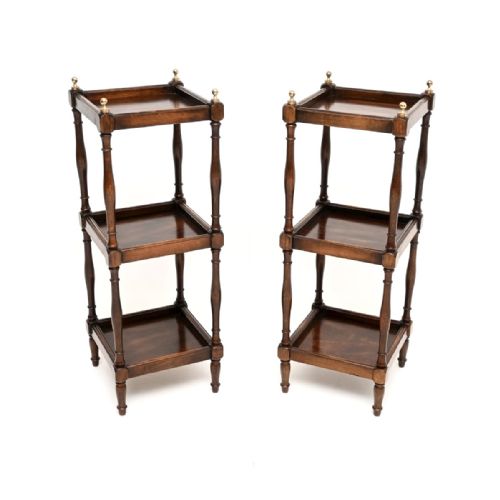
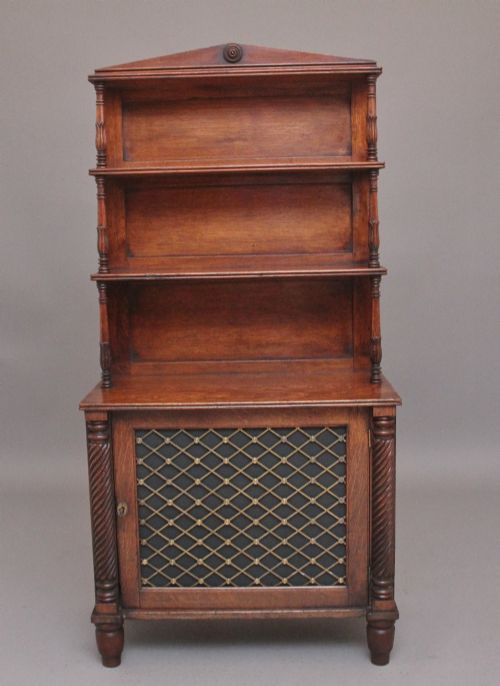
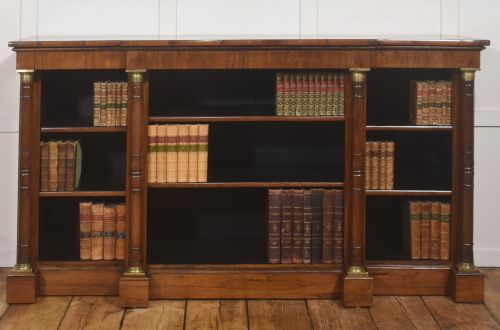
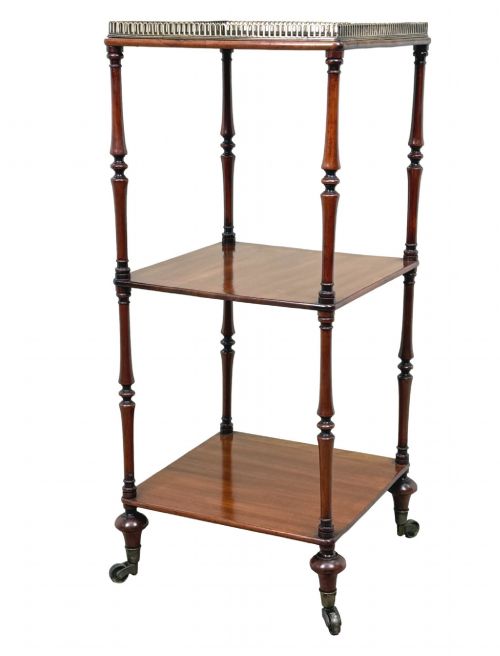
Brass column shelving encompasses bookcases, étagères, whatnots, and wall-hanging shelves supported or mounted with brass elements. These pieces draw on Regency, Victorian, Edwardian, and Neoclassical design traditions.
The most common versions encountered here are mahogany and rosewood bookcases or whatnots, frequently utilising brass mounts, columns, or wirework alongside rich timber construction.
Makers utilised woods such as oak, birdseye maple, and parcel gilt finishes to complement the characteristic brass detailing across various periods from the nineteenth century onwards.
How they were made
Cabinetmakers constructed the main framework from dense timbers like mahogany, rosewood, and oak, often selecting figured veneers such as birdseye maple for visual depth.
Cast and polished brass was incorporated as columns, mounts, or hanging brackets, secured carefully to the timber body to provide both structural support and decorative contrast.
Brass Column Shelving Retail Price Guide 2026
Typical asking prices for brass column shelving among the pieces listed under this phrase on Sellingantiques today, from the lower quarter to the upper quarter. They describe what is for sale here now, not the wider market.
One notable bookcase cleverly conceals its contents behind leather dummy books.
What varies in quality
The choice of timber underpins the piece, with richly figured rosewood, mahogany, and birdseye maple setting apart finer examples from simpler oak constructions.
The execution and weight of the brass components, from structural columns to subtle mounts, determine the refinement and visual balance of the finished shelving.
The Brass Column Shelving Glossary
- Étagère
- A set of open shelves for displaying small objects or books. These typically feature slender uprights.
- Whatnot
- A freestanding piece of furniture with multiple tiers for books or ornaments. They often incorporate brass columns or spindle supports.
- Breakfront
- A piece of furniture where the central section projects forward from the sides. This architectural form is common in larger bookcases.
- Parcel gilt
- Partially gilded with gold leaf or paint. This technique highlights carved details or mouldings against the underlying wood.
Brass Column Shelving: Frequently Asked Questions
What is an étagère?
An étagère is a tiered piece of furniture designed specifically for display. Multiple open shelves allow ornaments or books to be arranged clearly.
These pieces often rely on slender columns or uprights to maintain an airy appearance while supporting timber shelves.
How were whatnots used?
Whatnots served as versatile display and storage furniture in nineteenth-century interiors. They held books, small ceramics, and decorative objects in principal rooms.
Their tiered design made them practical for corners or wall spaces where larger cabinets would prove too bulky.
What timbers are common?
Makers predominantly used dense hardwoods such as mahogany and rosewood. Oak and birdseye maple also appear across various nineteenth-century examples.
These timbers provided a stable foundation for intricate brass mounts and column supports.
How do styles differ?
Styles range from restrained Regency and Neoclassical designs to ornate Victorian and Edwardian interpretations. Each period brought distinct proportions and decorative vocabulary to the shelving.
Details like parcel gilding, leather dummy books, and breakfront forms distinguish one stylistic approach from another.