
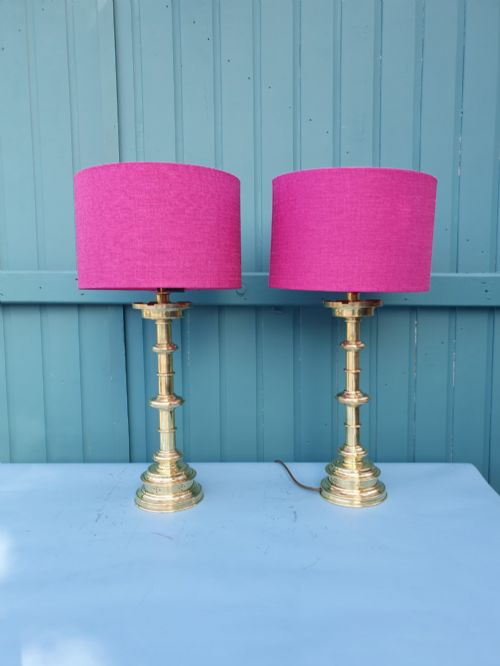


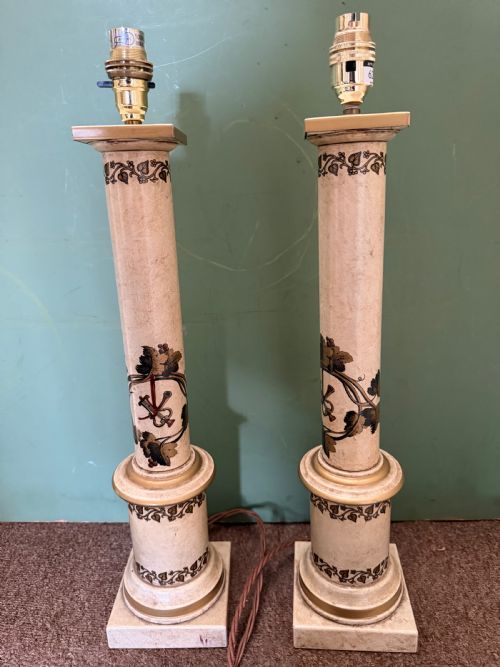
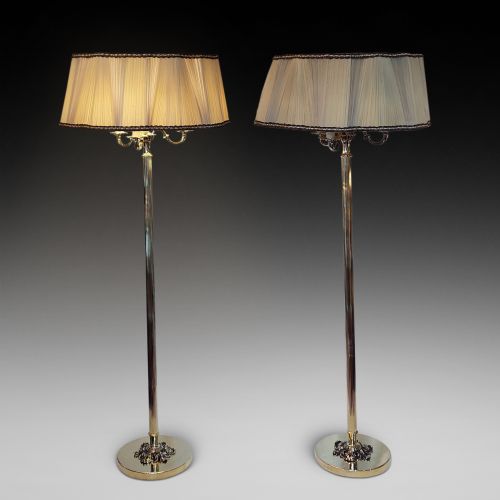


Brass Column Lamp Pair
A brass column lamp pair brings classical dignity to a room, offering matched illumination through sturdy metal shafts that echo ancient architectural orders.
Brass Column Lamp Pair
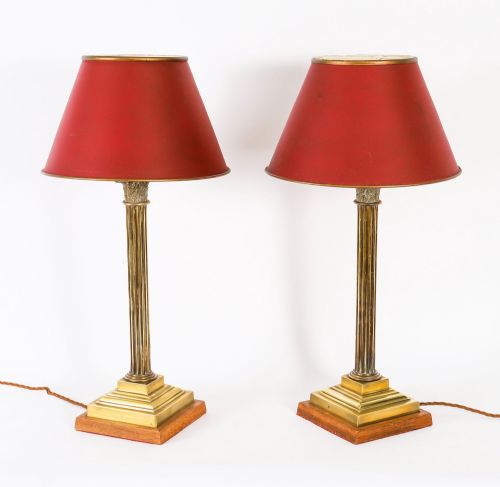
A brass column lamp pair consists of matched lighting fixtures built around upright shafts, heavily represented by the Corinthian order and neoclassical styles. These pairs frequently originate from the nineteenth and early twentieth centuries, spanning Victorian and Edwardian periods.
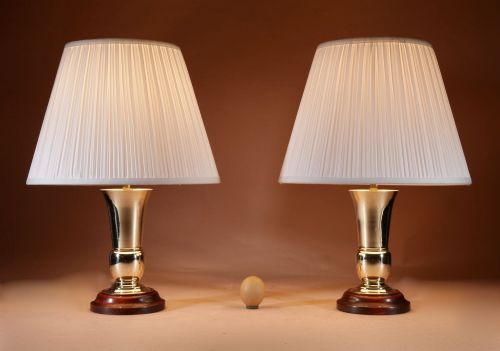
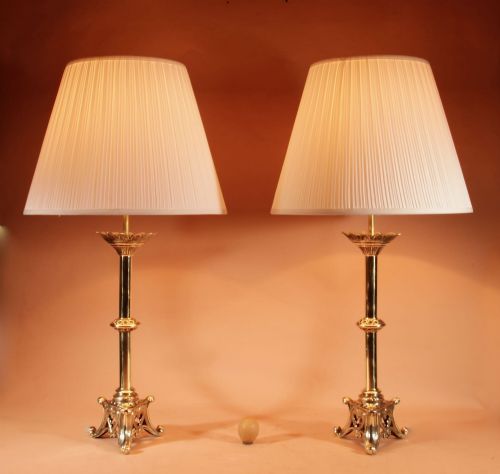
The selections on this page range from compact table models to towering standard lamps and floor uplighters. Many adapt earlier candle lamps or church candlesticks into electrified formats using brass, ormolu, and bronze.
How they were made
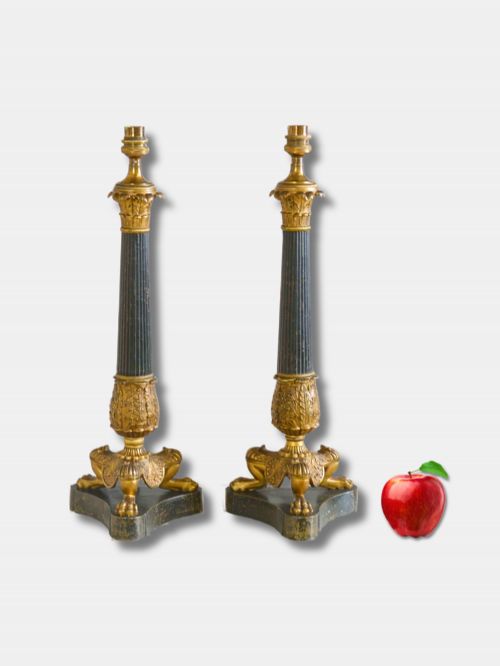
Maker workshops built these column lamp pairs using heavy cast brass, often combining patinated and polished metal surfaces to create textural contrast. Finer examples incorporate secondary materials like white marble bases, crystal glass, or gilt ormolu mounts.
Casting techniques allowed intricate capitals and stepped plinths, while later pieces occasionally integrated telescopic mechanisms for adjustable height. Structural elements were threaded or joined firmly to support the weight of the metal shafts.
Some towering column lamps started life as solitary church candlesticks before finding a second career holding lightbulbs.
What varies in quality
The crispness of the casting defines the upper tier of these pieces, particularly in the detailed acanthus leaves of Corinthian capitals. Heavy gauge brass and genuine Ormolu or bronze outlast thinner stamped metal alternatives.
Proportion and matching symmetry dictate overall success in a pair, where identical column fluting and weighted bases ensure balanced placement on a sideboard or floor.
Hinks & Sons
The Brass Column Lamp Pair Glossary
- Corinthian
- An architectural column style featuring an ornate capital decorated with carved acanthus leaves. This motif appears frequently on nineteenth-century brass lamp bases.
- Ormolu
- Finely ground high-carat gold mercury-gilded onto a bronze or brass base object. It yields a rich, warm metallic finish seen on French and Regency examples.
- Tole-peinte
- Painted or enamelled sheet metal utilised for decorative shades and canisters. It introduces painted colour alongside polished brass columns.
- Standard lamp
- A tall floor-standing lamp designed to illuminate a wider room area. These often feature heavy weighted bases to support the long vertical shaft.
Brass Column Lamp Pair: Frequently Asked Questions
How do I style a pair in my room?
Symmetrical placement works best for a brass column lamp pair, often flanking a fireplace, sideboard, or large mirror. Their vertical lines draw the eye upward and suit both traditional and transitional interior schemes.
Matching shades unify the pair, though neutral fabric options allow the cast metal bases and detailed capitals to remain the primary visual focus.
Are these lamps wired for modern use?
Many surviving examples have been rewired during their lifetime to meet contemporary electrical standards. It remains prudent to have any vintage lighting checked by a qualified professional before daily use.
Internal wiring paths vary between older conversions and manufactured lamp bases, so inspecting the cord exit points helps determine the internal setup.
How can I tell the period of the brass?
Nineteenth-century pieces generally exhibit heavier cast brass components with hand-finished chasing on the capitals. Later twentieth-century interpretations often feature brighter, more uniform machine finishes and lighter overall weight.
Patina also indicates age, with older bronze and brass showing natural darkening in recessed areas where polishing cloths do not reach.
What is the difference between table and standard lamps?
Table lamps are proportioned for placement on furniture surfaces like desks, pedestals, or side tables. Standard lamps are floor-standing fixtures designed to stand directly on the floor as primary or accent room lighting.
Both variants utilise the same architectural column motifs, simply scaled differently for their respective placement in a room.