




Brass Cloisonne Lighting
Brass cloisonne lighting brings together heavy cast metal and vibrant enamel wirework to illuminate interiors with rich, historical texture.
Brass Cloisonne Lighting
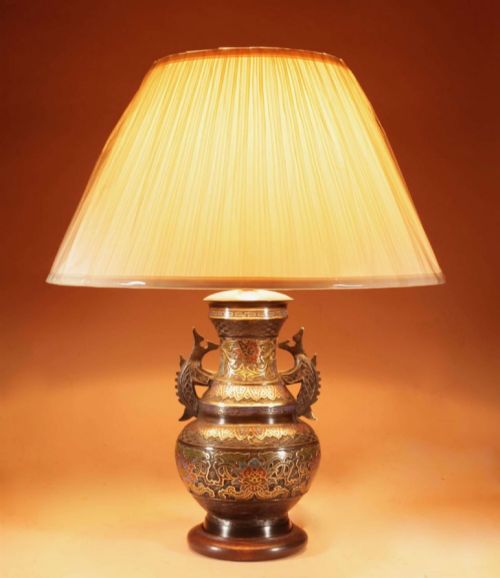
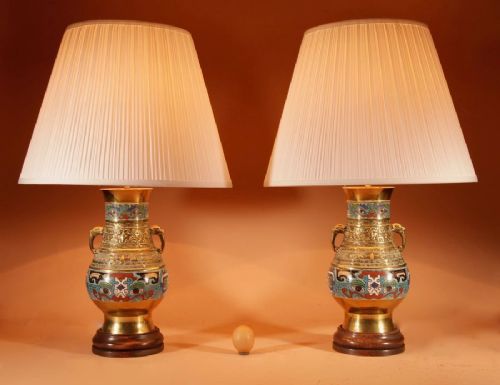
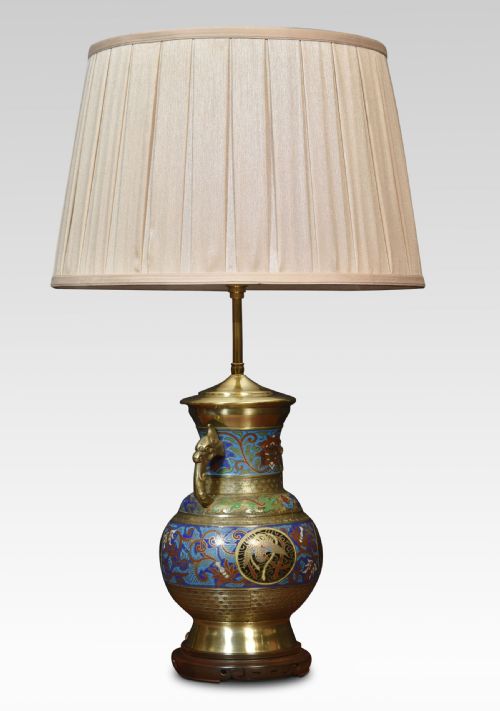
When you search for brass cloisonne lighting, you encounter functional objects repurposed from antique vessels or made originally as lamps during the nineteenth and early twentieth centuries. These pieces span Victorian, Meiji, and Chinese export origins, bringing diverse eastern and western aesthetic traditions into domestic spaces.
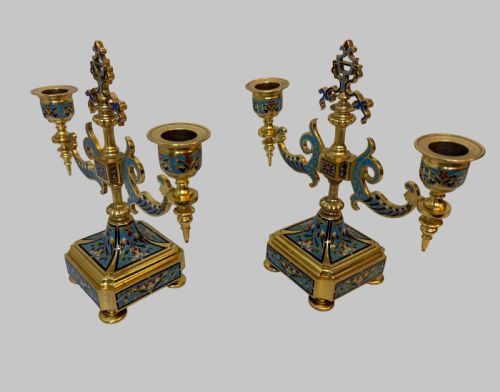
The most common forms on this page are table lamps and pairs of candelabra or candle holders created from converted vases and twin-handled lamp bases. They combine sturdy bronze, gilt bronze, and brass structures with intricate enamel detailing that catches the light.
Originating largely from Chinese and Japanese workshops, alongside nineteenth century French interpretations, these items reflect global trade and design exchanges of the period. Their forms range from simple columnar vases to ornate twin-handled urns fitted for modern electrical use.
How they were made
The construction relies on soldering thin metal wires onto a brass, bronze, or copper base to form cellular compartments known as cloisons. Artisans then fill these tiny geometric or floral sections with coloured enamel paste before firing the piece at high temperatures.
Once fired, the surface is ground down and polished until the metal wire edges flush evenly with the hardened glass-like enamel. Many items incorporate mounted wooden bases, fabric shades, and elaborate gilt bronze hardware to complete the conversion into domestic lighting.
Listings span the nineteenth century through nineteen twenty, incorporating fabric, wood, copper, and bronze alongside traditional cloisonne enamel.
What varies in quality
Quality reveals itself in the precision of the wirework and the density of the enamel fill within each compartment. Finer examples display immaculate symmetry and deeply saturated colours without pitting or bubbling across the brass and bronze surfaces.
The weight of the cast metal and the subtlety of the champlevé or cloisonne detailing separate standard production pieces from finer artisan works. Furthermore, the integrity of the original vessel body before lamp conversion influences the overall artistic merit.
The Brass Cloisonne Lighting Glossary
- Cloisonne enamel
- A technique where thin metal wires are soldered to a metal body to create cells filled with enamel paste. This method produces intricate multi-coloured patterns that define the surface decoration.
- Champleve
- A process where troughs or cells are carved directly into the thick bronze or brass surface rather than soldering wires on top. The excavated areas are then filled with enamel and fired.
- Gilt bronze
- Bronze that has been coated with a thin layer of gold to give a rich, reflective metallic finish. It often accents the mounts and bases of lighting fixtures.
- Grand Tour
- A cultural journey undertaken by wealthy Europeans in the nineteenth century that popularized the collection of exotic souvenirs like micro mosaic chamber sticks and enamel pieces.
- Meiji period
- The era of Japanese history lasting from eighteen sixty-eight to nineteen twelve, known for exceptional metalwork and enamel production exported to western markets.
Brass Cloisonne Lighting: Frequently Asked Questions
Are these lamps converted from old vases?
Many examples begin life as decorative vases or temple vessels before being carefully drilled and fitted for electrical wiring.
This adaptive reuse preserves antique craftsmanship while allowing the pieces to serve modern functional purposes in a home.
How do I clean enamel lamp bases?
Dust the surface gently with a soft, dry cloth to protect the delicate wire compartments and polished metal.
Avoid using harsh chemical polishes or abrasive cloths that might scratch the vitreous enamel or strip the gilt bronze.
Can I use modern lamp shades?
Standard shade carriers and fittings can usually be adapted to accommodate contemporary shades without altering the antique body.
Ensure the scale of the shade complements the heavy proportions of the bronze and enamel base.