


Brass Classical Urns
Brass classical urns bring the architectural severity and romantic grandeur of antiquity directly into domestic interiors through refined metalwork.
Brass Classical Urns
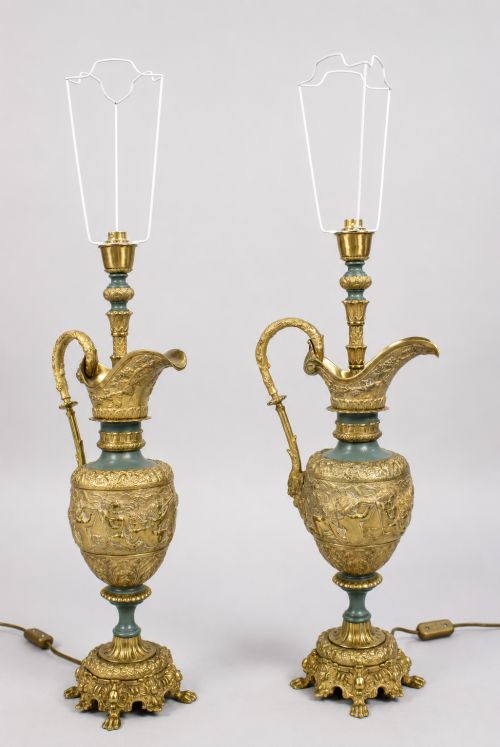
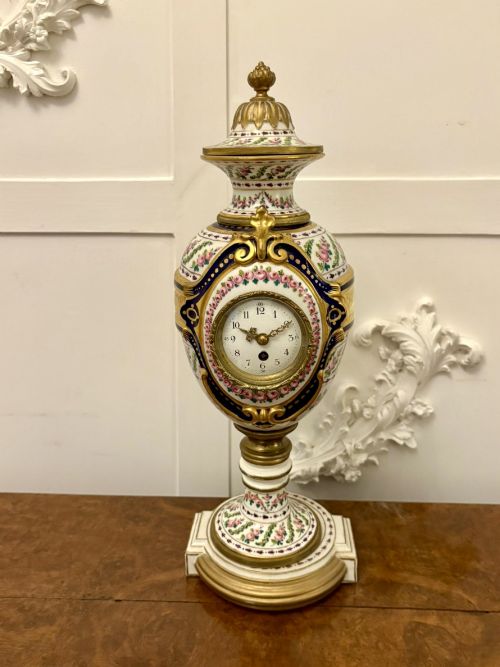
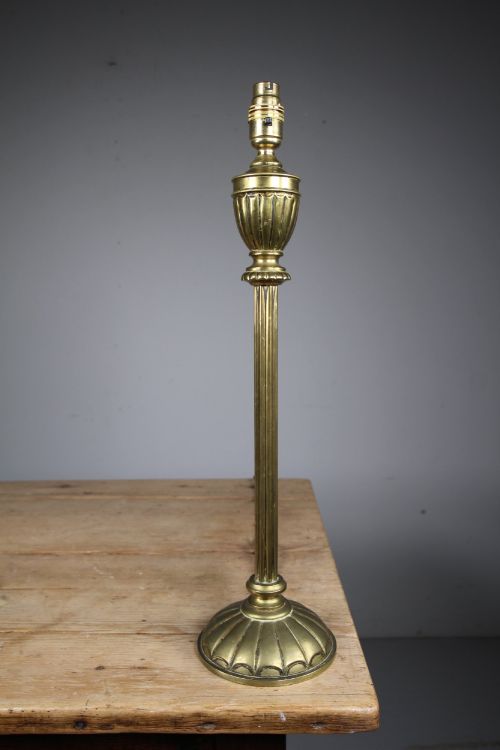
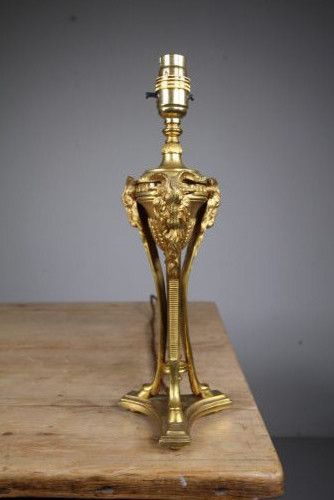
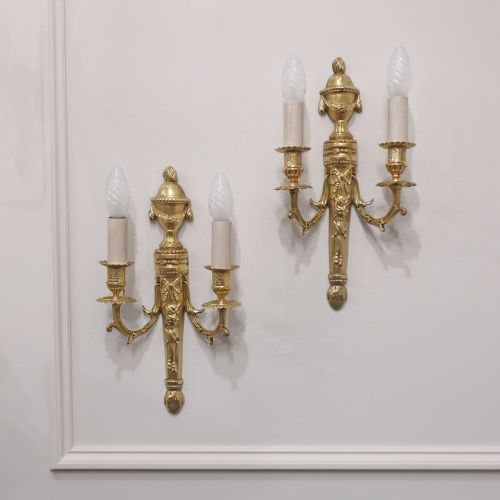
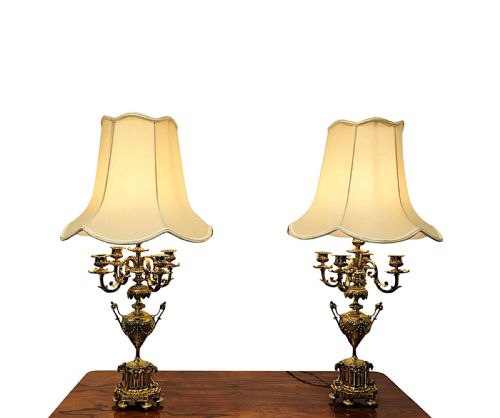
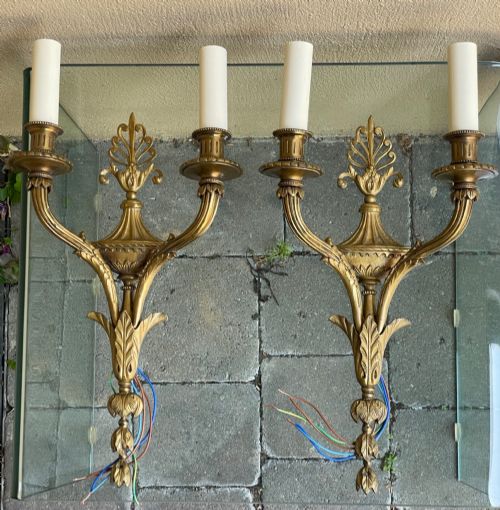
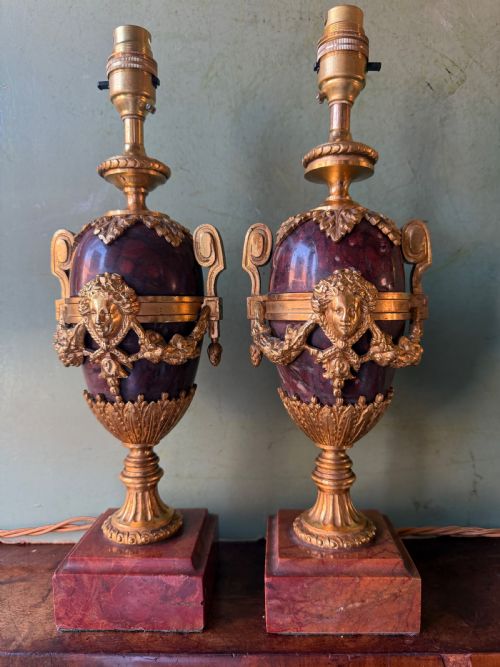
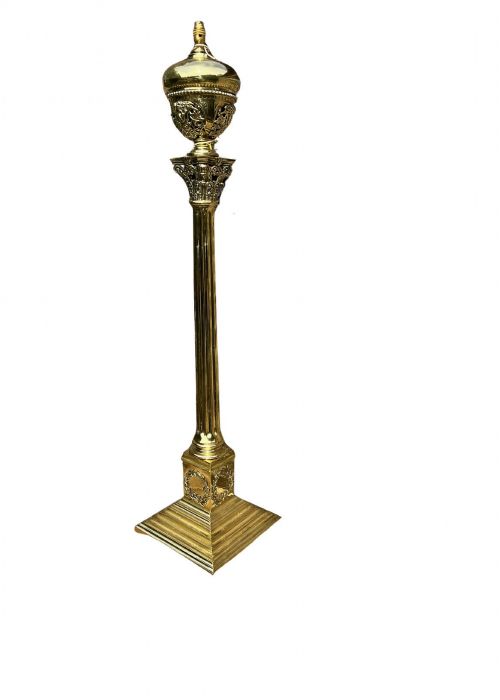
Brass classical urns draw heavily on ancient Greek and Roman forms, frequently adapted into decorative vases, mantel clocks, and converted table lamps. The pieces found here span the nineteenth century through the early twentieth century, reflecting sustained revivals of neoclassical taste.
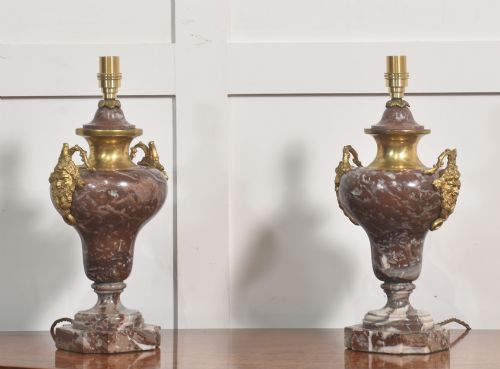
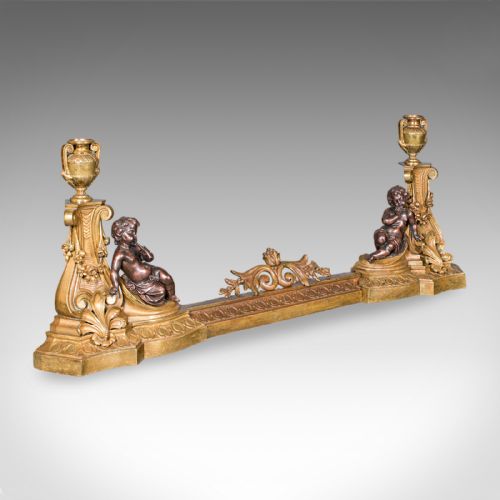
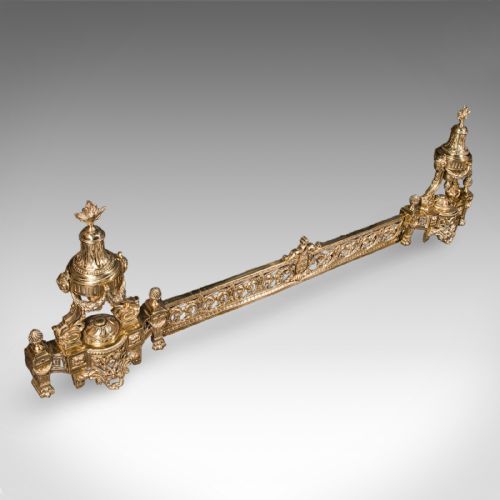
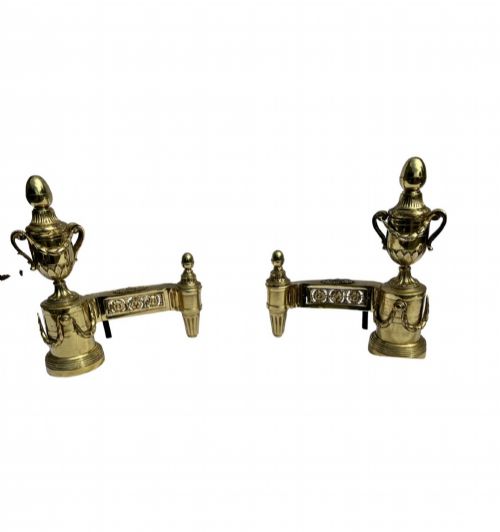
French workshops dominate the selection, often pairing cast brass, gilt bronze, and ormolu with rich components like rouge marble, white onyx, and hand-painted porcelain. English examples lean towards functional hearth accessories such as fire dogs and adjustable fenders incorporating classical motifs.
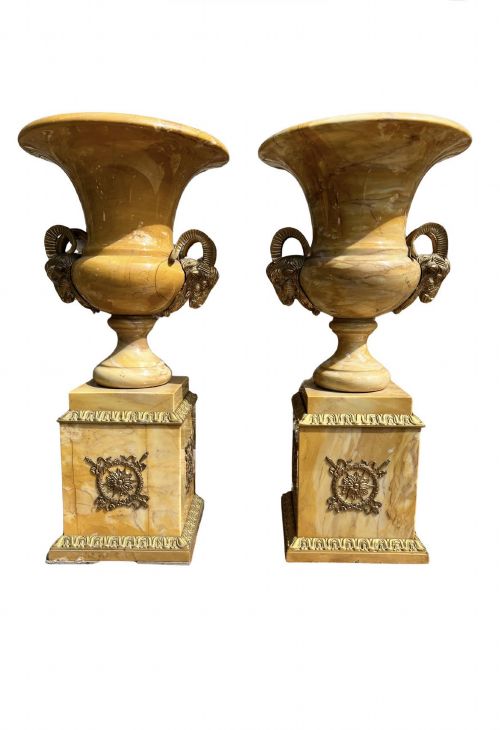
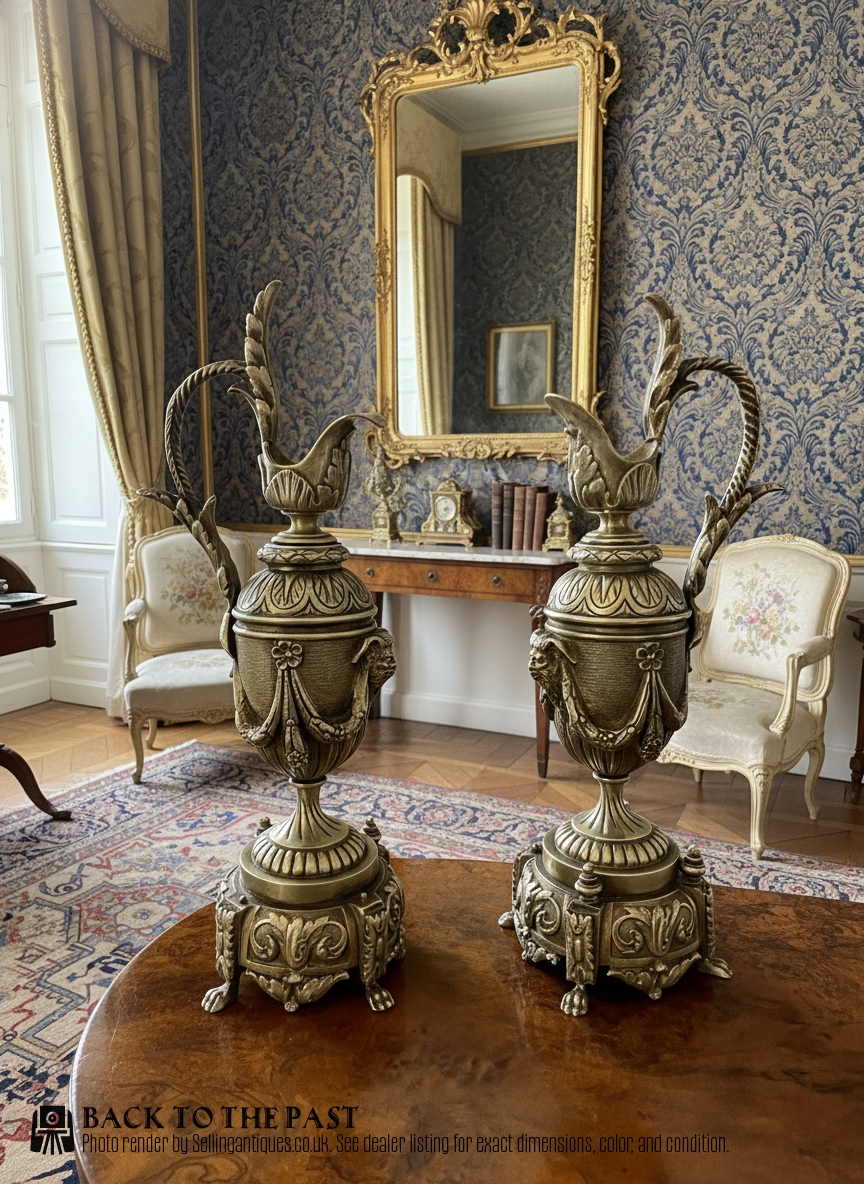
The assortment encompasses both matched pairs and individual decorative vessels, including campana shapes and amphora forms supported by paw feet or marble bases.
How they were made
Manufacturers utilised sand casting to shape heavy components in brass, bronze, and ormolu, followed by meticulous hand-chasing to sharpen foliage, masks, and fluting. Gilt finishes were applied through mercury gilding or electroplating, yielding durable metallic sheens.
Natural stones including Sienna marble, white onyx, and rouge marble were turned on lathes and polished to contrast with the warm, lustrous metal mounts.
Several pieces owe their existence entirely to wealthy Victorians packing heavy marble urns into luggage carts across Italy.
What varies in quality
Quality rests primarily in the crispness of the metal casting and the depth of the subsequent hand-chasing. Superior pieces exhibit sharply defined ram's head masks and acanthus leaves without the softened edges typical of secondary casts.
The selection of supporting materials equally dictates distinction, separating simple spun brass from heavy ormolu mounted on genuine solid marble or onyx bases.
Casier
The Brass Classical Urns Glossary
- Ormolu
- Gilded bronze produced by applying a mercury and gold amalgam to a bronze base and heating it until the mercury vaporised. This historic technique created a rich, matte golden surface characteristic of fine French decorative objects.
- Campana urn
- A bell-shaped vessel with a wide mouth and a distinct foot, modelled directly after ancient Roman terracotta and stone garden vases. These forms frequently inspired nineteenth-century mantel ornaments and decorative table pieces.
- Grand Tour
- The nineteenth-century practice where affluent travellers collected classical antiquities and miniature bronzes across Italy. These souvenir pieces often replicated famous sculptural urns and vases.
- Fender
- A low metal barrier placed around a domestic hearth to contain embers and ash. Classical examples feature pierced brass galleries and cast decorative mounts.
- Ewer
- A large jug with a wide spout and a looped handle, traditionally used for pouring water. In decorative metalwork, this shape was often adapted into ornamental lamps.
Brass Classical Urns: Frequently Asked Questions
What are brass classical urns?
Brass classical urns are decorative vessels and functional items modelled after ancient forms, created during nineteenth and early twentieth-century revival periods.
They utilise cast metals and stone to evoke antiquity for interior decoration.
How were brass classical urns used?
These pieces served primarily as mantel ornaments, decorative vases, and architectural focal points in grand reception rooms.
Many surviving examples from later periods have since been adapted into table lamps for modern electrical use.
How do I identify French neoclassical styles?
French neoclassical designs display strict symmetry, architectural proportions, and specific motifs like ram's heads, swags, and acanthus leaves.
They frequently combine gilded bronze mounts with contrasting marble or onyx bodies.
How should I clean antique brass and ormolu?
Antique brass and ormolu require gentle dusting with a dry soft cloth to preserve delicate historical surfaces and original gilding.
Harsh commercial metal polishes should be strictly avoided because they strip away thin layers of gold leaf.