



Brass Cauldron Planter
These brass cauldron planter pieces bring heavy metal warmth and utilitarian charm to hearth and hall.
Brass Cauldron Planter
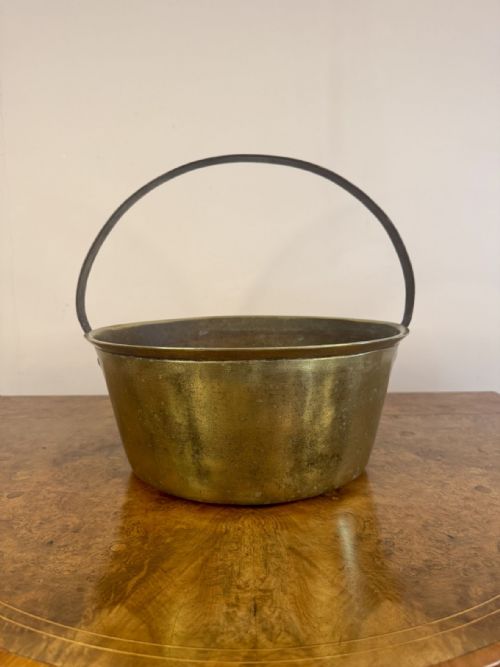
A brass cauldron planter serves as a robust container for foliage or fuel, drawing on historic forms used for domestic cooking and storage. When you search for a brass cauldron planter, you encounter vessels designed to hold logs, coal, or plants in domestic settings.
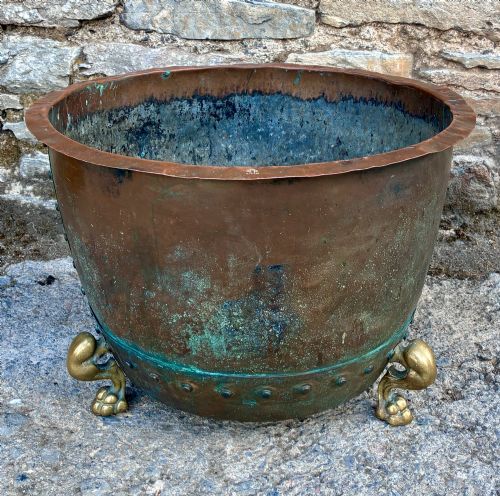
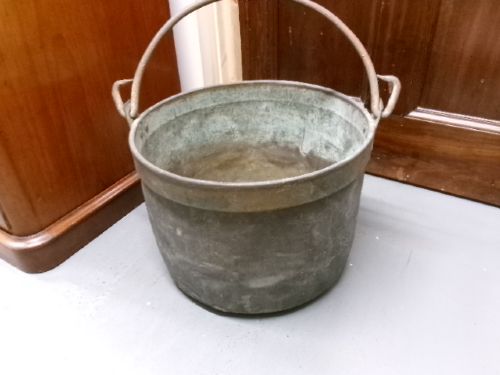
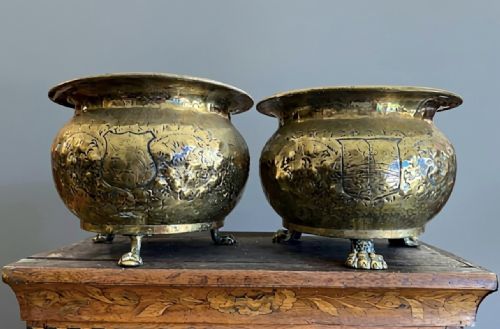
The pieces on this page span the nineteenth century, the Regency period, and the early twentieth century, taking forms such as log bins, jardinieres, coal buckets, and fireside accessories. Victorian examples sit alongside Arts and Crafts creations, Art Deco dinanderie pieces, and rustic farmhouse vessels.
How they were made
Makers constructed these vessels primarily from sheet brass and copper, frequently combining both metals within a single piece to create contrast between bodies and handles. Iron appeared regularly in structural elements, particularly in riveted seams and hanging bails.
Artisans formed the round bellies of these cauldrons through hand-hammering, spinning, or heavy riveting, joining plates with overlapping seams and visible rivets. Surface decoration involved embossing, hand-beating, and dinanderie work, leaving physical evidence of the metalworker's hand on the finished object.
Brass Cauldron Planter Retail Price Guide 2026
Typical asking prices for brass cauldron planter among the pieces listed under this phrase on Sellingantiques today, from the lower quarter to the upper quarter. They describe what is for sale here now, not the wider market.
Listings feature items from the nineteenth century, the Regency era, and the nineteen-thirties, using brass, copper, and iron.
What varies in quality
Metal thickness and weight distinguish robust vessels from lighter domestic items, with heavier copper and brass gauges providing structural integrity and longevity. The quality of riveting and the security of handle attachments dictate how well a vessel withstands heavy use as a log bin or coal bucket.
Decorative execution separates standard production items from finer artistic examples, particularly in the precision of embossed motifs and the neatness of hand-beaten surfaces. Well-preserved patination and original handles enhance the integrity of period pieces.
Henry Loveridge
The Brass Cauldron Planter Glossary
- Dinanderie
- Ornamental metalware made of brass, copper, or bronze, often featuring etched or applied surface decoration. This technique originates from the medieval metalworking town of Dinant in Belgium.
- Jardiniere
- An ornamental pot or stand for holding plants or flowers. These vessels often sit on heavy paw feet or flat bases.
- Bail handle
- A curved semi-circular handle attached to opposite sides of a vessel. These swing handles allow for lifting heavy loads of fuel or soil.
- Embossed
- Ornamented with raised patterns or designs moulded or stamped into the metal sheet. This technique gives texture and visual depth to the body of a planter.
Brass Cauldron Planter: Frequently Asked Questions
What were brass cauldron planters originally used for?
These vessels originated as domestic cooking pots, wash coppers, and utility pans before finding new roles by the fireside as coal and log containers. Their sturdy metal construction made them suitable for holding heavy loads of solid fuel.
Over time, collectors and homeowners repurposed these heavy metal vessels to hold large indoor plants and floral displays, a use reflected in the jardiniere descriptions.
How do I clean brass and copper?
Maintenance depends entirely on whether you prefer a bright polished finish or an aged dark patination acquired over centuries. Warm soapy water and a soft cloth remove everyday dust without disturbing the surface oxidation.
Harsh abrasive cleaners strip away the historic patination that collectors value, so gentle cleaning preserves both the character and the physical integrity of the metal.
Are these pieces waterproof for plants?
Many historic metal vessels were not manufactured with watertight seams, particularly riveted copper boilers and cauldrons designed for dry fuel storage. Moisture can seep through unsealed joints or historic rivet holes over time.
Using a modern inner plastic liner protects the antique metal from standing water and damp soil, preventing internal corrosion and protecting surfaces where the planter sits.
How do I date a brass cauldron planter?
Dating relies on observing manufacturing techniques, material combinations, and stylistic markers such as Arts and Crafts hand-beating or Art Deco dinanderie finishes. Rivet styles, handle mounts, and the purity of the brass or copper sheets offer reliable clues to the period.
Nineteenth-century examples often display hand-hammered surfaces and heavy iron rivets, whereas later twentieth-century pieces utilise different assembly methods and styling conventions.