


Brass Castors Lounge
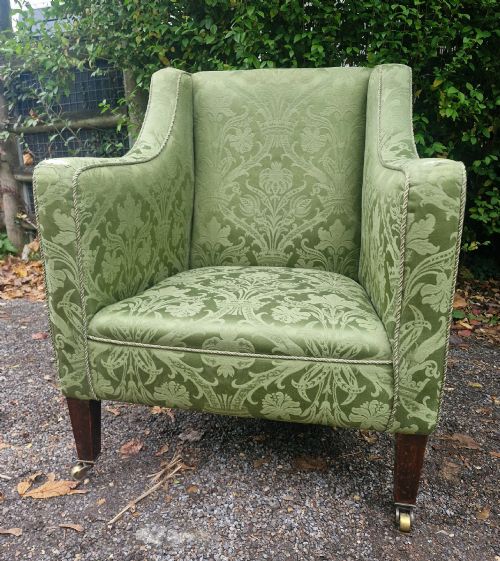
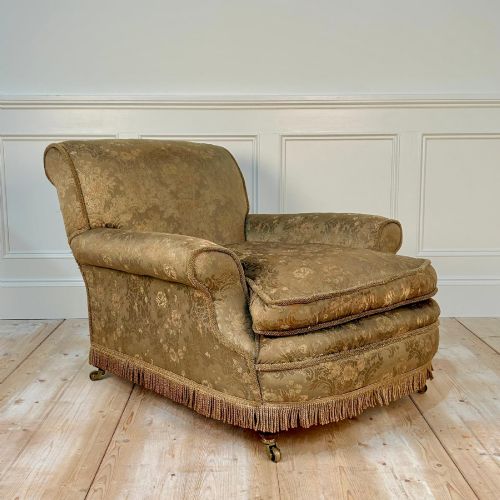
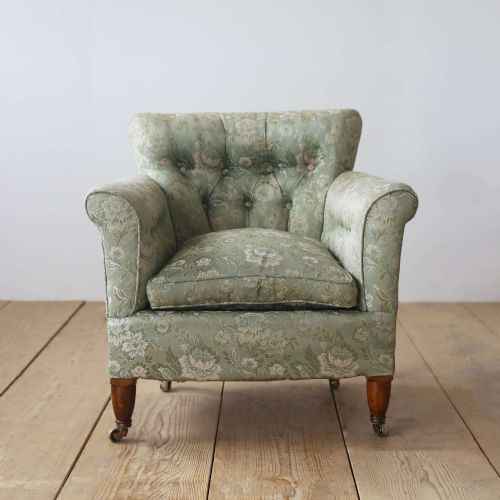
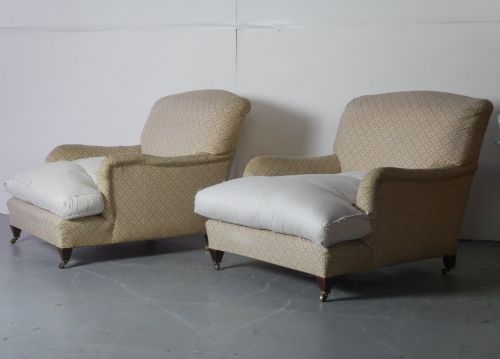
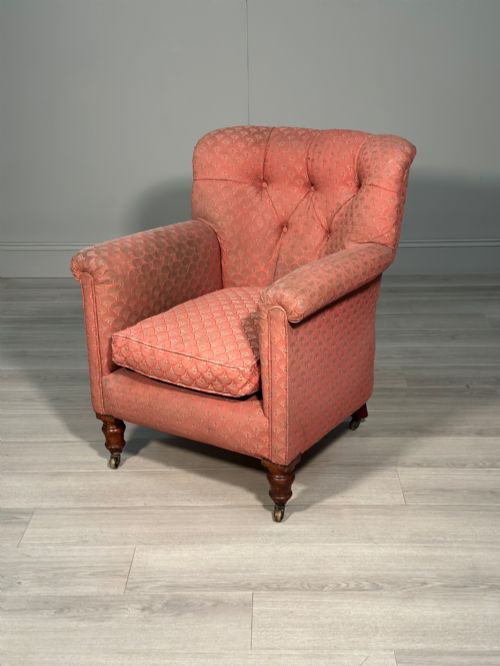
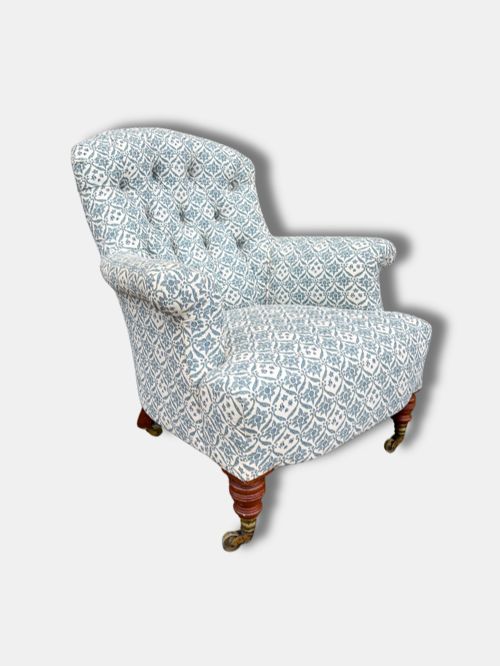
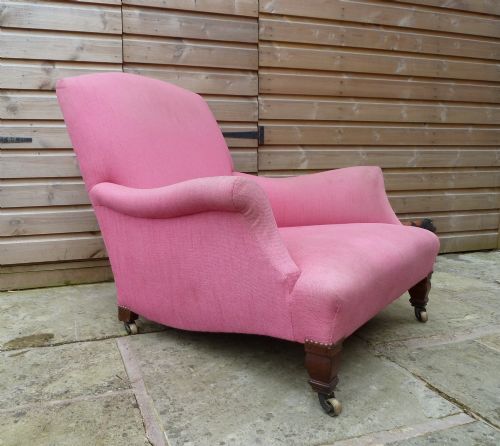
Brass castors lounge seating offers upholstered comfort on small rolling wheels, perfect for moving heavy Victorian and Edwardian armchairs across a room.
Brass Castors Lounge
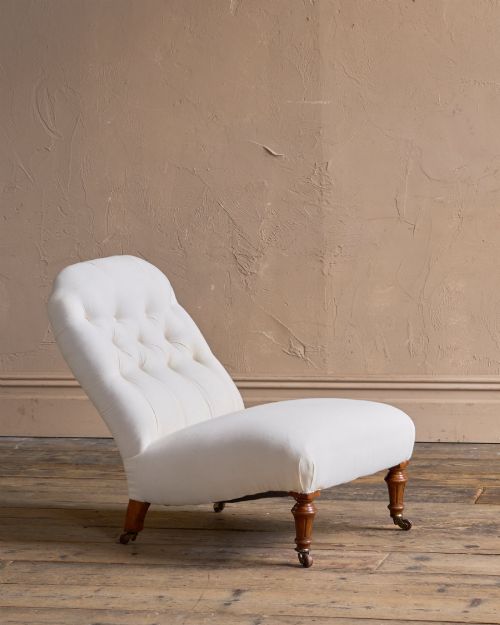
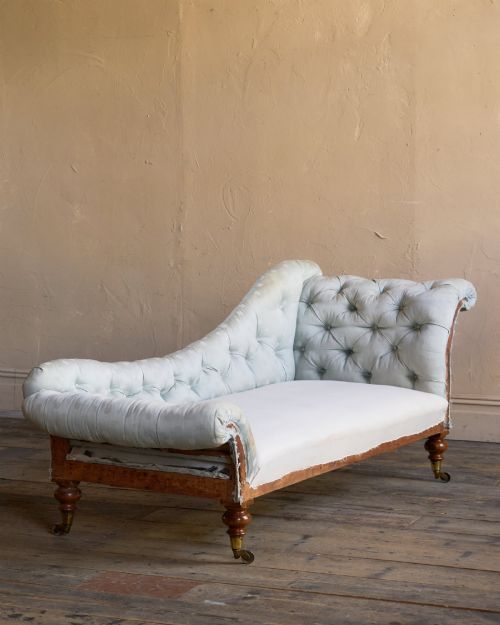
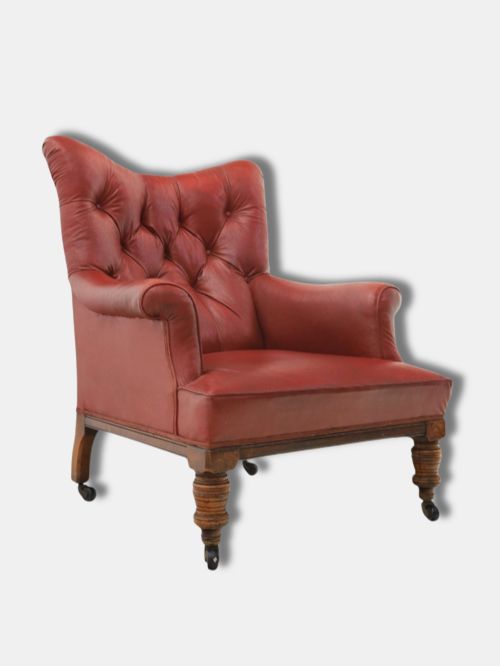
Brass castors lounge items comprise upholstered seating designed with mobility in mind, primarily featuring armchairs, chaise longues, and sofas mounted on small metal wheels. These pieces appear across Victorian, Edwardian, William IV, and Regency periods, reflecting classic English country house taste.
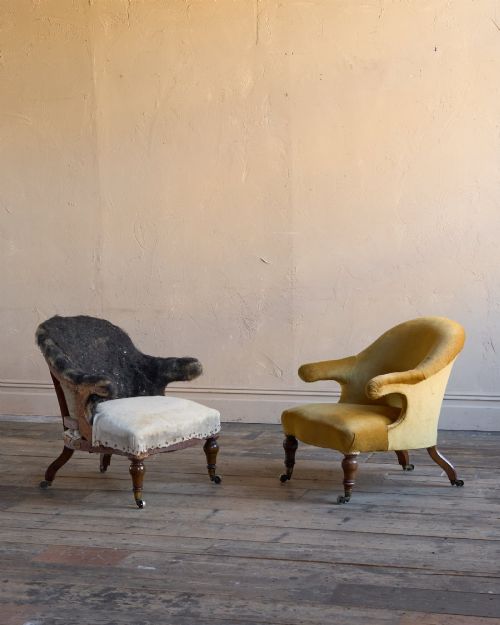
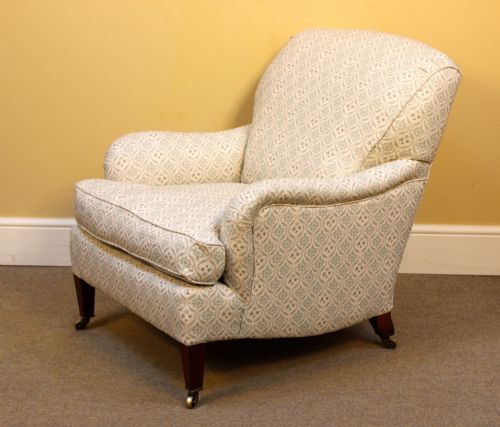
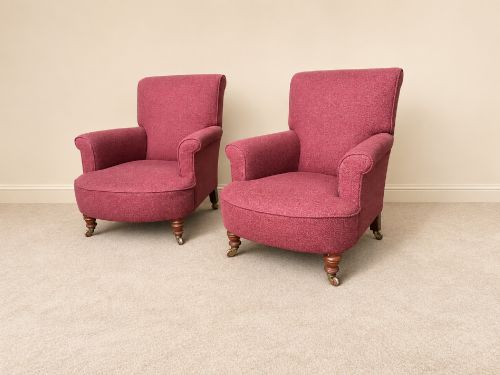
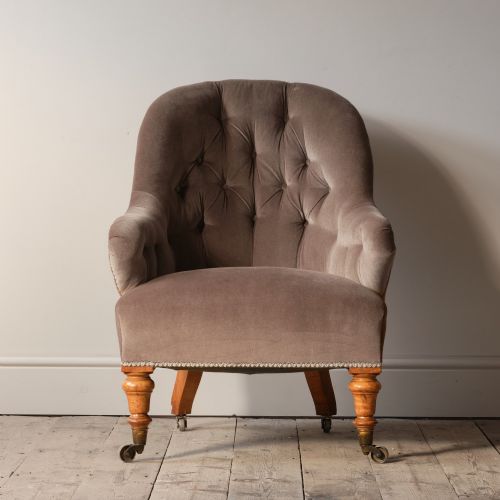
The most frequent form on this page is the upholstered armchair, often attributed to makers like Howard and Sons or styled after them. Alongside these sit occasional chairs, library chairs, and chaise longues finished in fabric, velvet, or leather.
The inclusion of castors allowed heavy timber frames constructed from mahogany, walnut, and hardwood to be repositioned easily across carpets and parquet floors. Buyers seek these forms for their combination of generous proportions and practical mobility.
How they were made
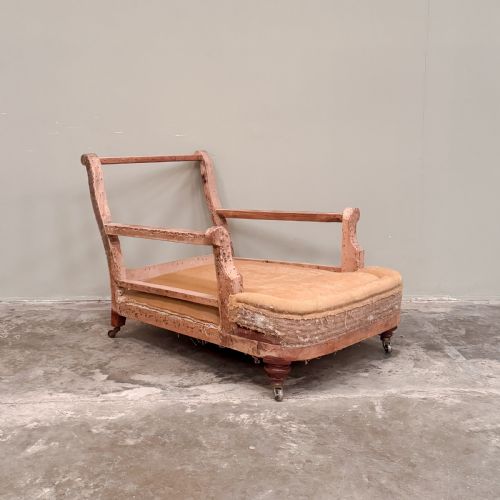
Frames rely on sturdy timbers such as mahogany, walnut, and general hardwood to support heavy sprung upholstery and deep buttoning. Metal castors, typically cast in brass, are secured directly to the base of the legs to allow smooth movement without damaging floors.
Upholstery techniques involve traditional stuffing layered beneath fabrics like cotton ticking, velvet, and leather. Skilled makers utilised button backs and tightly sprung seats to ensure durability alongside comfort.
Brass Castors Lounge Retail Price Guide 2026
Typical asking prices for brass castors lounge among the pieces listed under this phrase on Sellingantiques today, from the lower quarter to the upper quarter. They describe what is for sale here now, not the wider market.
Listings feature items spanning the Victorian, Edwardian, and Regency periods, constructed from mahogany, walnut, and hardwood.
What varies in quality
Quality rests upon the integrity of the underlying timber frame and the precision of the upholstery work. Pieces retaining maker stamps or signatures on the castors and frame webbing achieve greater distinction.
The refinement of the brass casting and the execution of turned or carved wooden legs differentiate standard production from superior workshop output.
Howard and Sons·Whytock and Reid·Morris and Co·Hindley and Sons·Gillows
The Brass Castors Lounge Glossary
- Castor
- A small wheel fitted to the foot of a piece of furniture to allow easy rolling. These brass fittings are characteristic of nineteenth-century seating.
- Button back
- An upholstery style where depressions are formed in the padding by sewing buttons through to the frame. This technique keeps the stuffing evenly distributed.
- Show frame
- A wooden structural framework left exposed around the upholstered portions of a chair. Mahogany and walnut are typical choices for this visible woodwork.
Brass Castors Lounge: Frequently Asked Questions
What is a brass castors lounge chair?
A brass castors lounge chair is an upholstered nineteenth or early twentieth-century seat fitted with small metal wheels on the legs. These wheels were added to heavy timber armchairs and sofas to aid movement.
Such chairs often feature deep buttoning, sprung seats, and covered frames in fabrics like ticking, leather, or velvet. They remain popular for traditional interiors and country house settings.
How do I identify a Howard and Sons chair?
Howard and Sons chairs typically display stamped brass castors, numbered legs, and specific ticking fabric underlinings. The frames offer deep, sprung comfort associated with Victorian club seating.
Many later pieces adopted this distinct aesthetic, leading to the term Howard style for similar comfortable armchairs.
Are these chairs suitable for daily use?
These upholstered seats are built on robust hardwood frames designed for enduring comfort and heavy daily use. Traditional springing and sturdy timber construction provide reliable support.
Original webbing and padding may require professional maintenance depending on the condition of the individual piece.
What materials are used in these frames?
Frames are primarily constructed from solid timbers such as mahogany, walnut, and general hardwood. These woods provide the necessary strength to support heavy upholstery and active seating.
Brass is standard for the small rolling castors attached to the base, while outer coverings range from velvet and leather to traditional cotton ticking.