






Brass Castor Cabinet
A brass castor cabinet brings together timber furniture and mobile fittings, offering practical storage mounted on small rolling wheels.
Brass Castor Cabinet
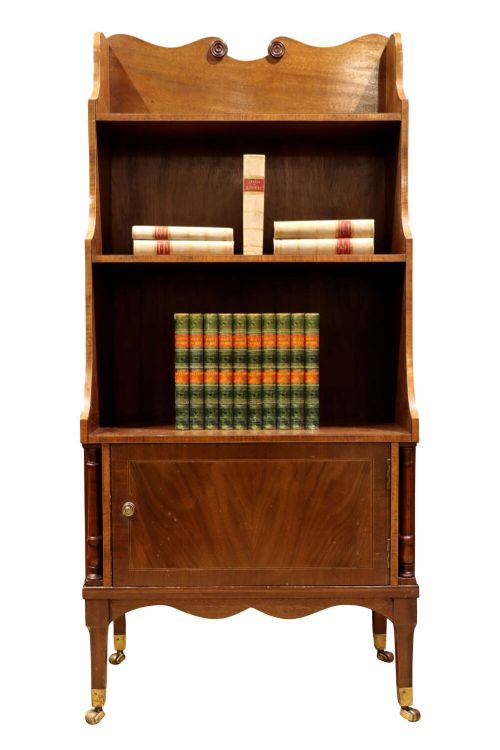
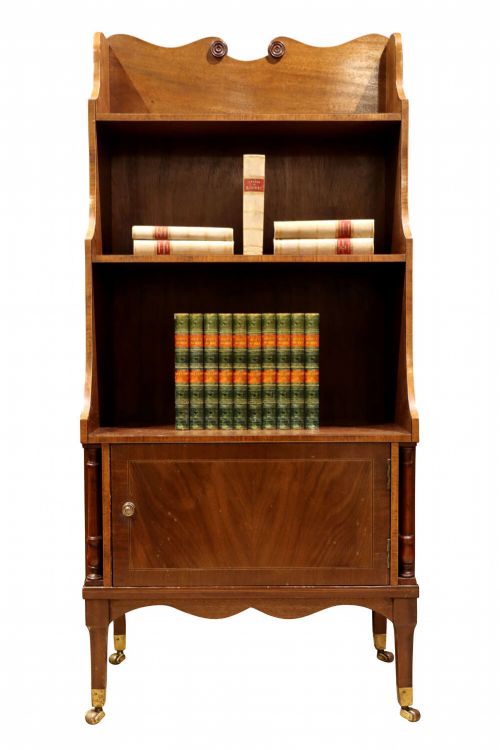
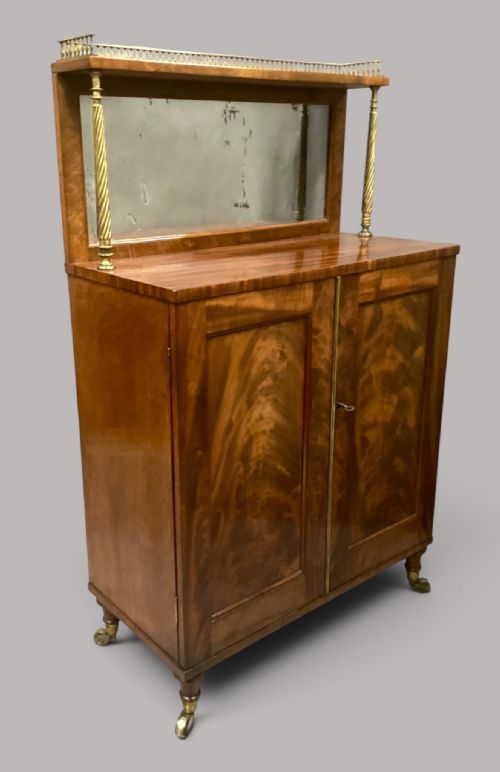
A search for a brass castor cabinet opens up a varied selection of nineteenth-century furniture items, ranging from music stands and bookcases to cellarettes and side cabinets. These pieces share a mobility provided by metal wheels fixed to their bases, allowing heavy timber items to be moved across floors with ease.
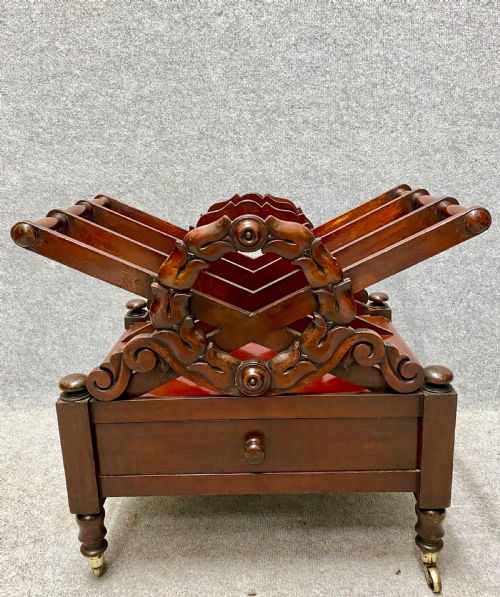
Canterburys and small bookcases dominate the examples seen here, often constructed in figured mahoganies and rosewoods. Their origins span the Georgian, Regency, Victorian, and Edwardian eras, reflecting changing domestic habits across the periods.
Materials and construction
Cabinet makers relied heavily on dense tropical hardwoods, particularly mahogany and rosewood, sometimes applying ebonised finishes for darker tones. Inlays and glass panels were added to decorative waterfall bookcases and display pieces.
Mobility is achieved through the integration of metal castors, which are fitted directly to the base of the furniture. These fittings allowed substantial timber items to be repositioned easily within a room.
Brass Castor Cabinet Retail Price Guide 2026
Typical asking prices for brass castor cabinet among the pieces listed under this phrase on Sellingantiques today, from the lower quarter to the upper quarter. They describe what is for sale here now, not the wider market.
Some nineteenth-century canterburys were built with such sturdy wheels that they practically chased you across the parlour.
Assessing quality
Quality rests upon the selection of timber veneers, the precision of decorative inlay work, and the structural integrity of the frame. Pieces featuring figured mahogany or rosewood generally display superior cabinet work.
Proportion and form separate standard examples from finer pieces, such as diminutive Davenport desks or metamorphic cellarette tables. The refinement of the turning and the matching of the wood grain indicate the maker's skill.
The Brass Castor Cabinet Glossary
- Canterbury
- A low, open-framed stand used for holding sheet music, newspapers, or magazines, often fitted with vertical divisions and small wheels.
- Cellarette
- A lockable cabinet or box designed to hold bottles of wine and spirits, frequently raised on legs with rolling fittings.
- Waterfall bookcase
- A set of open shelves arranged in decreasing depths from bottom to top, creating a stepped profile that resembles a cascading stream.
- Ebonised
- Wood treated with a dark stain or finish to imitate the appearance of ebony, popular in nineteenth-century cabinet work.
Brass Castor Cabinet: Frequently Asked Questions
What is a brass castor cabinet?
These items are nineteenth-century wooden furniture pieces, including bookcases, side cabinets, and canterburys, mounted on small metal wheels.
The wheels allowed heavy timber furniture to be repositioned easily on carpets or wooden floors within period homes.
How do I date a piece?
Dating relies on identifying the prevailing style, timber choices, and construction methods associated with periods like Regency or Victorian.
Specific design cues, such as inlaid mahogany or stepped shelving, help place an item within the nineteenth century.
Were these items used for music?
Certain forms, particularly canterburys and music racks, were specifically constructed to hold sheet music and periodicals close to an instrument.
Their partitioned compartments kept folios upright and organised in drawing rooms and parlours.
How do I care for mahogany?
Mahogany furniture requires a stable indoor climate away from direct sunlight and sudden changes in humidity to protect the timber.
Regular dusting with a dry cloth and occasional light waxing will preserve the polish of the wood.