


Brass Butler Tray
A brass butler tray brings portable service and historic timber character into domestic spaces.
Brass Butler Tray
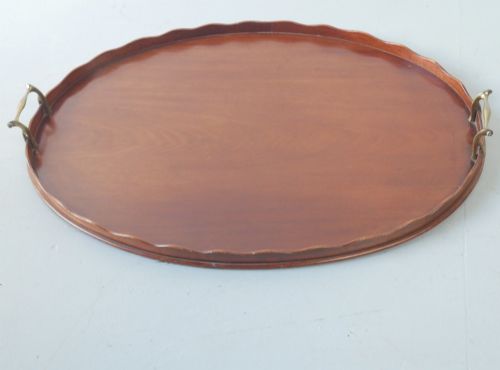
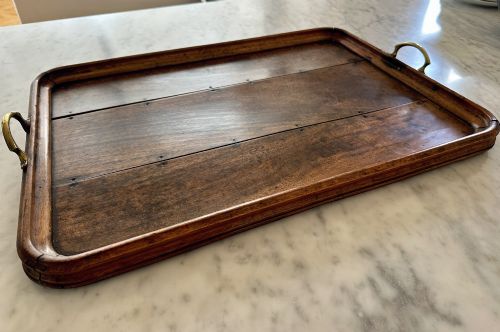
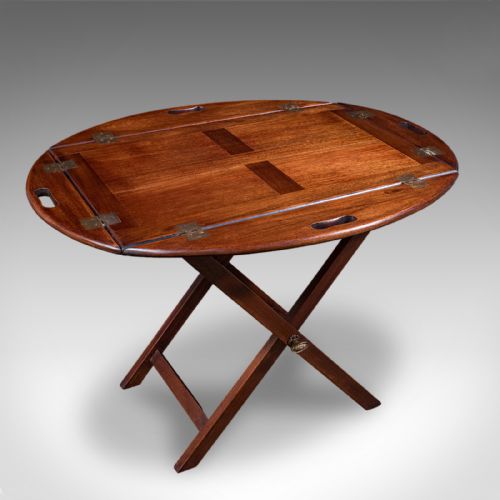
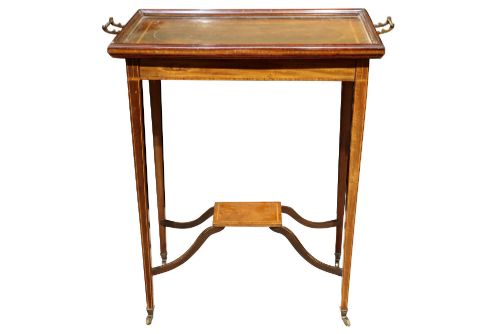
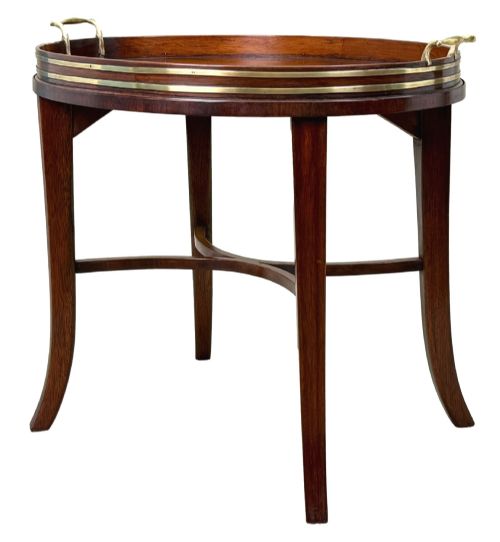
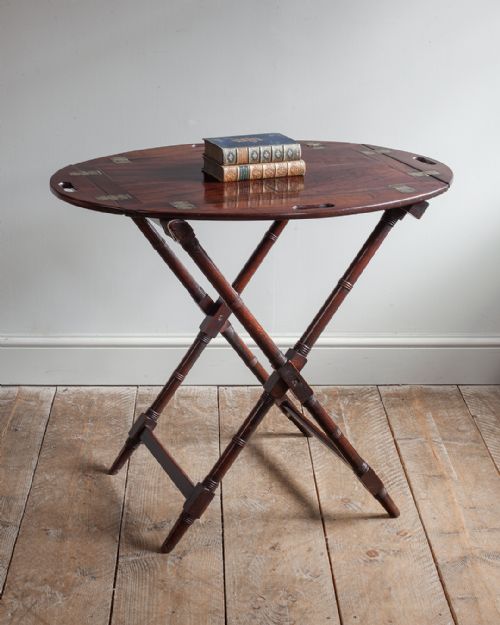
When you search for a brass butler tray, you encounter practical serving pieces designed for portability and formal hospitality. The selection encompasses flat trays, galleried platters with folding stands, and tray tables adapted for use as coffee or side tables.
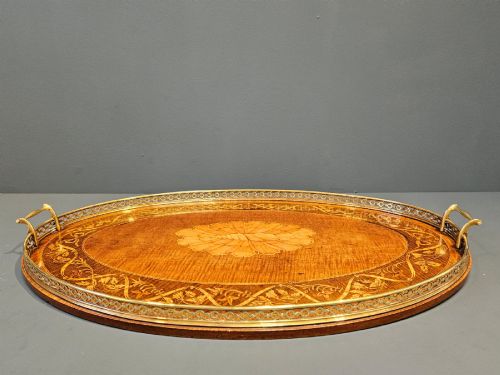
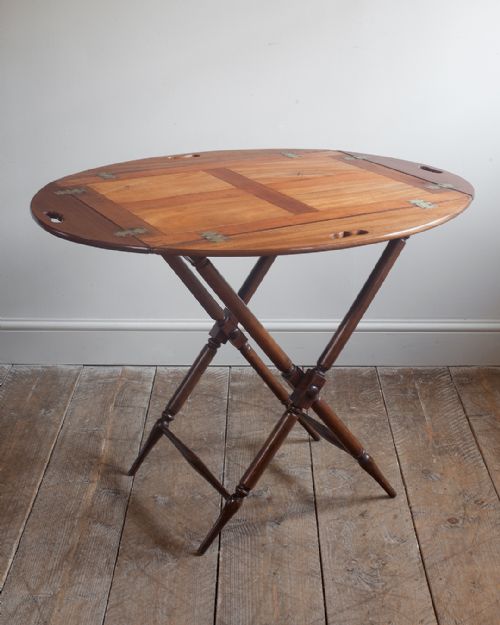
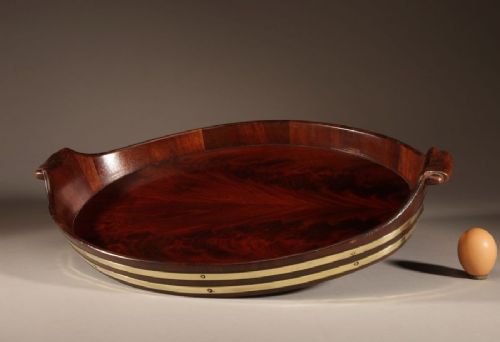
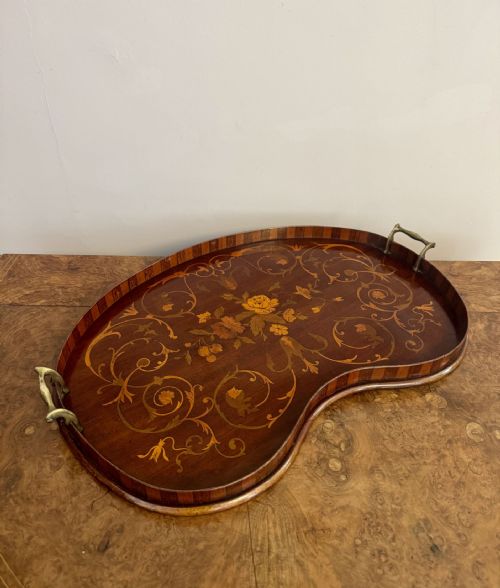
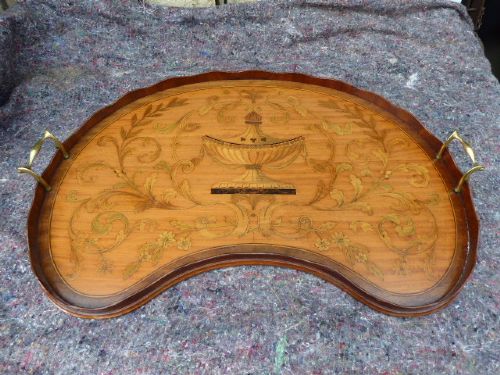
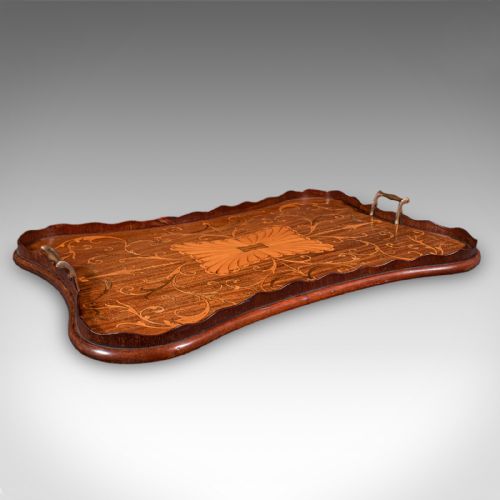
Most examples found here date from the Georgian, Victorian, and Edwardian periods, constructed as oval, kidney-shaped, or rectangular boards. They often feature hinged drop-flaps or inset brass carrying handles designed for lifting and transport.
These items originate from British and colonial workshops, ranging from plain utility pieces to highly decorative drawing room accessories. Many rest on folding stands of corresponding timber to form stable occasional furniture.
Materials and construction
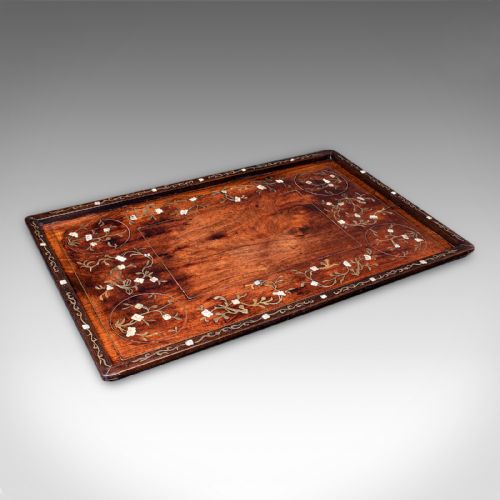
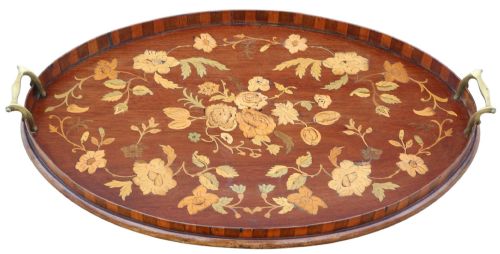
Cabinet makers utilised dense hardwoods such as mahogany, satinwood, oak, teak, and occasional burr yew for the primary board. Surfaces frequently incorporate marquetry inlay, contrasting stringing, and decorative veneers.
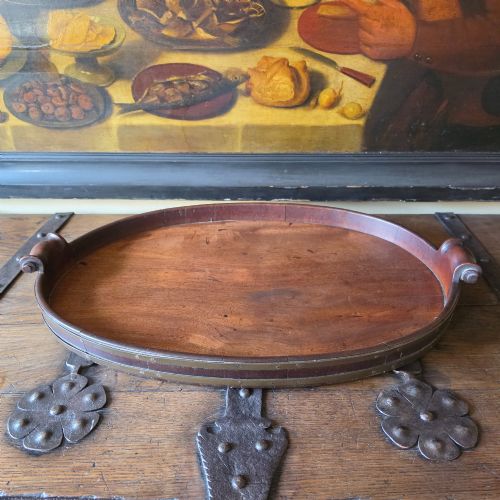
Brass provides structural and decorative detailing through bound rims, hinged drop-flaps, reinforced corners, and flush handles. Coopered construction techniques appear on round trays, where curved staves bind together with metal bands.
Brass Butler Tray Retail Price Guide 2026
Typical asking prices for brass butler tray among the pieces listed under this phrase on Sellingantiques today, from the lower quarter to the upper quarter. They describe what is for sale here now, not the wider market.
Some nineteenth-century sailors converted old mess trays into makeshift cribbage boards during long voyages.
Distinctions in quality
Quality rests in the crispness of the timber grain, the precision of the marquetry inlay, and the weight of the brass mounts. Superior pieces display harmonious timber selection and tight joinery at the corners and hinges.
The sophistication of the silhouette defines the upper tier, seen in well-proportioned kidney shapes, serpentine galleries, and finely cast brass handles. Original matching folding stands elevate the desirability of the piece.
Edwards and Roberts·Clay
The Brass Butler Tray Glossary
- Gallery
- A raised wooden or metal rim around the edge of a tray designed to prevent items from sliding off during transport.
- Drop-flap
- A hinged side section on a butler tray that folds down to ease serving or storage.
- Coopered
- Constructed from vertical staves of timber bound together with a metal band, similar to barrel-making.
- Marquetry inlay
- Decorative patterns formed by fitting contrasting pieces of wood veneer into a prepared surface.
- Stringing
- Fine inlaid lines of contrasting timber used to outline the borders of furniture tops and trays.
Brass Butler Tray: Frequently Asked Questions
How were butler trays used?
These pieces served households by carrying tea, silver, or cutlery from kitchens to living rooms. Folding stands allowed servants to set up temporary side tables wherever needed.
Today, the same adaptability makes them practical for serving drinks or functioning as low coffee tables in modern reception rooms.
Are stands usually original to the trays?
Some trays remain paired with their original folding stands, while others survived independently and were matched with stands later. Trays designed with folding sides specifically require matching table frames to function as furniture.
Inspecting the timber patina and wear patterns helps determine whether the tray and stand originated together.
How do I distinguish Georgian from Edwardian pieces?
Georgian trays from the eighteenth and early nineteenth centuries typically rely on solid mahogany construction with understated brass handles and straightforward joinery. Their design prioritises utilitarian strength and clean proportions.
Edwardian revivals often incorporate complex satinwood marquetry, kidney shapes, and elaborate inlay work reflecting late nineteenth-century decorative preferences.
Can I use a tray table daily?
These items were built from durable hardwoods like mahogany and teak to withstand heavy domestic service. Regular use as a coffee table or serving surface remains entirely appropriate.
Applying wax polish periodically protects the timber surface from moisture rings and daily wear.