




Brass Bound Liquor Box
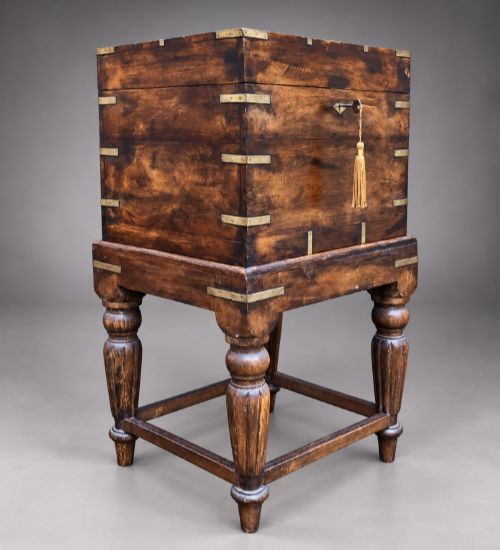
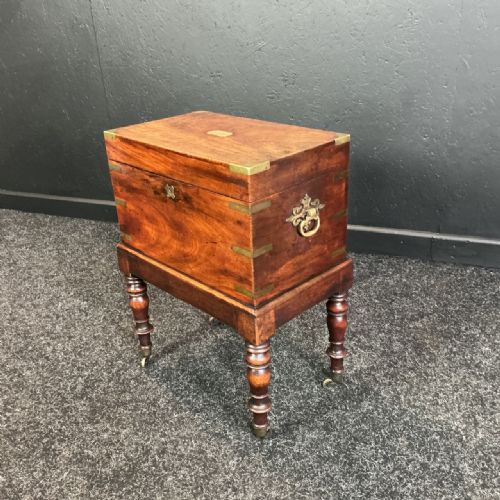
A brass bound liquor box is a robust timber chest built to hold bottles safely, combining heavy metal straps with fine cabinet woods for serious entertaining.
Brass Bound Liquor Box
A brass bound liquor box encompasses traditional cellarettes, wine coolers, and decanter boxes designed to secure potable spirits and wine. These pieces appear primarily in Georgian, Regency, and Victorian periods, reflecting the shifting domestic habits of elite households over more than a century.
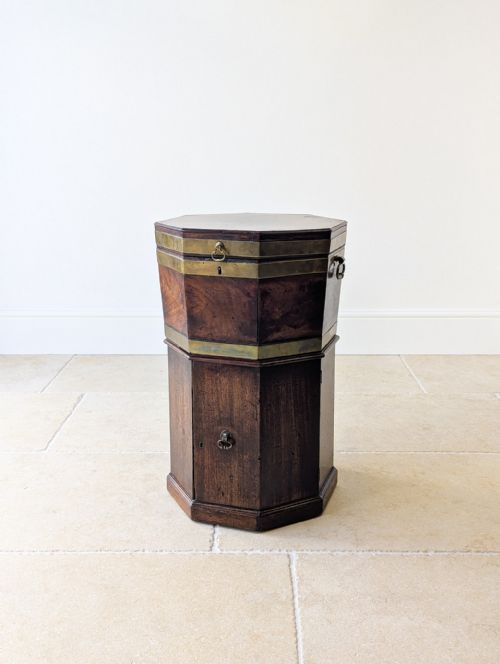
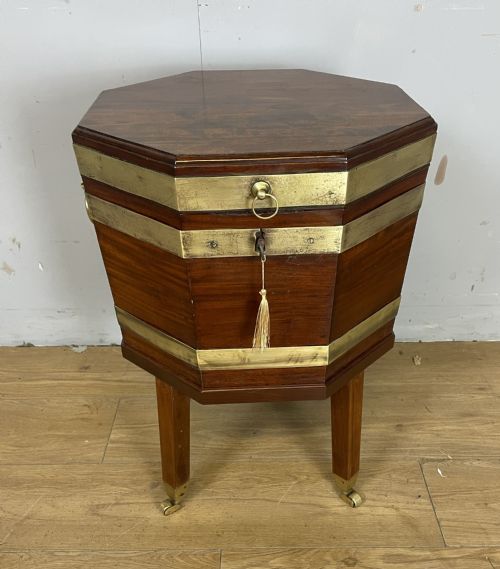
The most common form on this page is the Georgian or George III mahogany octagonal cellaret, often featuring substantial brass banding and handles. Alongside these stand later Victorian decanter boxes in exotic woods and Anglo-Indian variants reflecting global design influences.
Makers and cabinetmakers constructed these vessels in various formats, ranging from freestanding octagonal chests on original stands to compact tabletop boxes. Each iteration serves the fundamental purpose of keeping valuable bottles organised and secure within the dining room or parlour.
Materials and construction methods
Cabinetmakers constructed these chests predominantly using dense hardwoods such as mahogany, walnut, teak, and coromandel to withstand heavy use and weight. These timbers provided a stable, dark foundation that contrasted sharply with polished metalwork.
Heavy brass bands, strapwork, and mounts were fastened to the exterior to reinforce the structural joints and protect the edges from knocks. Interior arrangements frequently incorporated fitted wooden frames or velvet linings to secure fragile glass decanters.
Brass Bound Liquor Box Retail Price Guide 2026
Typical asking prices for brass bound liquor box among the pieces listed under this phrase on Sellingantiques today, from the lower quarter to the upper quarter. They describe what is for sale here now, not the wider market.
Several boxes arrive with mysterious indentations inside, left behind by generations of thirsty Georgian squires clinking their claret bottles.
Assessing quality and craftsmanship
Quality rests heavily on the selection of timber and the precision of the brass work integrated into the structure. Finer pieces demonstrate tight dovetail joinery, well-cast brass handles, and original interior fittings rather than later replacements.
Provenance and regional attribution also divide the standard range from exceptional items, such as those attributed to workshops like Gillows. The presence of original stands, intact velvet linings, and period glass components elevates the overall standing of an individual box.
Gillows of Lancaster and London
The Brass Bound Liquor Box Glossary
- Cellaret
- A lockable container used for holding bottles of wine or spirits near the dining table. They frequently take octagonal or rectangular forms with robust metal reinforcement.
- Decanter box
- A portable wooden chest lined to hold several glass decanters securely during transit or storage. These compact units gained popularity during the Victorian era.
- Brass banding
- Metal strips applied around the exterior edges of a wooden chest to add structural reinforcement and visual contrast. This technique protects vulnerable corners from heavy impacts.
- Coromandel
- A dense, heavily figured timber imported from Asia, valued for its rich dark brown colouring and contrasting streaks. Cabinetmakers utilised it on high-status Victorian decanter boxes.
- Octagonal
- Having eight sides, a preferred geometric shape for many Georgian wine coolers and cellarettes. This form allowed for efficient internal bottle storage while maintaining balanced exterior proportions.
Brass Bound Liquor Box: Frequently Asked Questions
What is a brass bound liquor box used for?
These chests were designed to safely store wine bottles and spirit decanters within the dining room or drawing room. Their robust construction and locks kept valuable contents secure from household staff.
Today, they function effectively as standalone decorative furniture pieces or specialised storage for modern collections of glassware and bottles.
Are original interiors common in these boxes?
Original wooden dividers and velvet linings survive on select pieces, though many have undergone interior reconfiguration over the centuries. Finding a complete and unaltered set of internal fittings is uncommon.
When present, these original configurations significantly enhance the historical context and integrity of the piece.
How should I care for the wood and brass?
Maintain the timber by keeping it away from direct heat sources and applying appropriate furniture wax sparingly. Avoid abrasive cleaners on the brass bands to preserve their aged appearance.
Gentle dusting with a soft cloth is sufficient for daily maintenance of both the polished hardwood and the metal mounts.