







Brass Book Holder
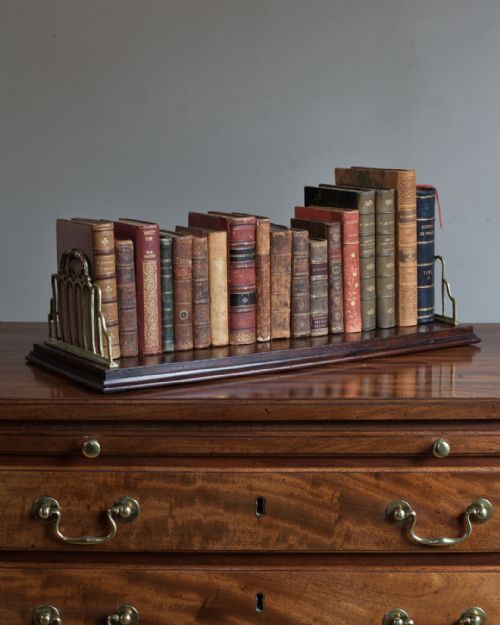
A brass book holder brings desk-top order with period metalwork and timber, offering a practical way to keep volumes upright and within reach.
Brass Book Holder
A brass book holder encompasses extending slides, carriers, and desk accessories designed to display and support volumes on tables and libraries. When searching for a brass book holder, buyers encounter forms spanning the Regency, Victorian, and Interwar periods.
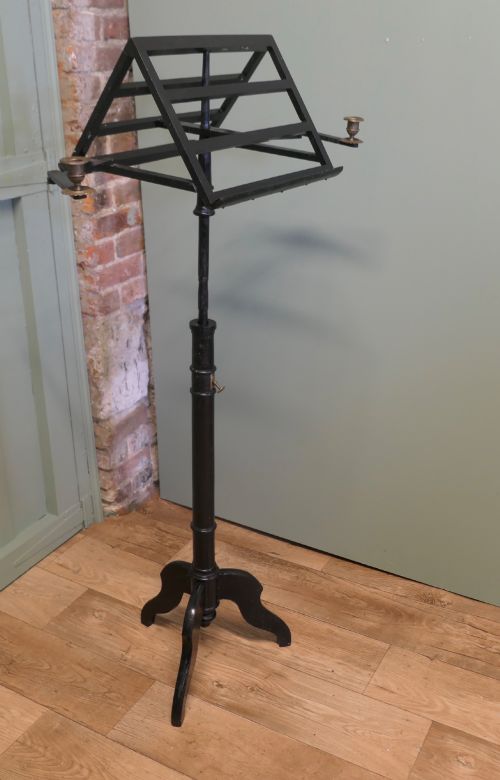
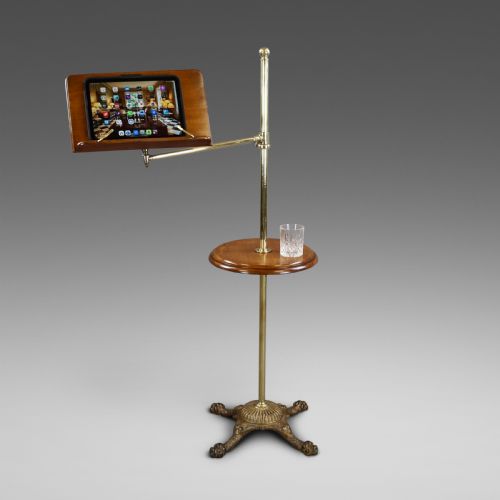
The versions most commonly met on this page combine brass mounts with timbers such as mahogany, walnut, rosewood, and oak. These pieces function as adjustable slides, stationary stands, or revolving cases.
Originating largely from nineteenth-century English workshops, these items serve both functional reading tasks and decorative library displays. Their construction ranges from simple folding book carriers to elaborately mounted library pieces.
How they were made
Makers utilised cast and sheet brass for hinges, mounts, extending actions, and decorative plaques, combining metalwork with dense hardwoods. Mahogany, walnut, and rosewood form the main bodies, often shaped with ebonised finishes or turned details.
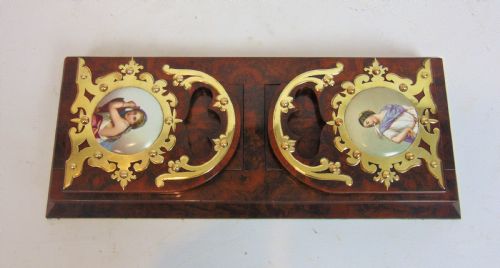
Extending mechanisms rely on sliding brass tracks and pivot joints that allow the sides to expand or contract smoothly. Details such as inset porcelain plaques and finely turned spindles demonstrate the integration of mixed media in desk accessories.
Brass Book Holder Retail Price Guide 2026
Typical asking prices for brass book holder among the pieces listed under this phrase on Sellingantiques today, from the lower quarter to the upper quarter. They describe what is for sale here now, not the wider market.
Listings feature Victorian and Regency periods, utilising brass, mahogany, walnut, oak, and rosewood across book slides and revolving cases.
What varies in quality
The sophistication of the extending mechanism and the precision of the brass mountings separate standard desk pieces from finer examples. Heavier timber selections and integrated decorative elements such as painted or porcelain plaques elevate a piece.
Subtlety in the casting of the brass hardware and the crispness of the turned woodwork indicate the standard of workshop production. Patina on the exposed brass and timber surfaces shows age and handling over decades.
Betjemanns·Tiffany & Co
The Brass Book Holder Glossary
- Book slide
- An extending desk accessory with two hinged or sliding ends designed to hold a variable row of volumes upright.
- Brass mounting
- Decorative or functional metalwork fixed to the timber body to reinforce corners, hinges, and extending tracks.
- Coromandel
- A dense, heavily figured tropical hardwood utilised in luxury nineteenth-century desk accessories and book carriers.
- Revolving bookcase
- A freestanding or desk-top unit mounted on a rotating spindle to provide access to books from multiple angles.
Brass Book Holder: Frequently Asked Questions
How do extending book slides work?
Extending book slides utilise internal or external brass tracks that allow the two ends to pull apart or push together smoothly. This mechanism lets the holder adjust to fit varying numbers of volumes.
Finer versions move on well-engineered scissor actions or sliding plates that maintain stability at any width.
What woods were used for book holders?
Cabinetmakers employed durable hardwoods including mahogany, walnut, oak, and rosewood to construct the bodies of these pieces. Ebonised wood and exotic timbers like coromandel appear on more decorative examples.
These timbers were chosen for their strength and ability to take a polished finish alongside brass mounts.
Where were brass book holders placed?
These pieces sat on library tables, partner desks, and study surfaces to keep current reading material close at hand. Revolving versions and desk sets organised inkwells alongside active volumes.
Their compact footprints made them suitable for domestic studies and institutional reading rooms alike.
How do I date a brass book holder?
Dating relies on the prevailing furniture styles, such as Regency reeded details or Victorian Gothic revival motifs, combined with material choices. Patent stamps and registration marks often provide specific manufacturing years.
Construction methods, including hand-cut screws and dovetailing, offer further clues to the period of origin.