





Brass Baluster Light Fixture
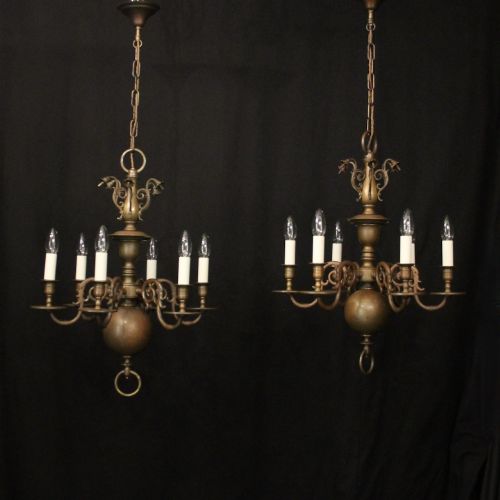
These brass baluster light fixtures bring substance and historic weight to a room, offering warm metal tones and traditional multi-armed forms.
Brass Baluster Light Fixture
A brass baluster light fixture is typically a multi-armed chandelier or lamp rooted in styles from the nineteenth and early twentieth centuries. Buyers searching for a brass baluster light fixture will find examples spanning the Edwardian era back to the nineteenth century, alongside later revivals of Dutch and Flemish designs.
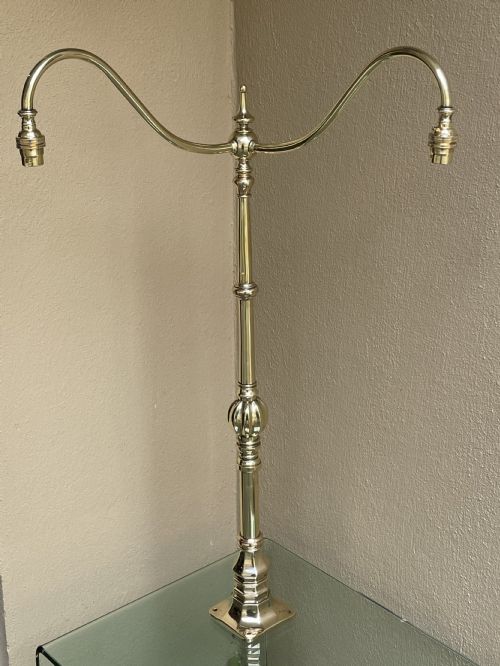
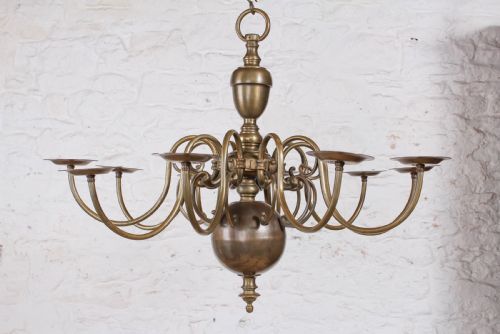
The selection on this page relies heavily on chandeliers with multiple scroll arms and central baluster stems, supplemented by table lamps and newel post lamps. Forms draw on Dutch Baroque, Flemish Renaissance, and French chateau aesthetics, translated through Edwardian and later twentieth-century production.
Most pieces seen here lean toward classic multi-armed candle or electrified formats in solid or polished brass, copper, and bronze. They suit spaces requiring traditional overhead illumination with robust metalwork and historical styling.
How they were made
Construction relies primarily on brass, bronze, and copper, shaped into central baluster shafts and radiating scroll arms. Metals are finished in solid, polished, or silver-plated variants to achieve different surface sheens.
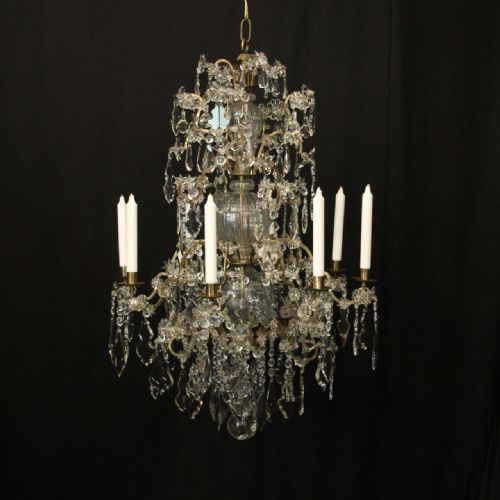
Details often incorporate cut crystal drops and gilded bronze accents, pairing cast metal components with glass elements to reflect light from multiple bulbs or candles.
Listings span periods from the nineteenth century through the Edwardian era and the 1930s, utilising brass, bronze, copper, and cut crystal.
What varies in quality
Quality rests in the weight of the metal casting and the crispness of the arm scrolls and baluster turnings. Heavier solid brass and bronze structures hold their shape and detail better than lighter assemblies.
The integration of cut crystal components and the execution of silver plating or gilding distinguish standard commercial items from more ambitious decorative examples.
The Brass Baluster Light Fixture Glossary
- Baluster
- A moulded shaft or pillar with a swelling lower portion, forming the central stem of these chandeliers. This shape provides structural stability and visual weight.
- Scroll arm
- A curved branch extending outward from the central stem to hold a light source. These arms often feature elaborate sweeping profiles.
- Newel post lamp
- A light fixture designed to mount on the ornamental post at the foot of a staircase. These pieces combine lighting utility with entrance hall decoration.
- Gilt bronze
- Bronze coated with a thin layer of gold or gold-coloured alloy. This technique enhances the decorative richness of metal mounts.
Brass Baluster Light Fixture: Frequently Asked Questions
Where do brass baluster light fixtures work best?
These fixtures suit high-ceilinged entrance halls, dining rooms, and traditional living spaces where a substantial overhead centrepiece is appropriate. Their historic styling anchors period interiors and adds gravity to more neutral rooms.
Because many extend downward on chains or stems, adequate ceiling height ensures the proportions read correctly within the space.
How do I identify a Dutch or Flemish style chandelier?
Dutch and Flemish styles typically feature robust, bulbous central balusters paired with wide, sweeping scroll arms designed for multiple light points. The metalwork is often heavy brass or copper with cast details derived from seventeenth-century prototypes.
Later Edwardian and twentieth-century revivals adapted these traditional forms for contemporary wiring while retaining the classic silhouette.
Are these fixtures suitable for modern electrical systems?
Most surviving antique and vintage fixtures have been adapted for modern wiring over time. Professional installation ensures that internal components meet current safety standards while preserving the exterior metalwork.
Consulting a qualified electrician before hanging ensures proper ceiling support for heavier bronze and brass assemblies.
What is the difference between brass and bronze on these fixtures?
Brass is an alloy of copper and zinc, yielding a bright golden hue that polishes easily. Bronze is an alloy of copper and tin, producing a darker, warmer tone with greater durability.
Both metals were used extensively across nineteenth and twentieth-century lighting, sometimes appearing together on the same piece.