

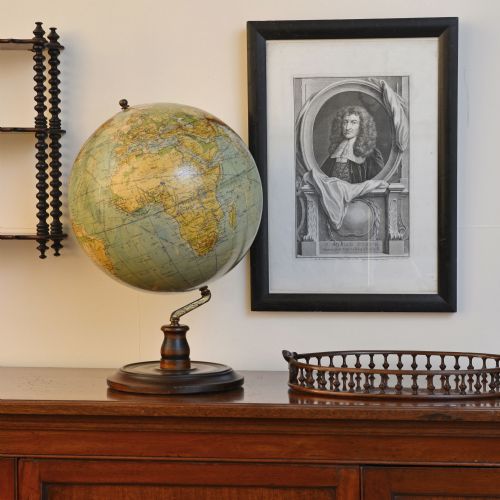


Brass and Wood Globe
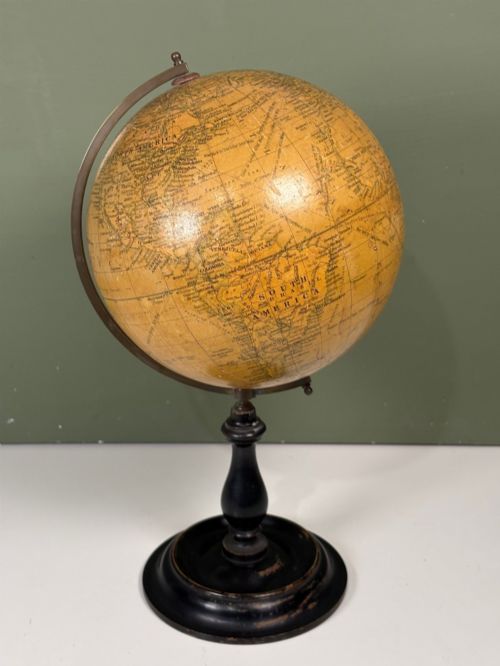
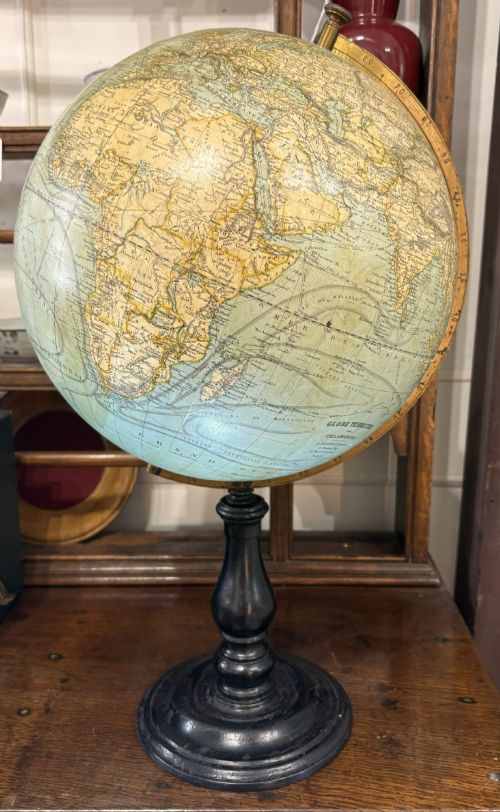
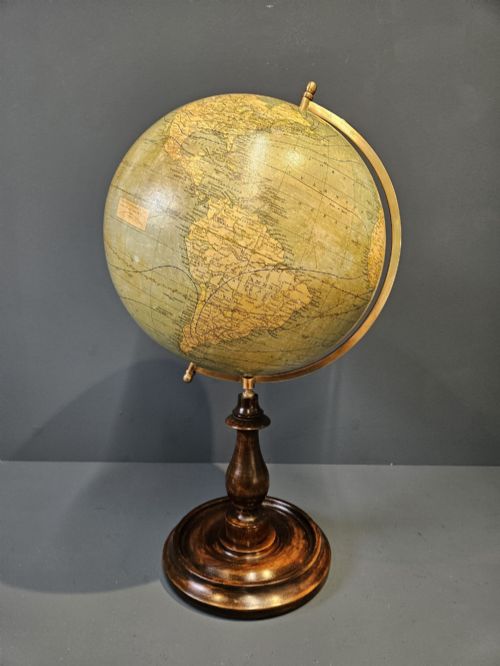
A brass and wood globe brings geography into a room through engraved gores and turned stands, offering a tangible link to historical cartography.
Brass and Wood Globe
A brass and wood globe is a geographical or celestial sphere mounted on a timber base with metal hardware, spanning tabletop and floor-standing formats. When you search for a brass and wood globe, you find pieces ranging from small pocket and miniature versions to large library and floor models.
The selection includes specimens from the eighteenth century up to mid-century modern coffee tables. Most items you encounter combine paper gores over plaster or papier-mâché spheres with mahogany, walnut, or ebonised timber mountings.
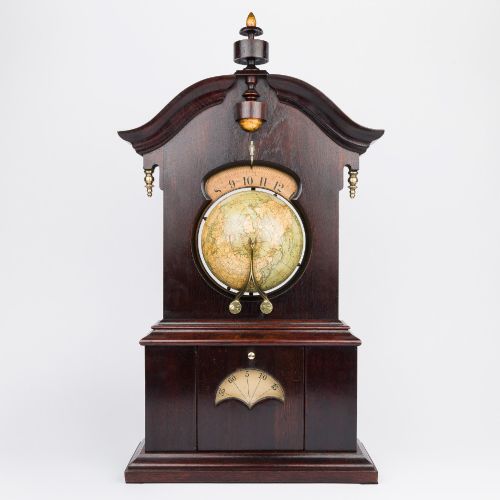
Forms vary from simple desktop instruments to elaborate pairs of terrestrial and celestial globes. You will also discover unusual adaptations, such as solar timepieces and globe coffee tables.
How they were made
Maker's workshops constructed the spherical bodies from plaster or paper mache over a core, applying printed paper gores by hand to show the map details. Artisans then fitted these spheres into brass meridians and hour circles.
The supporting stands utilise turned woods like mahogany, walnut, and ebonised timber, joined securely to hold the weight of the globe and its heavy metal ring.
Brass and Wood Globe Retail Price Guide 2026
Typical asking prices for brass and wood globe among the pieces listed under this phrase on Sellingantiques today, from the lower quarter to the upper quarter. They describe what is for sale here now, not the wider market.
Ernest Hemingway once lent his name to a globe coffee table, proving that explorers sometimes prefer to rest their drinks on the world.
What varies in quality
Quality rests in the crispness of the cartographic engraving and the accuracy of the paper gore alignment across the sphere. Finer examples display meticulous hand-colouring and precise geographical nomenclature.
The joinery and turning of the wooden stand also separate basic utilitarian pieces from finer library instruments. Substantial brass work with clear graduation markings indicates superior workshop standards.
George Philips and Son Ltd·Bacon·Geographia·M Vivien·Carey·Malby·Timby
The Brass and Wood Globe Glossary
- Gores
- Printed paper strips shaped like lunas that are pasted onto a globe sphere to form the map. They taper towards the poles to ensure correct alignment.
- Terrestrial globe
- A model representing the earth. These show landmasses, oceans, shipping routes, and political boundaries of the period.
- Celestial globe
- A sphere mapping the stars and constellations as viewed from Earth. They are frequently paired with terrestrial equivalents on floor stands.
- Papier-mache
- A composite material made from paper pulp and binder used to form lightweight sphere cores. It provides a stable surface for the applied paper gores.
Brass and Wood Globe: Frequently Asked Questions
How do I read a brass and wood globe?
Read the cartographic details on the paper gores to understand the geopolitical borders and place names of the era in which the globe was made. The surrounding brass meridian ring helps measure degrees of latitude.
Examine the cartouche for the publisher's name and publication date, which anchors the piece in its specific historical context.
Where should I place a globe at home?
Position your globe away from direct sunlight and damp areas to protect the delicate paper gores and timber stands from fading and warping. Table globes suit desks and sideboards, whilst larger floor models fit libraries and studies.
Ensure the room has stable humidity levels to preserve the plaster core and wooden elements over time.
How can I tell the age of a globe?
Look at the place names, colonial territories, and capital cities printed on the globe gores, as these change with historical events. Cartouches often name the maker and publication date or provide clues through address details.
The style of the wooden stand and the manufacturing materials, such as early papier-mâché cores, also indicate the period of production.
What is the difference between terrestrial and celestial globes?
Terrestrial globes map the surface of the earth, detailing continents, oceans, and historical political boundaries. They are designed for geographical reference and navigation study.
Celestial globes map the night sky, depicting constellations and star systems from an outside perspective. They were often produced as companion pieces to terrestrial globes.