

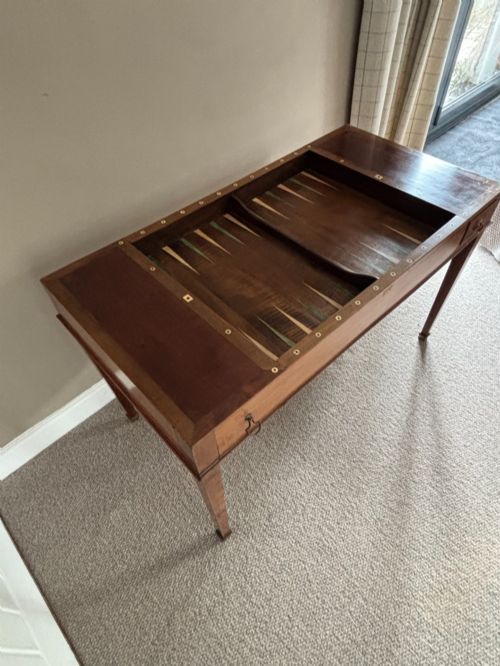
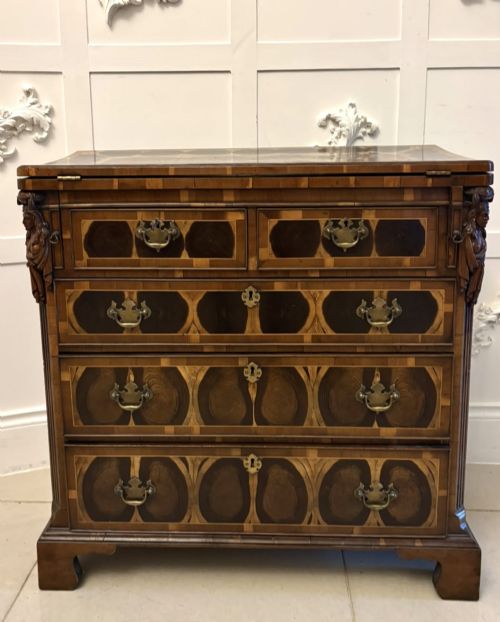
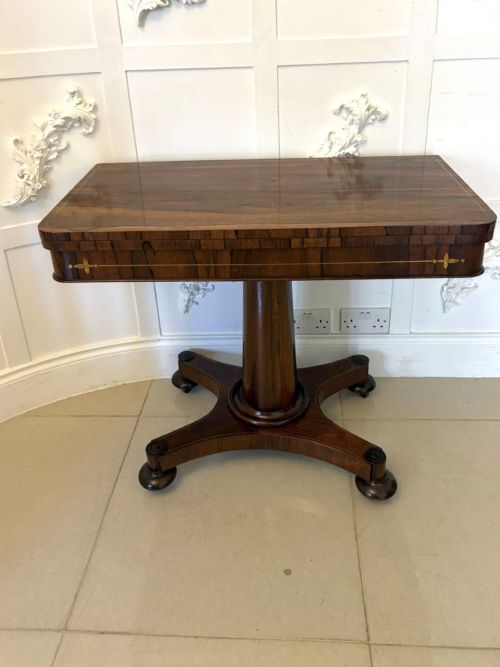

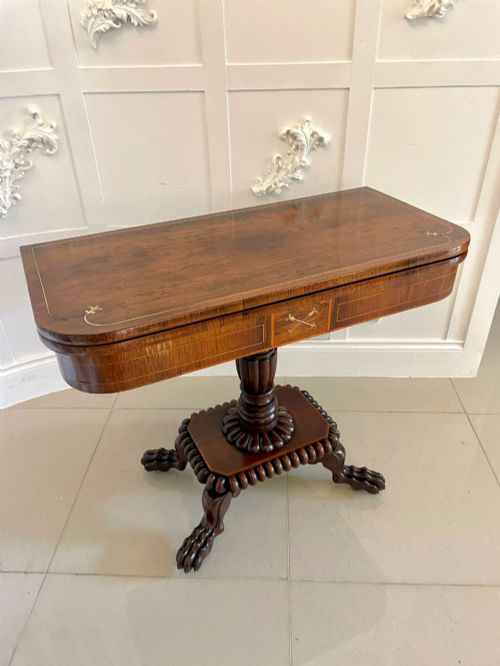
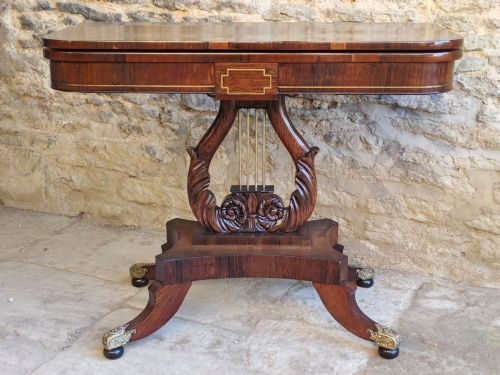


Brass and Wood Games Table
A brass and wood games table brings tactile theatre to a room, offering clever folding tops and hidden surfaces designed for evening pastime.
Brass and Wood Games Table
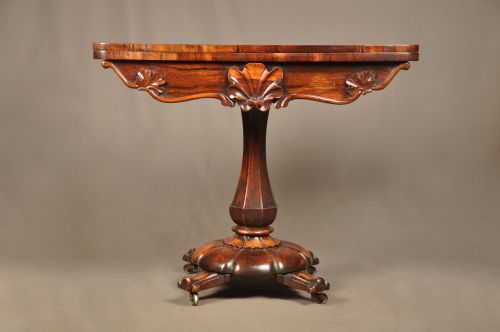
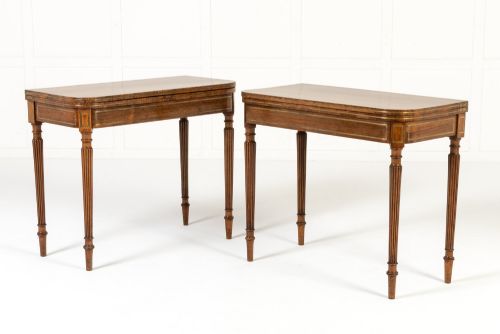
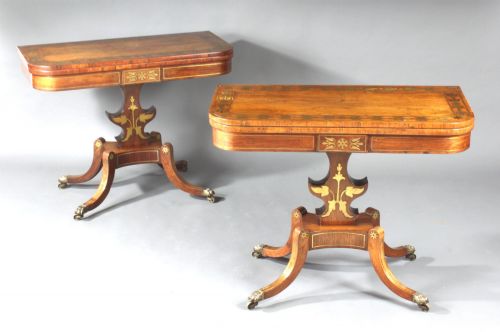
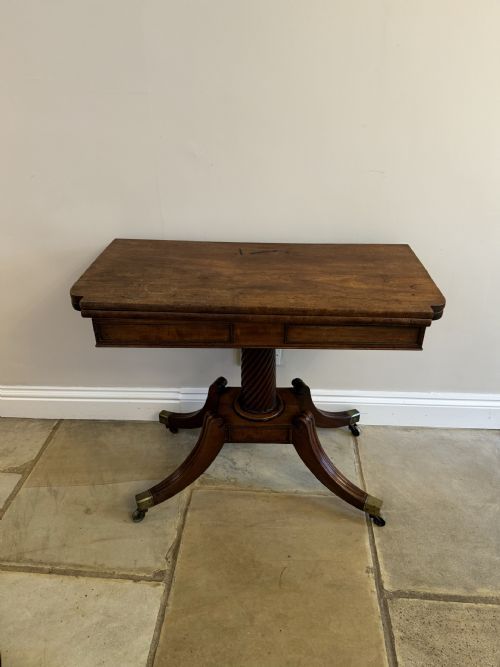
A brass and wood games table combines timber frames with metal mounts, inlay, or stringing, appearing most frequently in Regency and nineteenth-century designs. Card tables, tea tables, and combination work tables dominate the selection, often featuring clever fold-over tops that double their surface area.
Makers utilised rich hardwoods such as rosewood and mahogany, frequently pairing them with brass inlays, ormolu mounts, and contrasting veneers like satinwood and ebony. Pieces range from formal Georgian card tables to Edwardian envelope designs and occasional specialised items such as billiard scoreboards.
The selection centres heavily on English and French workshops of the Regency and Victorian periods, alongside occasional specimen wood pieces. Buyers encounter versatile console forms that function equally well as side tables when closed against a wall.
Materials and Technique
Cabinetmakers constructed the structural carcasses from solid timbers like mahogany, veneering the primary surfaces with figured rosewood, satinwood, or walnut to create striking grain patterns. Boxwood and ebony lines were meticulously inlaid into the wood to form geometric borders and decorative stringing.
Brass formed an integral part of the decoration, appearing as precision-cut Boulle-style inlay, cast ormolu mounts, gilded mouldings, and protective sabots on pedestal feet. Hinges, swivels, and pivoting mechanisms were engineered from brass to allow heavy timber leaves to open smoothly.
Brass and Wood Games Table Retail Price Guide 2026
Typical asking prices for brass and wood games table among the pieces listed under this phrase on Sellingantiques today, from the lower quarter to the upper quarter. They describe what is for sale here now, not the wider market.
Listings feature brass and wood games tables spanning the Georgian, Regency, William IV, Victorian, and Edwardian periods, constructed in rosewood, mahogany, and walnut.
Judging Quality
The distinction between standard production and master cabinetwork lies in the crispness of the brass inlay and the selection of the timber veneers. Superior examples display perfectly flush brass work without gaps in the timber channels, alongside heavily figured rosewood or mahogany chosen for symmetry.
Structural integrity of the pivoting mechanism dictates daily utility, with finer pieces maintaining tight joints and level surfaces when opened for play. The subtlety of carved details, such as pedestal columns or lyre supports, separates ambitious regional workshops from top-tier metropolitan makers.
George Bullock·George Oakley·John McLean
The Brass and Wood Games Table Glossary
- Card Table
- A specialised furniture form with a hinged top that folds open to reveal a baize-lined playing surface. They became essential household fixtures during the Georgian and Regency eras.
- Ormolu
- Gilded bronze used for decorative mounts and accents on furniture. French and English cabinetmakers applied these metal fittings to enrich the corners and borders of tables.
- Stringing
- Thin strips of contrasting wood or metal inlaid into channels in the primary timber. This technique creates delicate borders around table edges and friezes.
- Envelope Table
- A square card table with four triangular flaps that fold inward to enclose the top. They gained popularity during the Edwardian period.
- Lyre Table
- A table supported by a central pedestal carved in the shape of a musical lyre. This form is particularly characteristic of Regency rosewood designs.
Brass and Wood Games Table: Frequently Asked Questions
How did people use a brass and wood games table?
These tables stood against a parlour wall as decorative console or side tables when not in use. For evening entertainment, the hinged top folded out to create a stable surface for cards, chess, or other social pastimes.
Many designs incorporated internal wells beneath the folding leaf to store counters, dice, and packs of cards. Some specialised combination pieces also functioned as work tables for sewing or writing.
How do I tell Regency pieces from Edwardian ones?
Regency brass and wood games tables, dating from the early nineteenth century, typically feature heavy rosewood or mahogany, bold brass inlay, and pedestal bases with carved feet or lyre supports. The timber grain is often dark and richly figured.
Edwardian examples, appearing around the turn of the twentieth century, frequently utilise lighter construction and the distinctive four-flap envelope mechanism. Their styling reflects a revival of earlier classical motifs combined with domestic convenience.
Can I use an antique games table daily?
These tables were built to withstand active use, employing sturdy pivot hinges and solid timber framing to support opening leaves. Normal domestic use for drinks or display causes no harm to sound examples.
Care should be taken when rotating or folding heavy rosewood and mahogany leaves to protect the underlying brass mechanisms and hinges. Placing the table away from direct heat sources preserves the antique timber and veneer.
What is inside the folding top?
Opening the hinged leaf typically reveals a recessed playing surface often lined with baize, felt, or leather. This textile provided a soft counter-slip layer for dealing cards and rolling dice.
Some tables feature concealed pivoting compartments or shallow storage wells beneath the surface for game accessories. Finer models lined these interior cavities with matching secondary veneers.