



Brass and Velvet Box
A brass and velvet box brings tactile warmth and structural rigour to the dressing table, holding personal treasures with quiet authority.
Brass and Velvet Box
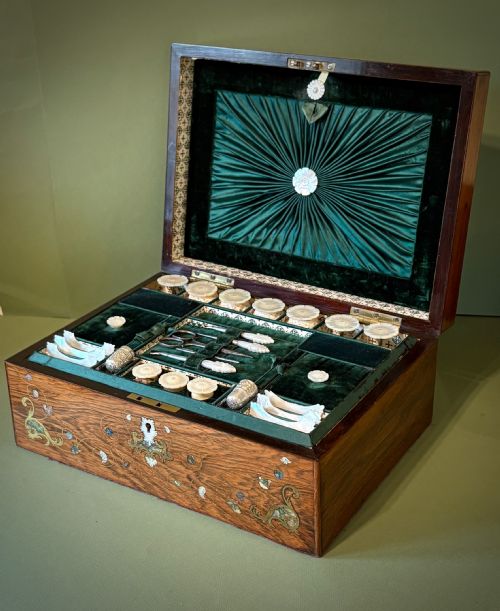
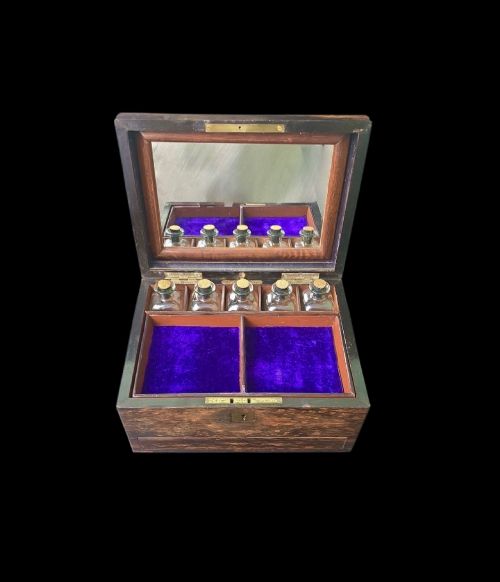
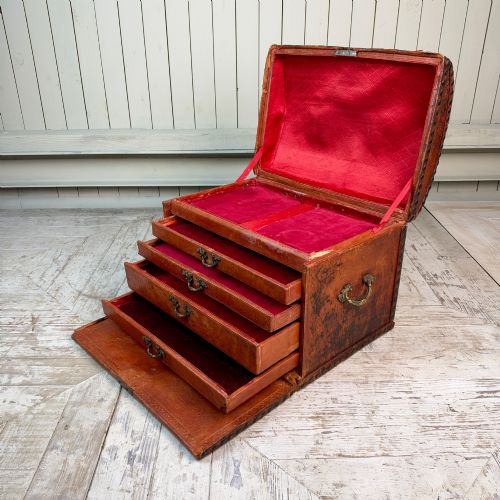
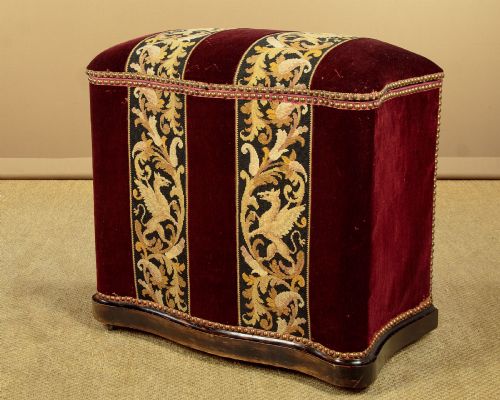
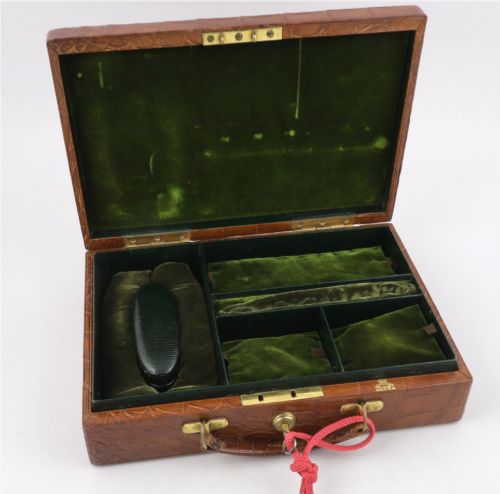
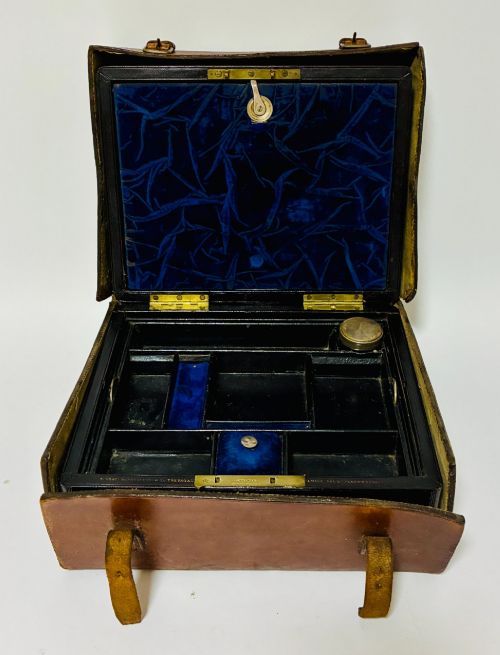
When you search for a brass and velvet box, you encounter objects primarily designed for travel, vanity and the safe keeping of jewellery, instruments or personal items. The pieces on this page span the Regency, Victorian and Edwardian periods, stretching from the early nineteenth century into the opening decades of the twentieth century. These containers frequently appear as dressing cases, jewellery boxes, vanity chests and display tables.
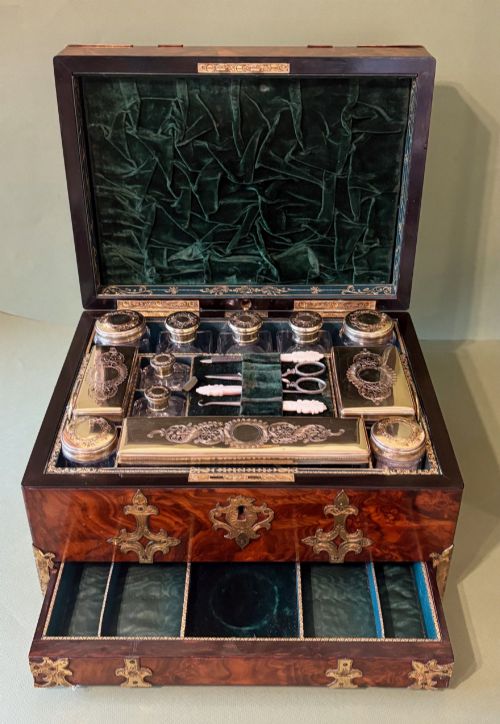
The most common iterations on this page are Victorian wooden vanity cases and nineteenth century French trinket boxes. They draw on styles such as Regency, French Rococo Revival, Napoleon III and Victorian Militaria. Many incorporate interior linings of soft textile alongside structural carcases of mahogany, walnut, coromandel, rosewood or cast brass.
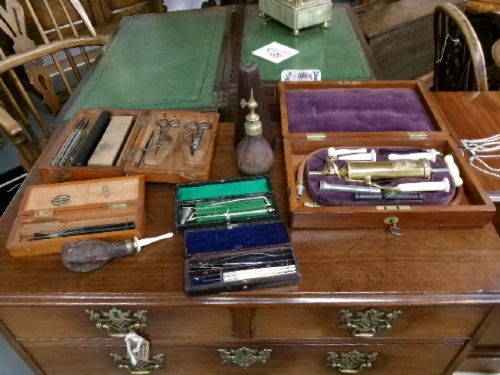
Beyond domestic dressing tables, the evidence includes scientific instrument sets, medical cupping sets, apothecary boxes and firearm cases housed in fitted compartments. These utilitarian boxes share the same material palette of metal mounts and protective textile linings, fulfilling specialised storage roles for nineteenth century owners.
How they were made
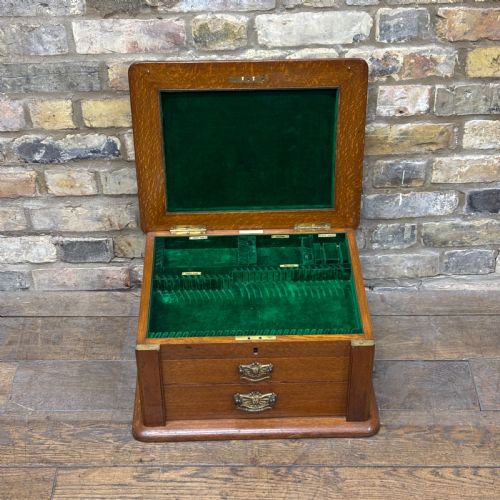
The construction of these pieces relies on cabinet timbers such as mahogany, walnut, rosewood, coromandel and oak, frequently paired with cast brass, ormolu or gilt metal mounts. Woodworkers employed precise joinery to form the structural carcases of travelling vanity cases, jewellery chests and instrument boxes. Brass banding, corner brackets and inlaid stringing were applied to reinforce high-wear edges and provide decorative contrast against the dark timber surfaces.
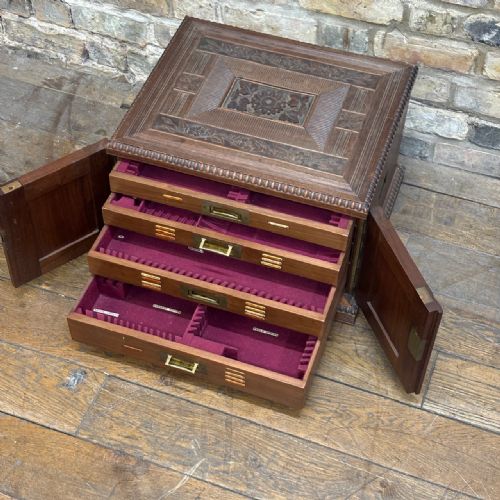
Internal spaces were tailored to individual contents using velvet, silk, leather and paper linings, often engineered with folding trays, concealed drawers and fitted recesses. Artisans secured textile elements within wooden compartments to cushion delicate glass bottles, silver-topped jars, scientific instruments and jewellery. Cast brass or ormolu formed the exterior caskets, catch mechanisms and hinges that held the lids secure during transit.
Specialised workshops produced items ranging from domestic jewellery boxes to campaign silverware trunks and opticians' examination sets. The integration of brass hardware with timber frames and textile inserts created durable containers intended to withstand frequent travel while preserving fragile contents.
Brass and Velvet Box Retail Price Guide 2026
Typical asking prices for brass and velvet box among the pieces listed under this phrase on Sellingantiques today, from the lower quarter to the upper quarter. They describe what is for sale here now, not the wider market.
Periods represented span from the Regency era through the Victorian epoch and into the Edwardian years.
What varies in quality
The distinction between standard examples and the top of the range rests on the precision of timber selection and the complexity of the internal fitments. Superior pieces utilise dense, highly figured timbers such as coromandel, burr walnut or rosewood, matched with substantial brass mounts rather than plated substitutes. The internal architecture of a high-grade dressing case reveals intricate concealed drawers, spring-release mechanisms and hallmarked silver bottle tops.
J C Vickery·F. West·John Millikin
The Brass and Velvet Box Glossary
- Ormolu
- A gilt-bronze decorative technique widely applied to French trinket boxes and nineteenth-century caskets. It provides a bright metallic finish that mimics gold without tarnishing.
- Coromandel
- A dense, highly figured East Indian timber featuring dark brown and black grain patterns. Cabinetmakers utilised it for luxury Victorian vanity cases and jewellery chests.
- Bijouterie table
- A glass-topped display table designed to exhibit small decorative objects, jewellery and trinkets. These pieces frequently feature wooden frames and textile-lined interiors.
- Apothecary box
- A fitted wooden container holding medicinal ingredients, glass phials and scales. Regency and nineteenth-century examples relied on secure internal partitioning to prevent breakage during transport.
- Campaign trunk
- A robust storage chest constructed for travel, fitted with recessed brass handles and reinforced corners. These trunks accommodated silverware and personal effects for journeys.
Brass and Velvet Box: Frequently Asked Questions
What were these boxes used for?
These containers served varied purposes depending on their internal fittings, from housing jewellery and cosmetics on a dressing table to transporting scientific instruments and medical sets. Owners relied on them to keep delicate items organised and protected during travel.
Domestic examples held rings, necklaces and vanity jars, while utilitarian versions secured draughting tools, firearms and apothecary phials in dedicated compartments.
How do I care for velvet and brass?
Protect velvet linings from direct sunlight to prevent fading and use a soft, dry brush to lift surface dust from the pile. Avoid liquid cleaners on historical textiles.
Clean brass mounts sparingly with a dry or very lightly dampened cloth, avoiding harsh chemical polishes that can seep into the surrounding wood or fabric.
How do I date a dressing box?
Examine the construction methods, timber choices and hardware styles to establish a period of origin. Regency boxes often feature clean mahogany lines, while Victorian examples frequently showcase burr walnut, coromandel or elaborate brass inlay.
Interior accessories such as silver hallmarks, bottle shapes and paper linings offer additional chronological markers that narrow down the date of manufacture.
Are the interiors usually original?
Many surviving pieces retain their original velvet, silk or leather linings, though heavy use often resulted in period repairs or later relining. Original fittings frequently show wear consistent with the age of the exterior wood.
Examining how the fabric fits around internal partitions helps determine whether the textile elements match the primary construction period of the box.