


Brass and Tole Lamp
These brass and tole lamp designs combine painted metal shades with sturdy brass bodies, bringing focused light and classic decorative character to any room.
Brass and Tole Lamp
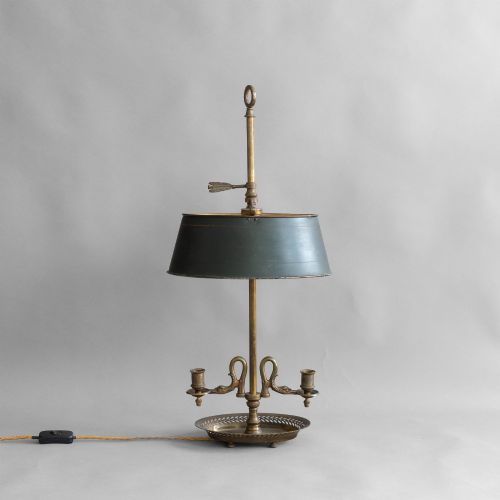
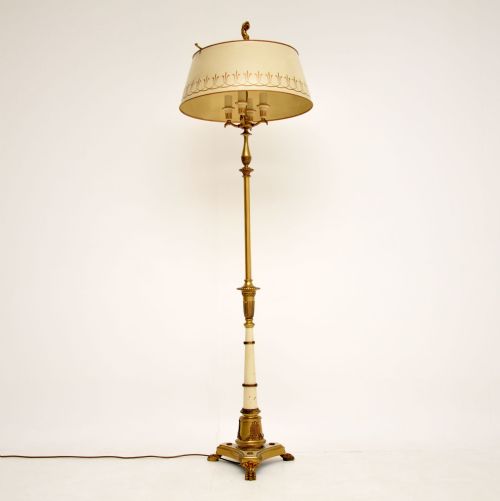
A brass and tole lamp combines metal components with painted tinware shades, taking forms such as bouillotte desk lamps, tall floor standards, and table lights. These fixtures often originate from French workshops spanning the nineteenth century through the early decades of the twentieth century.
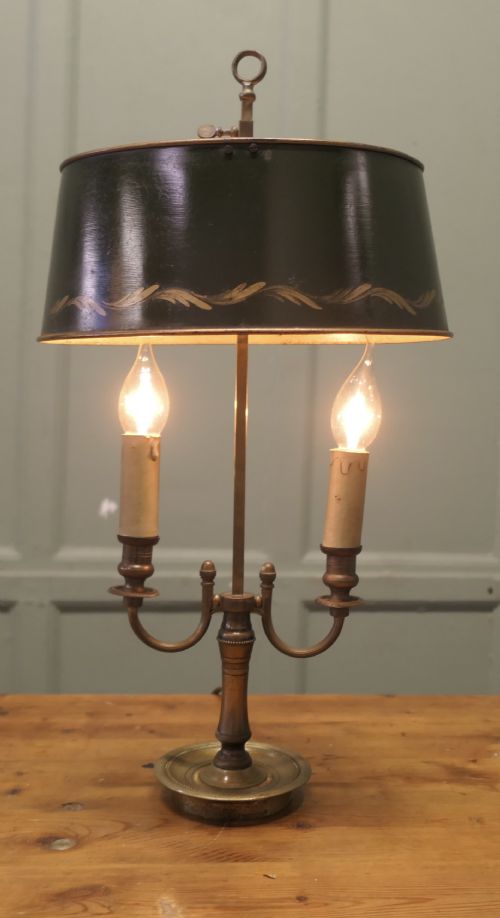
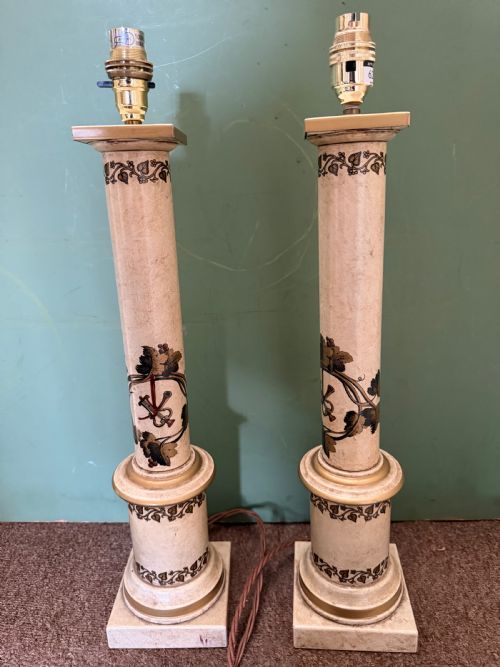
Most examples encountered here follow traditional bouillotte patterns featuring adjustable shades and multiple candle arms. Other variations include column lamps, wall lights, and Chinoiserie pieces finished in black and gold lacquer.
The aesthetic draws heavily on Neoclassical and French Empire styles, pairing polished or gilt brass with painted green or dark toleware. Buyers frequently select these lamps to provide directional task lighting while adding period elegance to a study or drawing room.
Materials and construction
Makers shaped the structural elements from brass, gilt metal, bronze, and ormolu, often forming columns, bases, and multi-branch candle arms by casting or turning. These metal parts provide the necessary weight and stability for desk and floor fixtures.
The characteristic shades use tole or toleware, which is painted and lacquered sheet metal, sometimes decorated with gilt motifs or Chinoiserie designs. Artisans applied traditional paint techniques to create the deep green and black finishes seen on nineteenth and twentieth-century examples.
Materials represented across the selection include brass, gilt metal, bronze, ormolu, toleware, and lacquer.
Assessing quality and execution
Quality in a brass and tole lamp rests on the crispness of the metal casting and the durability of the painted finish on the shade. Finer examples display cleanly turned brass components, substantial weight, and carefully applied hand-painted details.
The sophistication of the mechanism also marks the standard of the piece, particularly in adjustable bouillotte lamps where the shade slides smoothly along a central column. Finer items integrate harmonious proportions between the brass body and the toleware shade, maintaining balance across single and multi-branch configurations.
The Brass and Tole Lamp Glossary
- Tole
- Painted or lacquered sheet metal, commonly used to form adjustable lamp shades. The material allows for rich colour applications such as deep greens and blacks.
- Bouillotte lamp
- A traditional desk or table lamp featuring a central shaft, multiple candle arms, and an adjustable shade that moves up and down. It derives its name from an eighteenth-century card game.
- Ormolu
- Gilded bronze or brass applied to decorative objects and lamp mounts. The technique creates a bright, polished golden surface.
- Chinoiserie
- European artistic style reflecting Chinese motifs and decorative techniques. Pieces in this style often feature black and gold lacquer work.
- Tole-peinte
- Painted tinware featuring decorative surface artwork. This finish is typical of nineteenth-century French lighting.
Brass and Tole Lamp: Frequently Asked Questions
What is a bouillotte lamp?
A bouillotte lamp is a traditional lighting fixture featuring a central column, several candle arms, and a distinctive painted metal shade that can be adjusted up and down.
Originally designed to illuminate card tables, these lamps now serve as functional desk or table lights that provide directional illumination.
How do I use a brass and tole lamp?
These lamps function effectively as task lighting on desks, side tables, or reading surfaces, where the adjustable shade directs light downwards.
They also work well as decorative accent pieces on sideboards or mantelpieces, bringing period character and warm illumination to an interior.
How do I care for toleware shades?
Dust the painted metal shade regularly with a soft, dry cloth to prevent accumulation. Avoid abrasive cleaners or excess moisture, which can damage the painted and lacquered surface.
Clean the brass components gently with a suitable metal polish, taking care to avoid getting polish on the painted tole sections.
How do I date a brass and tole lamp?
Dating relies on examining the construction methods, materials, and stylistic cues such as Neoclassical or Empire motifs. Earlier nineteenth-century examples often display hand-finished details and heavier bronze or ormolu casting.
Twentieth-century pieces tend to show standardised manufacturing techniques while maintaining traditional forms like the twin bouillotte or column lamp.