

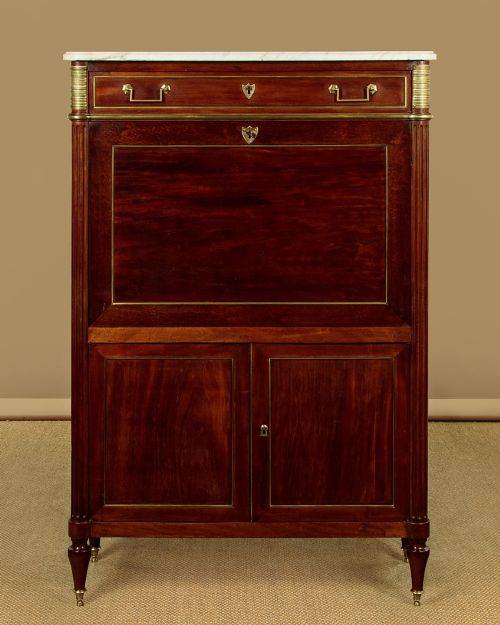
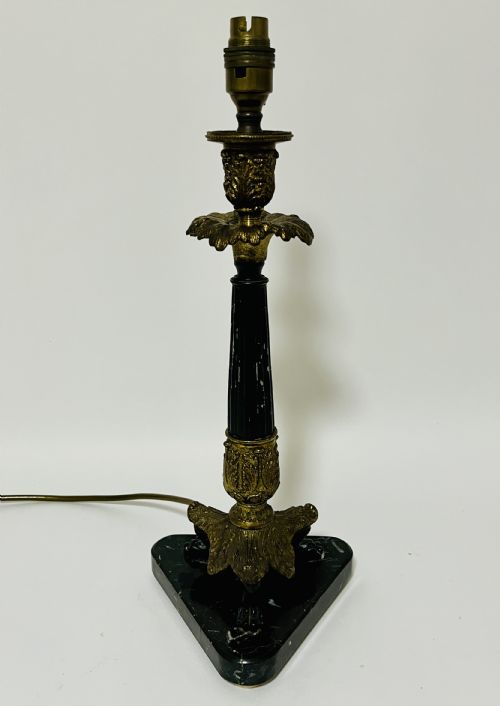


Brass and Marble Column
These pieces unite solid stone and cast metal in support of lamps, clocks and stands, bringing classical weight and proportion to a room.
Brass and Marble Column
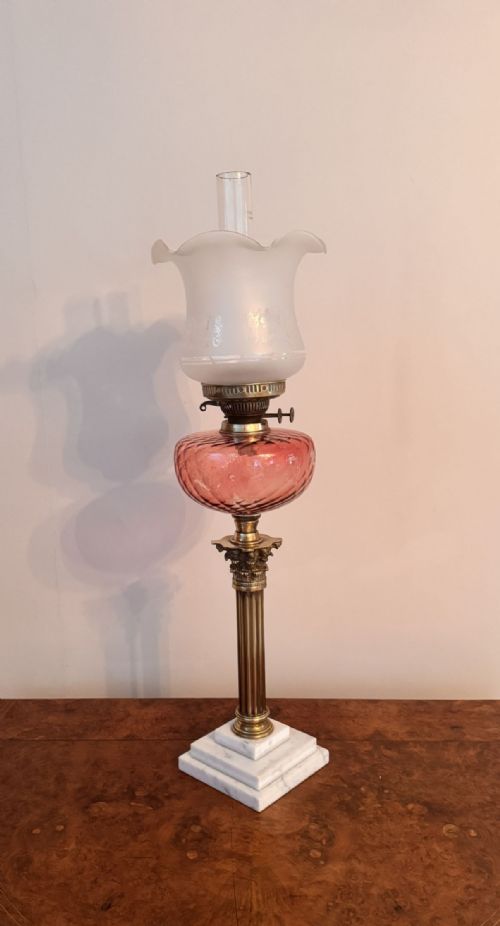
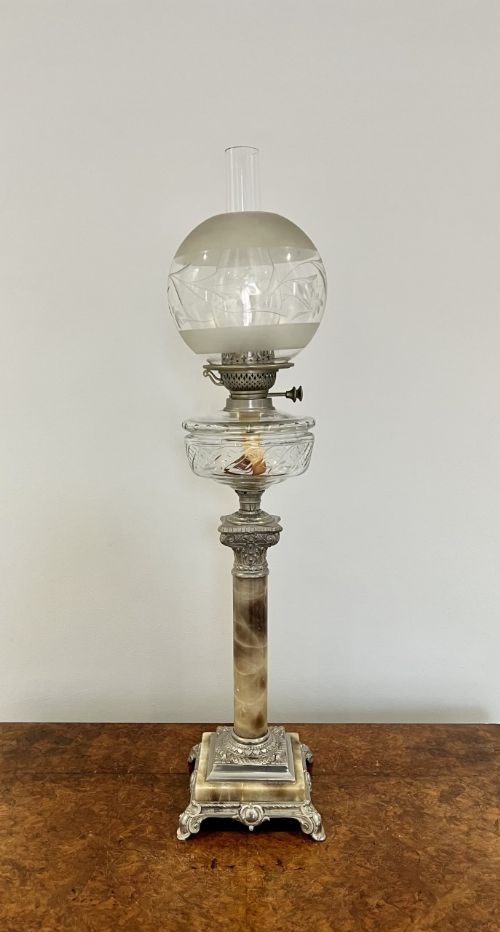
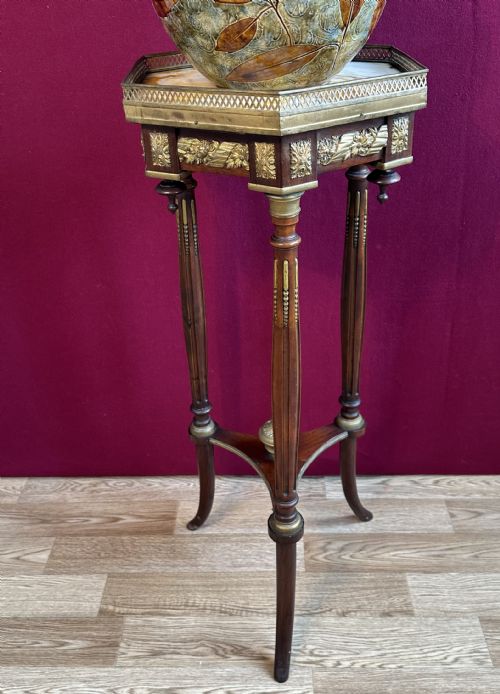
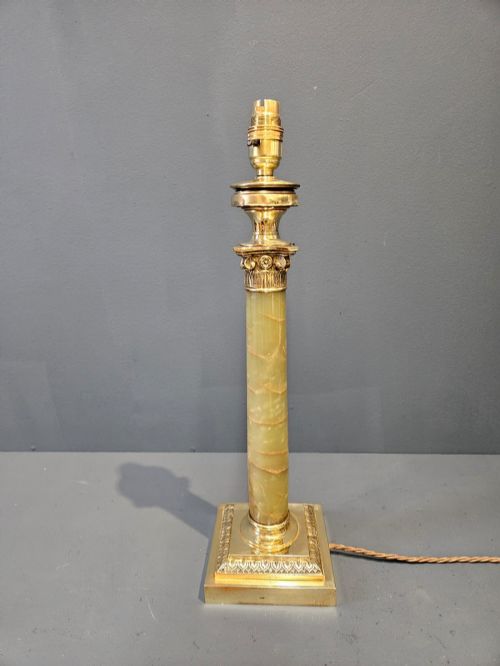
A brass and marble column typically appears on this page as a table lamp, a mantel clock, or a plant and pedestal stand from the Victorian period up to the 1930s. The architectural influence runs deep, with items manifesting styles from Neoclassical and French Empire to Louis XVI Revival.
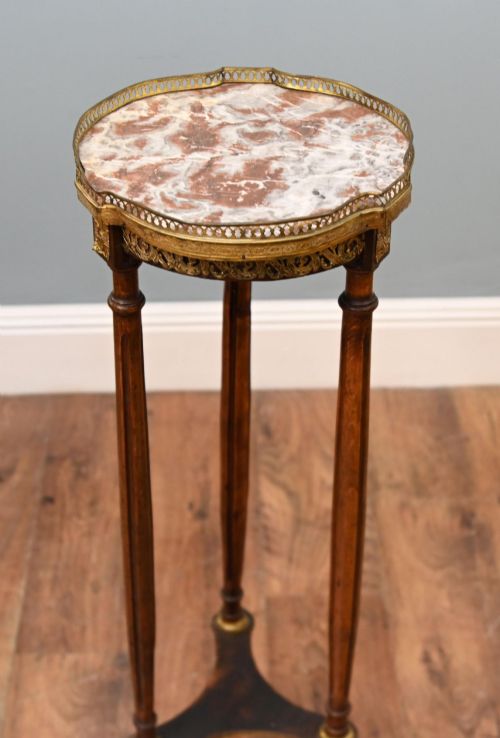
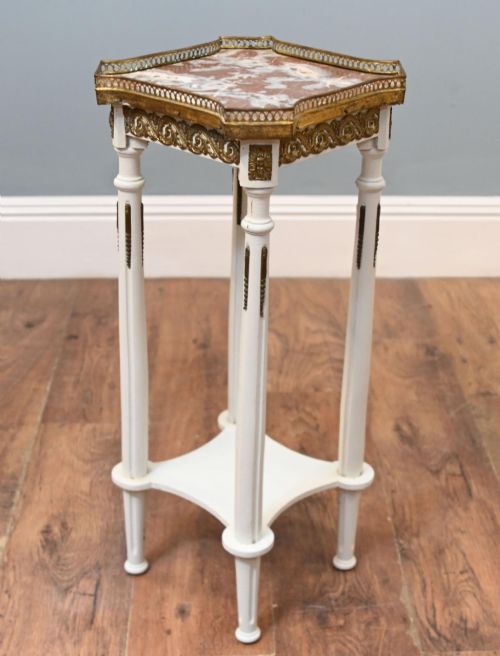
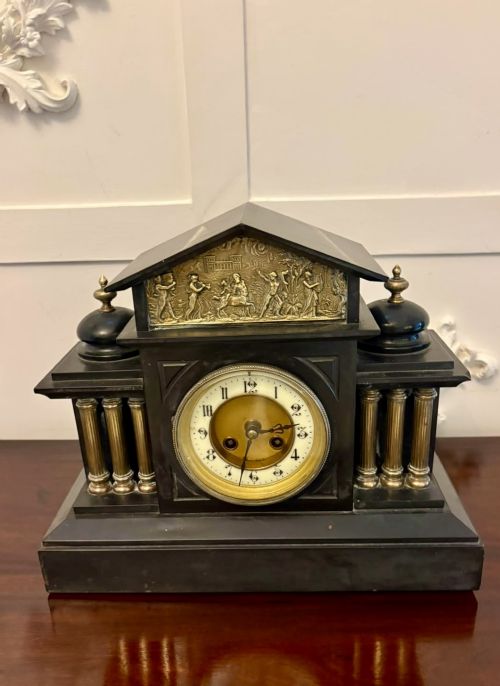
Mantel clocks dominate the surviving examples, often pairing black or pink marble cases with cast brass mounts, or taking the form of portico clocks. Plant stands and table lamps make up the remaining bulk, utilising onyx or polished stone shafts fitted with heavy metal bases and capitals.
Origin points span domestic Victorian workshops and continental makers, particularly French houses producing gilt bronze and marble garnitures. The fusion of these materials served both decorative and structural purposes in nineteenth and early twentieth-century interiors.
Materials and Construction
Construction relies on the stable union of turned stone shafts with cast brass, ormolu, and occasionally gilt bronze elements. Metal components are cast, chased, and mounted securely through central threaded rods or pinned collars to support heavy marble or onyx columns.
The stone elements - ranging from black and pink marble to onyx and faux marble - are turned on lathes and polished to matte or glossy finishes. Base mounts and capitals frequently display classical Corinthian or Doric leaf work, combining structural integrity with ornamental detail.
Brass and Marble Column Retail Price Guide 2026
Typical asking prices for brass and marble column among the pieces listed under this phrase on Sellingantiques today, from the lower quarter to the upper quarter. They describe what is for sale here now, not the wider market.
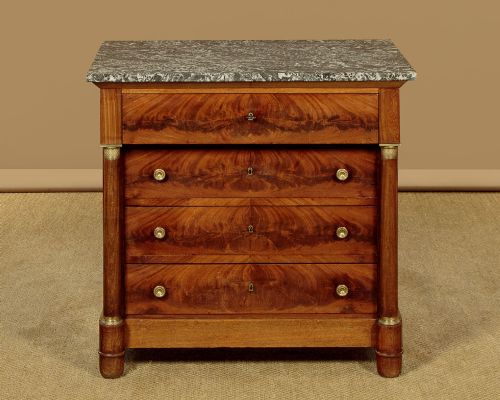
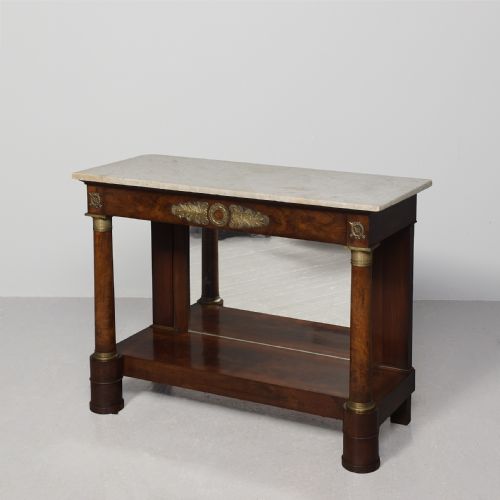
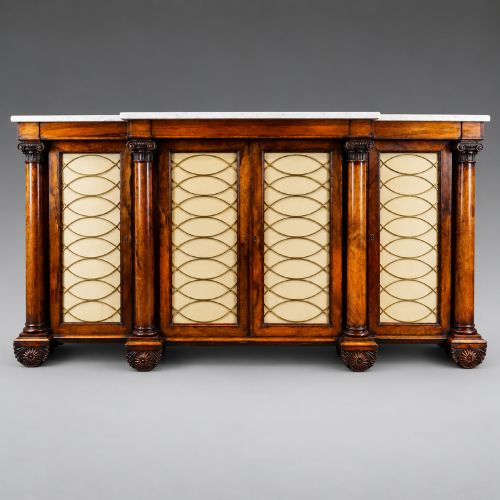
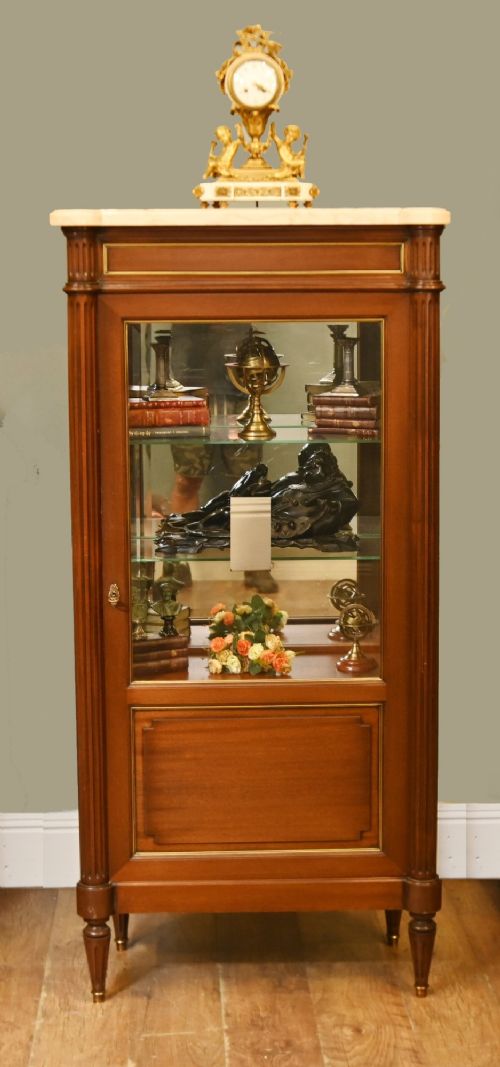
Listings combine architectural elements such as Corinthian columns with materials like mahogany, slate, and gilt ormolu across the Victorian era.
Execution and Detail
Quality separates in the crispness of the metal chasing and the depth of the stone's polish. Finer examples display hand-finished brass work with sharp botanical casting, whereas lesser pieces rely on softer, unchased metal surfaces.
The selection of the marble or onyx also dictates the grade of the piece, with uniform veining and substantial heft marking out the superior items. Furthermore, integrated movement quality in clocks and the precision of the stone joints define the higher tiers.
Philippes Paris·Baby and Jannings·Negretti and Zambra London
The Brass and Marble Column Glossary
- Ormolu
- Gilt bronze or brass applied to furniture and clock mounts. This technique involves amalgamating gold with mercury over a metal base.
- Portico clock
- A mantel clock featuring a architectural frame supported by columns. They often house pendulum movements visible between the vertical pillars.
- Garniture
- A set of matching decorative ornaments designed for display together, typically comprising a central clock flanked by two matching vases or candelabra.
- Corinthian column
- A classical pillar style characterised by ornate capitals decorated with acanthus leaves. This design appears frequently on nineteenth-century lamp bases.
- Onyx
- A banded variety of chalcedony stone used for decorative architectural objects. It provides a translucent, layered surface alternative to standard marble.
Brass and Marble Column: Frequently Asked Questions
How do I identify a Victorian marble clock?
Victorian marble clocks generally rely on heavy, architectural stone cases housing eight-day mechanical movements. They frequently incorporate incised gilt details or contrasting coloured marble accents.
Look for dial surrounds cast in brass and retailer signatures or maker plaques inscribed on the movement plates or porcelain dials.
Were these columns originally wired for electricity?
Most table lamps utilising these columns started as oil lamps or candlesticks before undergoing later conversion to electricity. The original metal reservoirs or burners were adapted to house electrical fittings during the twentieth century.
Examine the internal wiring channels and base entries to determine if the adaptation respects the original metal structure.
What is the difference between marble and onyx stands?
Marble stands feature dense, crystalline limestone with varied mineral veining, offering a cool and solid tactile presence. Onyx stands display a banded, semi-translucent structure that catches light differently across the turned shaft.
Both materials were chosen for weight and decorative impact, though onyx typically yields a warmer, honey-toned appearance.
How should I care for brass and stone furniture?
Maintain the stone surfaces by dusting with a soft, dry cloth and avoiding acidic cleaners that etch polished marble or onyx. Brass and ormolu components require gentle cleaning without abrasive polishes to preserve any remaining historical gilding.
Keep these heavy pieces away from direct heat sources and moisture to protect both the stone integrity and internal clock mechanisms.