
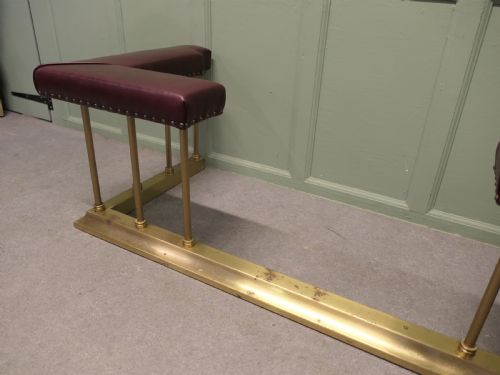


Brass and Leather Fender
A brass and leather fender provides fireside seating and hearth protection, combining sturdy metal framework with upholstered top rails.
Brass and Leather Fender
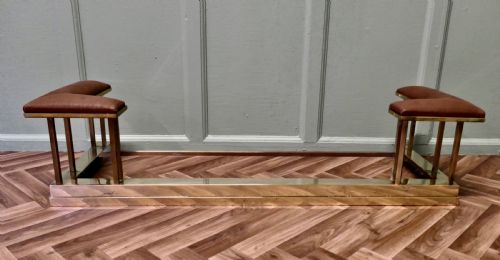
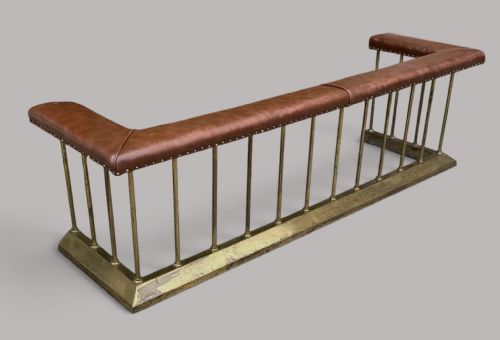
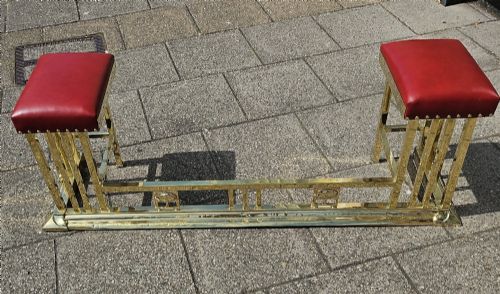
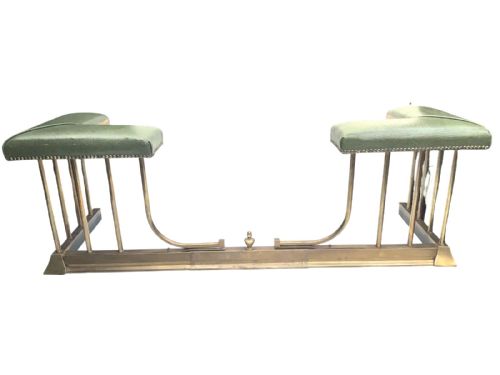
A brass and leather fender is a substantial hearth accessory designed to surround an open fire while offering built-in seating for warming oneself. These pieces combine a metal base frame with padded leather top rails, serving a dual function in traditional reception rooms.
The version most frequently met on this page is the Victorian or Edwardian club fender, often constructed with polished or patinated brass and upholstered seats. Examples from the nineteenth century onward frequently feature extending mechanisms or box forms tailored for country house hearths.
How they were made
Makers constructed the primary frames of brass, steel, copper, or iron, utilising cast and tubular metal joined to form sturdy low barriers. These metal structures required precise assembly to support the weight of sitters and withstand regular fireside use.
The top rails were upholstered in leather - often tan or green - using traditional padding and studwork over a wooden or metal core. Many models incorporated extendable iron or brass inner sections to adjust for varying hearth widths.
The listings span the nineteenth century through the 1940s, featuring materials such as brass, copper, steel, and iron combined with leather.
What varies in quality
Quality rests in the substantial weight of the brass tubing and the integrity of the underlying iron or steel framework. Heavier gauges of metal and robust corner mountings distinguish sturdier hearth furniture from lighter utilitarian pieces.
The execution of the leather upholstery and the refinement of the metal castings determine the overall polish of the object. Finer examples display careful buttoning or studwork alongside well-balanced proportions suited to substantial domestic fireplaces.
The Brass and Leather Fender Glossary
- Club fender
- A low fireside seat with a metal frame and padded leather top rails designed to enclose the hearth. These pieces originated in gentlemen's clubs and country houses during the Victorian period.
- Extendable
- A descriptor for fenders fitted with sliding mechanisms that allow the overall width to adjust to different fireplace openings. This practical feature was common in both nineteenth-century and Edwardian examples.
- Box club fender
- A variant featuring enclosed sides or storage compartments beneath the upholstered seats. This form provides a more substantial barrier against hearth drafts.
- Chesterfield seat
- An upholstered top rail characterised by deep buttoning and padded ends. This style offers a comfortable bench arrangement around the fireplace.
Brass and Leather Fender: Frequently Asked Questions
How do I choose the right size fender?
Measure the width and depth of your hearth area carefully before selecting a piece. Many examples feature adjustable frames that accommodate varying fireplace dimensions.
Consider the clearance needed around the fire basket and ensure the seating height complements your existing fireside hearth furniture.
Were these seats actually used for sitting?
These low hearth rails were specifically engineered to seat people close to the fire for warmth. The sturdy metal and leather construction supports regular daily use.
Victorian and Edwardian households utilised them extensively in libraries and drawing rooms during cooler months.
How do I tell Victorian from Edwardian pieces?
Victorian models often display heavier cast brass components and more robust structural ironwork. Edwardian examples sometimes introduce sleeker lines and restrained decorative profiles.
Art Deco variations from the early twentieth century further simplify the metal framing while retaining leather upholstery.
What maintenance do leather seats require?
The leather top rails benefit from occasional conditioning to preserve the supple hide and prevent drying near heat sources. Regular dusting of the brass framework maintains the polished or patinated surface.
Avoid using harsh chemical cleaners on antique metal components to protect the original finish.