




Brass and Iron Lock
These pieces of brass and iron lock hardware span domestic security, travel chests, and industrial transport from the seventeenth century onward.
Brass and Iron Lock
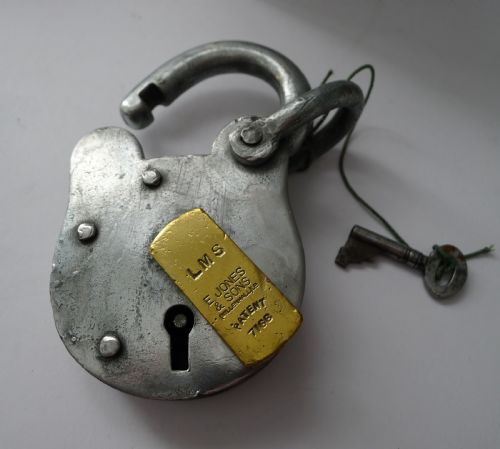
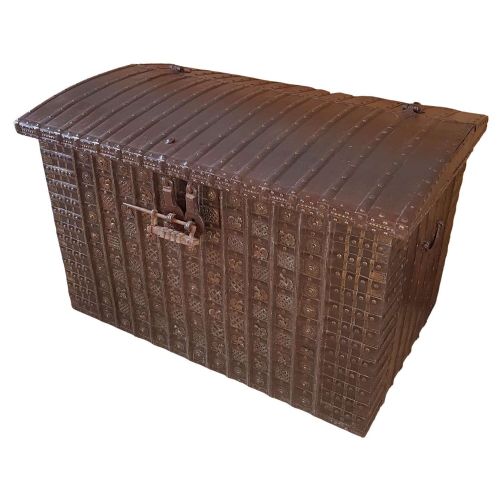
A brass and iron lock primarily comprises padlocks, heavy trunks, chests, and safes designed for security and transport. The hardware range extends from massive customs padlocks to elaborate nineteenth-century fireproof safes and dowry chests.
Buyers regularly encounter utilitarian padlocks alongside domestic storage containers reinforced with metal bands and intricate locking mechanisms. Examples span British railway security items and continental European strongboxes.
Origins stretch across English, French, Spanish, and Rajasthani workshops, reflecting diverse regional approaches to mechanical protection. Periods represented run from the seventeenth century through the Edwardian era.
How they were made
Construction relies upon heavy iron and steel bodies combined with cast iron and brass components for mechanisms and decorative straps. Trunks and chests incorporate timber carcasses like teak and walnut, then overlay them with forged iron banding.
Surface treatments include Spanish leather coverings and decorative embossing paired with functional brass fixtures. Combination dials, internal drop-bolt mechanisms, and custom keys demonstrate period locksmithing techniques.
Brass and Iron Lock Retail Price Guide 2026
Typical asking prices for brass and iron lock among the pieces listed under this phrase on Sellingantiques today, from the lower quarter to the upper quarter. They describe what is for sale here now, not the wider market.
Listings feature periods spanning the seventeenth century, Georgian, Victorian, and Edwardian eras, utilising brass, iron, steel, teak, walnut, and leather.
What varies in quality
Quality rests in the complexity of the internal mechanism and the survival of original operating keys. Elaborate multi-dial combinations and maker-signed locking plates elevate standard utility hardware into notable examples of period engineering.
The integrity of secondary materials, such as leather upholstery and structural wood panels, defines the preservation standard. Retaining original mounting straps and operable brass escutcheons distinguishes finer workshop production.
Milners of Liverpool·George Price
The Brass and Iron Lock Glossary
- Padlock
- A detachable lock with a shingle-ended or sliding shackle designed to pass through a staple or link. These devices secured railway rolling stock, customs posts, and domestic gates.
- Safe
- A secure metal box or cabinet built to resist fire and forced entry. Victorian iterations often feature heavy cast iron doors and complex interior brass locking works.
- Coffering
- Heavy chest or trunk construction reinforced with structural metal bands. Spanish and French examples frequently employ leather and iron overlay for added resilience.
- Damchiya
- A traditional low dowry chest originating from Rajasthan, typically secured with heavy iron straps and bespoke locking hardware.
Brass and Iron Lock: Frequently Asked Questions
What periods do these locks cover?
The selection includes pieces spanning from the seventeenth century through Victorian, Edwardian, and early twentieth-century production.
Individual dates range from seventeenth-century Spanish leather trunks to railway padlocks marked circa nineteen-ten.
Do these padlocks come with keys?
Certain items retain their original keys and operational internal mechanisms, while others survive primarily as historical artefacts.
Listings specify whether an original key accompanies the padlock, chest, or safe.
How were these heavy chests used?
Chests and trunks served for domestic storage, dowry transport, and secure carriage of valuables across European and Asian households.
Customs houses and railway networks utilised heavy padlocks to secure freight and premises.
What materials make up these safes?
Construction utilises cast iron, steel, and brass for the structural bodies, doors, and internal locking mechanisms.
Secondary materials include timber frames of teak and walnut, alongside exterior coverings of Spanish leather.