



Brass Accented Display
Brass accented display pieces bring a refined metalwork touch to furniture, combining practical surfaces with decorative metallic detailing.
Brass Accented Display
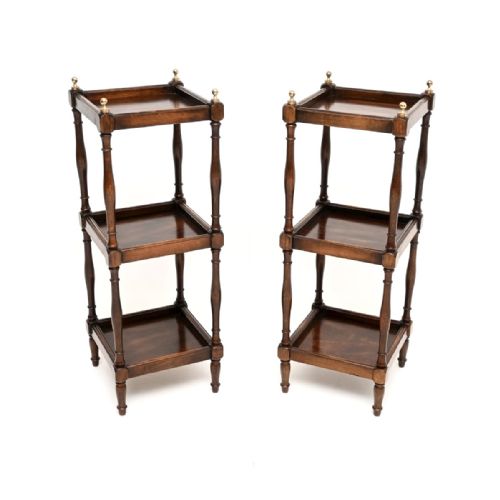
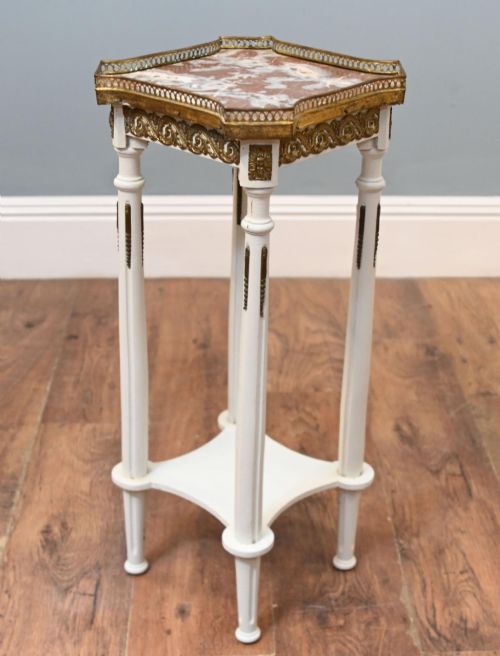
Brass accented display items encompass tiered stands, etageres, plant stands, and occasional tables that integrate metallic highlights into wooden or stone structures. These functional forms range from Victorian oval display shelves to Edwardian lamp tables and French marquetry pieces.
Buyers encountering this selection will frequently meet multi-tiered side tables and plant stands dating from the nineteenth century through the early twentieth century. These configurations prioritise visible surface area and decorative framing.
The aesthetic bridges several periods including Victorian, Regency, and Art Deco, reflecting shifting domestic tastes for polished metal mounts, inlay, and gallery rails.
How they were made
Construction relies heavily on hardwoods such as mahogany, walnut, and ebonised wood, frequently enhanced by amboyna veneer and marquetry. These timbers provide a dense structural base for the contrasting metal elements.
Brass is incorporated through inlaid stringing, galleries, mounts, and structural supports that accent the primary wood or stone bodies. Marble and onyx frequently top these stands to provide durable display surfaces.
Brass Accented Display Retail Price Guide 2026
Typical asking prices for brass accented display among the pieces listed under this phrase on Sellingantiques today, from the lower quarter to the upper quarter. They describe what is for sale here now, not the wider market.
Industrial water pressure gauges occasionally sneak into the display category, proving that pressure looks rather decorative in brass.
What varies in quality
The standard of timber selection and veneer work dictates the fundamental refinement of each piece, distinguishing simple utility furniture from more ambitious workshop production. Precision in marquetry and inlay work creates sharper visual contrast against the surrounding wood.
The integration of the metal components, from cast brass mounts to fine gallery rails, determines the structural crispness of the finish. Heavier gauge brass and meticulous fastening reflect superior manufacturing choices.
Gillow
The Brass Accented Display Glossary
- Etagere
- A piece of furniture consisting of a set of open shelves for displaying small objects. These tiered structures often feature delicate brass supports and rails.
- Marquetry
- Decorative veneer applied to furniture in geometrical patterns or pictorial designs. This technique frequently combines exotic timbers with contrasting materials.
- Bijouterie cabinet
- A glazed display table or cabinet designed for small treasures and curiosities. These pieces use glass and metal framing to maximise visibility.
- Dumb waiter
- A tiered stand or revolving shelving unit traditionally used for serving food or displaying items. Examples incorporate multiple surfaces supported by central or peripheral columns.
- Stringing
- A narrow inlay of contrasting wood or metal set into the surface of furniture. Brass stringing creates fine linear borders around table tops and panels.
Brass Accented Display: Frequently Asked Questions
What is a brass accented display table?
These items are small occasional tables, etageres, and plant stands that incorporate brass mounts, galleries, or inlay into their wooden or stone construction.
They serve both decorative and functional roles in interior spaces, providing tiered surfaces for display.
How do I identify a Victorian piece?
Victorian examples often utilise dense hardwoods like mahogany and walnut, frequently featuring multi-tiered designs and oval top configurations.
Makers of this era commonly applied intricate inlay and turned wooden supports alongside polished brass elements.
Where should I place an etagere?
An etagere works effectively in living rooms or studies where open shelving allows for the display of small decorative objects and books.
Their slim profiles and reflective brass accents also suit hallways and corners requiring vertical visual interest.
What materials are common in these stands?
Primary construction materials include mahogany, walnut, ebonised wood, and amboyna veneer, paired with brass for structural and decorative highlights.
Some variants incorporate marble or onyx top surfaces to provide a contrasting, durable display area.