





Brass Accent Plant Stand
A brass accent plant stand brings metallic warmth and raised display space to a room, catching the light in corners that otherwise stay dull.
Brass Accent Plant Stand
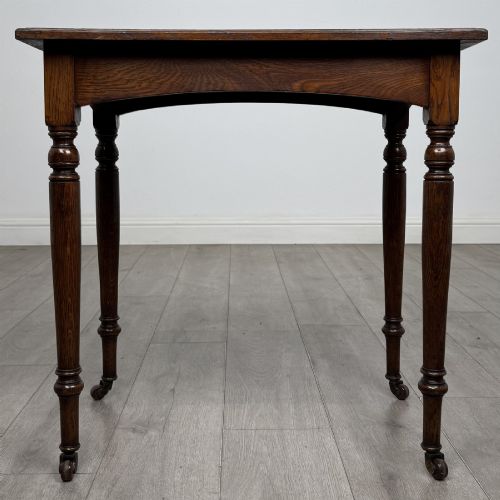
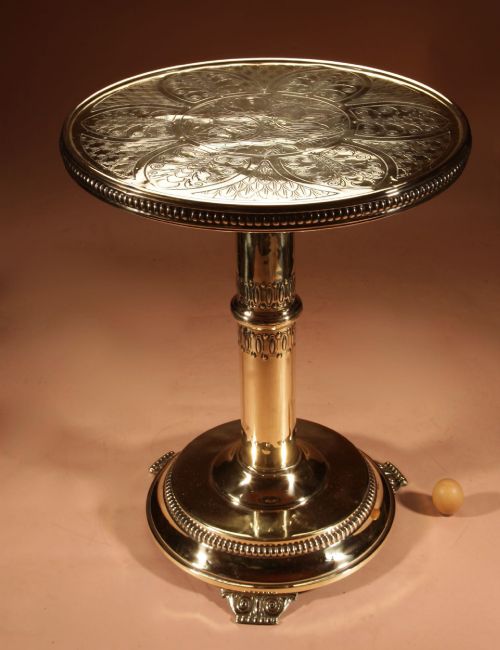
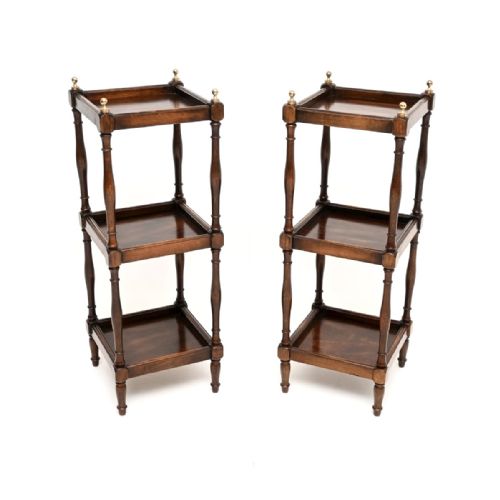
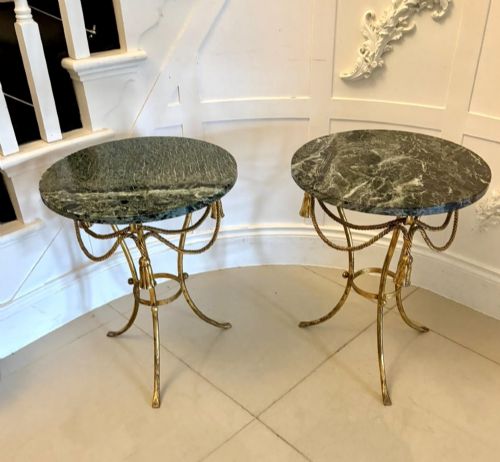
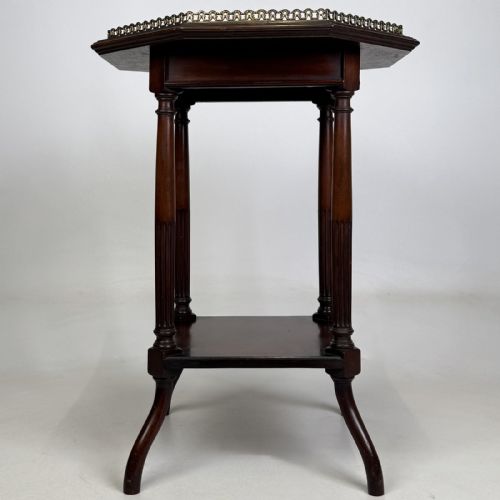
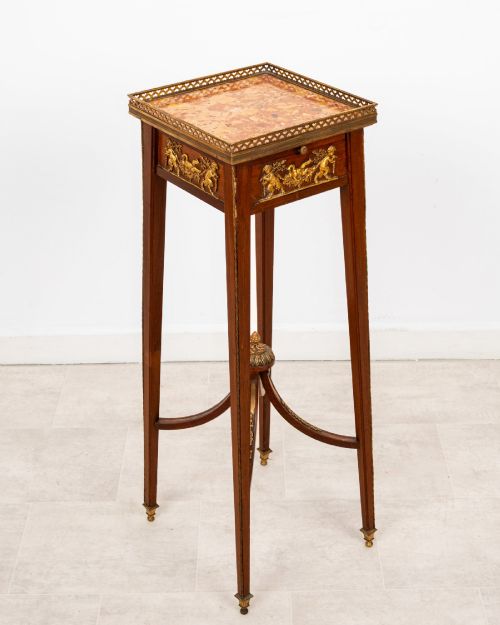
A brass accent plant stand takes multiple architectural shapes on this page, shifting from multi-tiered display shelves to round gueridons and small occasional tables designed to hold greenery or lamps.
The pieces span the nineteenth century through the early decades of the twentieth, drawing heavily on French revival styles such as Louis XV and Louis XVI alongside simpler Victorian and Regency frameworks.
Makers blended these forms with side tables, dumb waiters, and jardiniere tables, meaning the category blurs functional surface area with decorative elevation.
Materials and Construction
Foundations rely on dense timber frames of mahogany, walnut, and rosewood, frequently enhanced by parquetry, marquetry, and brass inlay.
Metalwork appears in cast or gilded brass, ormolu, and gilt metal, forming galleries, mounts, and structural legs that support the heavier tops.
Insets of polished marble, rouge marble, verde marble, and onyx provide solid, cool surfaces that contrast against the warm timber and gleaming metal.
Brass Accent Plant Stand Retail Price Guide 2026
Typical asking prices for brass accent plant stand among the pieces listed under this phrase on Sellingantiques today, from the lower quarter to the upper quarter. They describe what is for sale here now, not the wider market.
The listings combine nineteenth-century Victorian designs with early twentieth-century French revival styles, uniting mahogany, walnut, and marble.
Gradations in Execution
The refinement of the casting in the brass mounts and ormolu dictates much of the visual weight, distinguishing sharp, hand-chiseled detailing from softer industrial output.
The selection of stone and timber creates another divide, seen in the depth of grain matching on mahogany or walnut and the striking natural veining across marble and onyx insets.
Structural integrity rests on the tightness of joints and the precision with which brass galleries sit flush against timber or stone rims.
François Linke
The Brass Accent Plant Stand Glossary
- Gueridon
- A small circular table on a central pillar or multiple legs, originating in seventeenth-century France and commonly topped with marble.
- Ormolu
- Gilt bronze ornamentation applied to furniture, cast and finished by hand to produce a rich golden surface.
- Marquetry
- Decorative veneer patterns formed by fitting together small pieces of wood, shell, or ivory into a larger design.
- Gallery
- A raised ornamental border of pierced metal or turned wood fitted around the edge of a table top to keep objects secure.
- Jardiniere
- An ornamental stand or receptacle designed specifically to hold plants or flowers indoors.
Brass Accent Plant Stand: Frequently Asked Questions
What is a brass accent plant stand used for?
These pieces elevate potted plants, vases, and small lamps to eye level, utilising vertical space in living areas and hallways.
Their sturdy stone or wooden tops combined with elevated platforms make them versatile side tables for corners or beside seating.
How do I identify French revival styles?
French revival pieces incorporate curved cabriole legs, ornate gilt brass mounts, and shaped marble tops that echo seventeenth and eighteenth-century court furniture.
Look for symmetrical or asymmetrical floral marquetry and classical mounts modelled in the manner of notable Parisian cabinet makers.
Where should I place a tiered stand?
Tiered stands work effectively in empty corners or beside armchairs where multiple levels allow for displaying trailing foliage and decorative objects.
The smaller footprint preserves floor space while multiplying the display area through stacked shelves.
How do marble and onyx tops differ?
Marble offers a hard, cool surface with dense veining, appearing frequently in French gueridons and lamp tables for durability.
Onyx presents a more translucent, banded appearance that catches the light differently, adding a distinct warmth to tables from the later nineteenth and early twentieth centuries.