




Brandy Decanter Bottle
A brandy decanter bottle holds your spirit in coloured glass or silver-mounted crystal, ready to pour after dinner.
Brandy Decanter Bottle
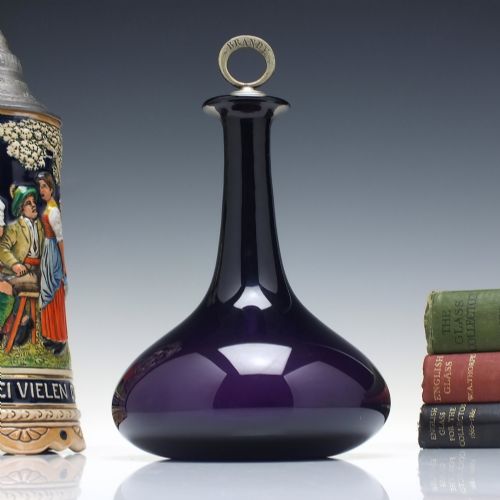
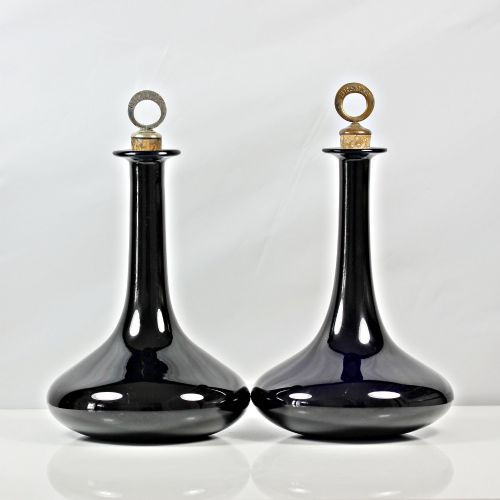
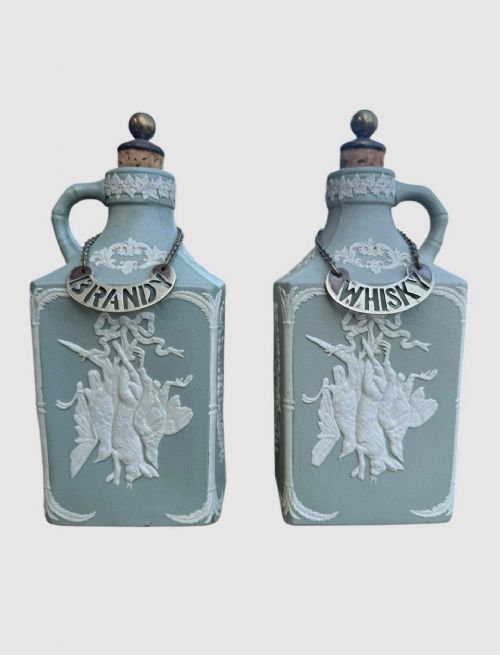
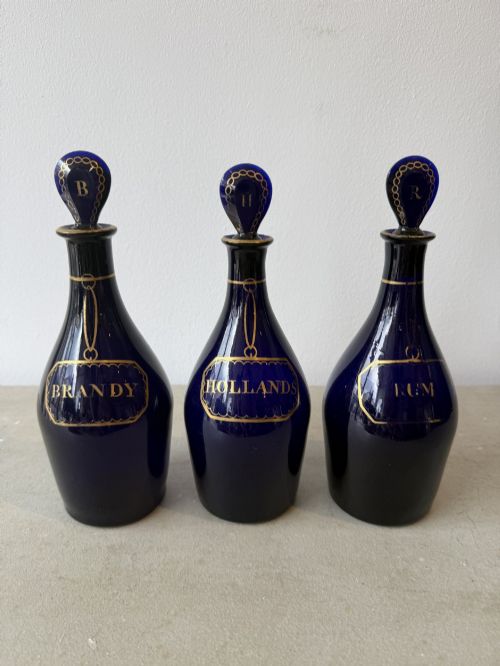
A brandy decanter bottle is a vessel designed to hold and serve spirits, appearing in forms from single personal flagons to pairs and sets of three. You will most frequently meet nineteenth-century glass examples in this search, alongside silver labels and tantalus frames.
The materials span amethyst, Bristol blue, cobalt, and ruby glass, frequently mounted with silver or fitted with cork stoppers. Makers applied gilt decoration and engraved lettering directly onto the glass to identify the contents.
Origins stretch from the Georgian and Victorian eras through the Edwardian period and into the mid-twentieth century. Traditional British craftsmanship dominates the offerings, with pieces appearing both individually and in matched pairs.
How they were made
Glassmakers utilised optical blowing techniques to shape the crystal and coloured glass bodies, producing characteristic mell and flagon profiles. Workers then hand-engraved titles such as brandy onto the surface or applied gold leaf details.
Silversmiths constructed mounts, collars, and matching hanging labels from sterling silver and silver plate. Cork stoppers finished the necks to preserve the spirit within.
Brandy Decanter Bottle Retail Price Guide 2026
Typical asking prices for brandy decanter bottle among the pieces listed under this phrase on Sellingantiques today, from the lower quarter to the upper quarter. They describe what is for sale here now, not the wider market.
A locked tantalus kept the brandy safe from thirsty but light-fingered staff.
What varies in quality
Quality rests in the depth of colour within the glass and the crispness of any hand-engraved lettering. Rich amethyst, Bristol blue, and ruby hues distinguish superior vessels from plain glass.
The presence of matching silver-gilt mounts, original stoppers, and corresponding silver labels elevates a set. Maker attribution, such as work by James Powell or Freeman & Son, marks out pieces executed to a higher standard.
James Powell·Freeman & Son Ltd
The Brandy Decanter Bottle Glossary
- Mell decanter
- A decanter with a heavy, rounded base tapering toward the neck, common in nineteenth-century glass. This shape provided stability on dining tables.
- Tantalus
- A locked wooden or metal frame holding decanters securely without hiding the bottles. The design allowed hosts to display spirits while restricting access.
- Decanter label
- A small silver or silver-plated tag hung from the neck by a chain to identify the contents. These items bear engraved names like brandy or whisky.
- Optical blowing
- A glassblowing technique using a ribbed mould to create decorative patterns within the vessel wall. This method produces subtle fluting across the glass.
- Silver-gilt
- Silver that has been coated with a thin layer of gold on the surface. This treatment adds a warm yellow lustre to mounts and hardware.
Brandy Decanter Bottle: Frequently Asked Questions
What is a brandy decanter bottle?
A brandy decanter bottle is a glass vessel created to hold and serve spirits at the table. They range from single personal flagons to sets housed in silver-plated tantalus frames.
Many examples feature engraved labels or coloured glass bodies in shades of blue, amethyst, and ruby. They combine utilitarian storage with decorative display.
How do I identify an Edwardian decanter?
Edwardian decanters often display refined glass-cutting techniques and are frequently accompanied by sterling silver labels on chains. The period saw a preference for matching sets and silver-mounted collars.
Examining the hallmarks on the silver mounts provides the exact year of manufacture and the maker's mark. Stylistic cues also point to the early twentieth-century date of creation.
Were decanter labels always matched?
Decanter labels were produced both individually and in coordinated sets to hang from specific bottles. Sets of matching sterling silver labels ensure the correct spirit is named on each decanter.
Individual labels show that owners frequently added or replaced tags over time as collections grew. The presence of matching chains and hallmarks helps confirm original sets.
How should I clean coloured glass?
Coloured glass decanters require gentle washing in warm water with mild detergent to preserve the historic surface. Harsh scrubbing and abrasive brushes can scratch the glass or damage engraved details.
Silver mounts and collars should be polished carefully to avoid staining the surrounding glass body. Allowing the interior to dry completely prevents moisture retention.