



Boxwood Figure Carving
A boxwood figure carving brings dense, pale grain and miniature precision to the collector's desk.
Boxwood Figure Carving
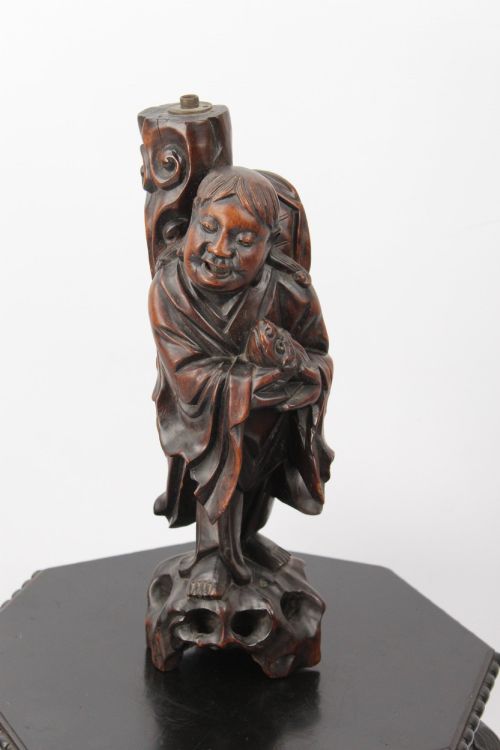
A boxwood figure carving is a small sculptural work rendered in dense timber, spanning Chinese Qing dynasty figures, Japanese Meiji period netsuke, and European Baroque sculpture. These small works range from Daoist immortals and seated sages to Japanese deities like Ebisu and Fukurokuju, alongside European religious subjects.
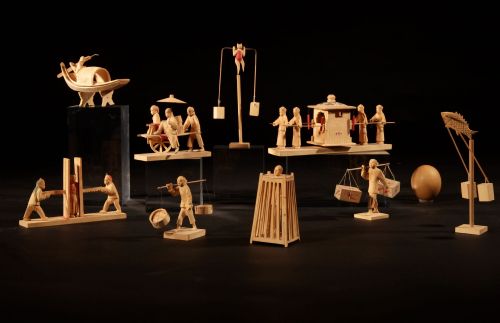
The pieces on this page are most frequently encountered as Chinese wood carvings depicting daily life, Japanese netsuke and okimono, or European figures combining boxwood with ivory or mounted on turned wood bases. Forms vary from reclining figures and desk accessories to corpus christi crosses and miniature animal groups.
Materials and Technique
Boxwood provides a dense, fine-grained surface that allows carvers to execute microscopic detail without splintering. Artisans utilise this tight grain for miniature sculptures, often combining the pale wood with contrasting ivory elements or securing the finished carving to a turned wood base or metal mounts.
Carvers employ hand chisels and tiny gouges to define the deep folds of robes, facial expressions, and textures such as hair and fur. The natural finish of the wood is typically left unpainted, relying entirely on the precision of the knife work and the subtle warmth of the polished grain.
Boxwood Figure Carving Retail Price Guide 2026
Typical asking prices for boxwood figure carving among the pieces listed under this phrase on Sellingantiques today, from the lower quarter to the upper quarter. They describe what is for sale here now, not the wider market.
The listings show boxwood figure carving examples spanning Japanese Meiji period netsuke, Chinese Qing dynasty figures, and 18th century European works.
Evaluating Quality
Quality rests upon the ambition of the carving and the fidelity of the anatomical rendering, distinguishing master carvers from regional workshops. A superior piece demonstrates precise control over expression and posture, whether capturing the corpulent frame of a Buddha or the dynamic movement of a wise man on a horse.
The clarity of the signature or the sophistication of the regional folk art style also marks the distinction between standard decorative items and works of true sculptural merit. Artisans who manage to preserve crisp edges and depth within a miniature scale separate the finer examples from simpler output.
Simon Troger·Tomochika·Masayuki
The Boxwood Figure Carving Glossary
- Boxwood
- A dense, hard timber with a pale, uniform grain that takes minute detail exceptionally well. It forms the primary medium for miniature figures and netsuke.
- Netsuke
- A small carved toggle used in traditional Japanese dress to secure a pouch or container to a sash. These functional items frequently double as intricate miniature sculptures.
- Okimono
- A Japanese display piece designed for placement on a shelf or in a tokonoma alcove. Unlike netsuke, they serve a purely decorative purpose.
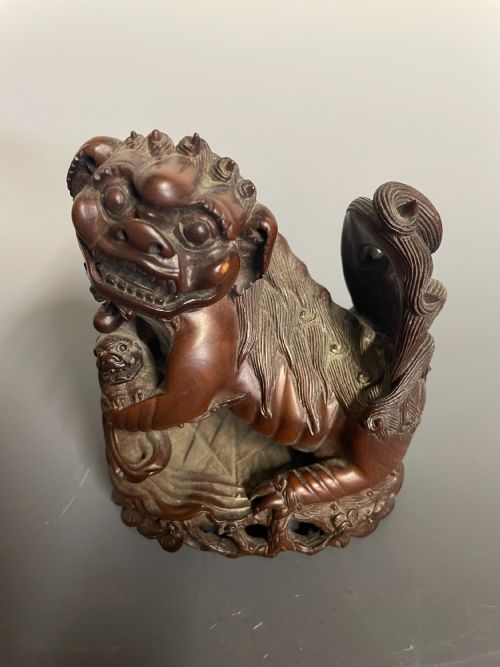
- Foo Dog
- A traditional guardian lion depicted in Chinese art with stylized curls and a protective stance. They appear frequently in carved wood and stone.
- Corpus Christi
- A representation of Jesus on the cross, often rendered in carved wood or ivory during European ecclesiastical periods.
Boxwood Figure Carving: Frequently Asked Questions
What is a boxwood figure carving?
A boxwood figure carving is a small, detailed sculpture fashioned from dense boxwood timber. These pieces range from Asian deities and daily life scenes to European religious figures.
Craftsmen take advantage of the tight, pale grain to execute microscopic details that larger timbers cannot support. The resulting objects function as desktop ornaments, toggles, or cabinet displays.
How do I care for carved boxwood?
Carved boxwood requires stable environmental conditions away from direct sunlight and rapid temperature shifts. Excessive heat causes the dense wood to dry and split along the grain.
Dusting should be performed gently with a soft, dry brush rather than liquid cleaners. Natural oils from human hands develop a patina over time, but handling should remain minimal to protect delicate projections.
How do I identify a netsuke?
A netsuke is traditionally identified by the presence of small cord holes known as himotoshi, through which a silk cord passed. These miniature toggles were designed to anchor suspended pouches to traditional Japanese garments.
Subject matter typically draws from folklore, daily life, animals, or deities. Their compact, rounded forms avoid sharp protruding edges that might catch on clothing.
What is the difference between an okimono and a netsuke?
An okimono is a standalone decorative sculpture intended for display on a shelf or table. It lacks the cord holes required for fastening to a traditional sash.
A netsuke is strictly a functional toggle with specific dimensions and pierced channels for cord passage. While both share similar subjects and carving techniques, their original Japanese domestic uses differ entirely.